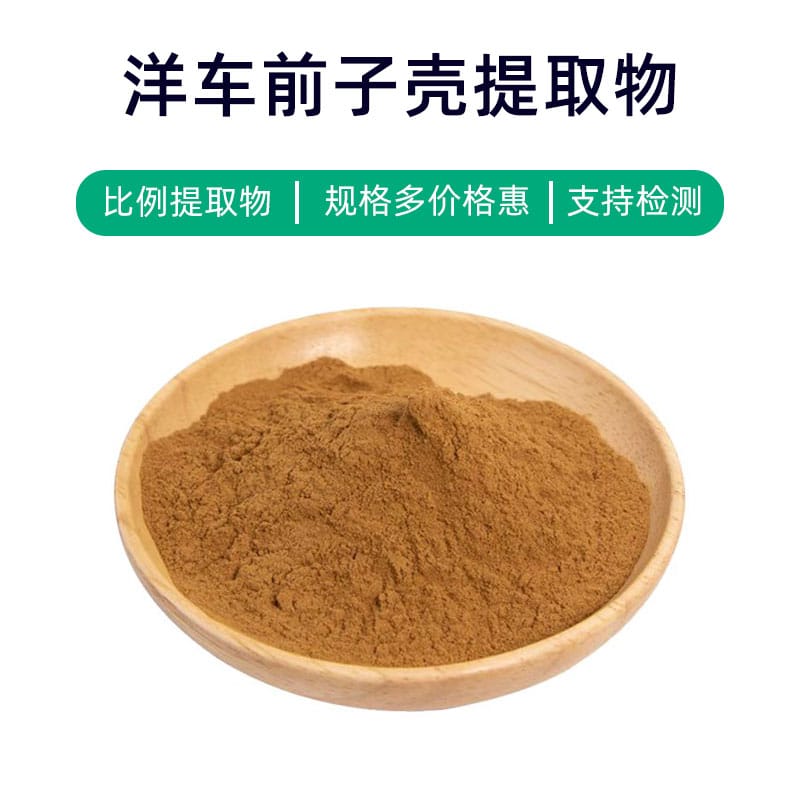



Product Introduction for Plantago Asiatica Seed Husk Extract
Plantago Asiatica Seed Husk Extract is a natural plant extract derived from the seed husk of Plantago asiatica, primarily composed of polysaccharides, mucilage, and plant tannins. It holds significant application value in medicine, health supplements, and cosmetics.
Firstly, this extract contains abundant polysaccharides, which are known for their ability to modulate immune function and enhance the body’s resistance, making it beneficial for boosting the immune system and preventing colds.
Secondly, the mucilage in the extract forms a protective layer, which can safeguard the gastrointestinal mucosa, helping to alleviate discomfort in the digestive tract and reducing gastrointestinal inflammation.
Additionally, plant tannins are another key component of the extract, possessing astringent, anti-inflammatory, and antioxidant properties. They can be utilized in skincare products, aiding in pore tightening and oil control, thus improving skin condition.
In medicine, Plantago Asiatica Seed Husk Extract serves as a vital component in traditional medicine formulations used to prepare gastrointestinal regulators and immune modulators. In the health supplement domain, it is commonly found in products aimed at immune support and stomach protection. Within cosmetics, it features in oil-controlling toners and anti-inflammatory repair creams, providing protection and restoration for the skin.
Overall, Plantago Asiatica Seed Husk Extract has various benefits, including immune regulation, gastrointestinal protection, and anti-inflammatory and antioxidant effects. It has wide applications in medicine, health supplements, and cosmetics, representing a natural plant extract with high application value and market potential.
Production Process for Plantago Asiatica Seed Husk Extract
The production process of Plantago Asiatica Seed Husk Extract typically includes the following key steps:
- Material Preparation: Start with fresh Plantago asiatica seed husks, ensuring quality and freshness. Care should be taken during collection to protect the source plant from contamination and damage.
- Washing and Grinding: Clean the collected seed husks to remove impurities and surface dirt, and then grind the material into powder to facilitate the extraction process.
- Extraction: Utilize appropriate solvents (like water or ethanol) to extract the ground seed husks, with common extraction methods including soaking or heating and refluxing. This step effectively extracts the plant’s active components.
- Concentration: Concentrate the extracted solution to remove excess solvent and moisture, resulting in a concentrated liquid.
- Filtration and Separation: Filter the concentrated liquid to eliminate impurities and solid particles, yielding a pure extract liquid.
- Drying: Employ drying methods like spray drying or vacuum drying to convert the extract liquid into a powder form.
- Crushing and Sieving: Crush and sieve the dried extract powder to ensure that the product has a fine and uniform particle size that meets specifications.
- Packaging and Storage: Package the final extract product in airtight containers to protect against moisture and light, thereby extending its shelf life. Store it in a cool, dry, ventilated area, avoiding dampness and direct sunlight.
This describes the general production process for Plantago Asiatica Seed Husk Extract, where each step needs to be strictly controlled regarding operational conditions and quality requirements to ensure the final product’s quality and stability.
Efficacy and Side Effects of Plantago Asiatica Seed Husk Extract
Plantago Asiatica Seed Husk Extract is a commonly used herbal extract with multiple effects and benefits.
- Anti-inflammatory Effects: Rich in flavonoids and polyphenolic compounds, this extract possesses significant anti-inflammatory properties that can relieve discomfort caused by inflammation.
- Antioxidant Effects: The polyphenolic components in the extract exhibit strong antioxidant activity, neutralizing free radicals in the body, slowing the aging process, and protecting cell health.
- Antibacterial and Anti-inflammatory: The extract has inhibitory effects against various bacteria and fungi, making it useful for treating skin infections and oral inflammation.
- Diuretic and Detoxifying: Certain components in the extract protect kidney function and promote urine production, assisting in the elimination of metabolic waste and toxins.
- Tumor Growth Inhibition: Some studies indicate that Plantago Asiatica Seed Husk Extract may inhibit tumor cell growth, exhibiting potential auxiliary therapeutic effects for certain cancers.
- Blood Sugar Reduction: Research shows that the extract can lower blood sugar levels, offering supportive treatment for diabetes patients.
- Digestive Improvement: The flavonoids in the extract provide protective effects on the gastrointestinal tract, alleviating symptoms of indigestion and gastritis.
- Cardiovascular Protection: The active ingredients in the extract protect cardiovascular health, helping to lower blood lipids and prevent arteriosclerosis and other heart diseases.
Generally, Plantago Asiatica Seed Husk Extract is safe when used in appropriate doses, with minimal side effects. However, individual variability exists, and a few individuals may experience allergic reactions or digestive issues. It is advisable to follow medical guidance to avoid overuse, especially for pregnant women, children, the elderly, and those with chronic conditions. Discontinue use and consult a doctor if any discomfort arises.
Application Scenarios and Dosage of Plantago Asiatica Seed Husk Extract
Plantago Asiatica Seed Husk Extract finds extensive applications in the fields of medicine, food, and cosmetics.
- Medical Applications:
It has a long history in traditional medicine, primarily used for:
- Anti-inflammatory and Pain Relief: It can help treat inflammatory conditions like arthritis, sprains, and fractures, reducing pain and swelling.
- Respiratory Disease Improvement: It provides relief for respiratory conditions such as bronchitis and asthma.
- Digestive Health: It alleviates issues like indigestion and gastrointestinal inflammation.
- Diuretic and Detoxifying: It promotes urine production to help eliminate toxins from the body.
- Blood Sugar and Lipid Regulation: Assists in the management of diabetes and hyperlipidemia.
- Food Applications:
Plantago Asiatica Seed Husk Extract is often used as a food additive with several functions:
- Antioxidation: Serves as a natural antioxidant, extending the shelf life of food products.
- Preservation: Its antibacterial properties can be used in preserving meats and fruits and vegetables.
- Flavoring and Fragrance Enhancement: It has a unique aroma that can enhance flavor in food products.
- Cosmetic Applications:
The extract is utilized in various ways within cosmetics:
- Moisturizing: Offers excellent hydration properties, beneficial in skincare products to nourish the skin.
- Anti-inflammatory and Sensitivity Relief: It provides soothing and repairing effects for sensitive or inflamed skin.
- Oil Control and Acne Treatment: Helps regulate oil and can be included in formulas for oil control and acne treatments.
Dosage:
- Medical Use: Generally recommended for oral or external use, with specific dosages adjusted based on medical advice and individual circumstances.
- Food Use: As a food additive, the amount should comply with production processes and food types.
- Cosmetic Use: Included in products according to formulation and application areas, following product guidelines for usage.
In summary, Plantago Asiatica Seed Husk Extract has significant application value across medicine, food, and cosmetics. It is crucial to adhere to scientifically sound dosages during use to ensure safety and effectiveness.
Information on the Plant Source of Plantago Asiatica Seed Husk Extract, Distribution, and Growth Environment
The source of Plantago Asiatica Seed Husk Extract is Plantago asiatica, a common herbaceous plant belonging to the Plantaginaceae family. Below is a detailed overview of its plant characteristics, distribution, and growth environment.
Plant Characteristics:
Plantago asiatica is a perennial herb that typically grows in open areas such as grasslands, slopes, fields, and roadsides. It has a robust root system with creeping rhizomes, and its stems are upright, usually measuring between 10-30 cm in height. The leaves are lanceolate or ovate, with distinct leaf veins. The inflorescence is a terminal spike, with small, densely packed flowers that are either white or pale purple.
Distribution:
Plantago asiatica is widely distributed in China and other East Asian regions, such as Japan and Korea. In China, it mainly grows in the northern, central, eastern, and southwestern areas, thriving in suitable environments with abundant populations.
Growth Environment:
- Climate Requirements: The plant is highly adaptable, preferring a warm and moist climate, with no strict requirements for temperature and humidity.
- Soil Requirements: It shows good adaptability to soil types and can grow in loose, fertile loam and sandy loam, with moderate soil requirements.
- Light Requirements: Plantago asiatica prefers bright light but can also thrive in partially shaded environments.
- Moisture Requirements: It requires a moist environment but does not tolerate waterlogging.
In summary, Plantago asiatica is resilient and can grow in diverse environments, making it a common wild plant. Its growth is influenced by various factors, including climate, soil, light, and moisture. Maintaining a suitable growth environment is beneficial for maximizing its medicinal value.
Processing and Storage of Plantago Asiatica Seed Husk Extract
The processing of Plantago Asiatica Seed Husk Extract typically involves several steps: beginning with cleaning and preparing the raw materials, followed by grinding or crushing, and then employing suitable extraction methods (such as water or ethanol extraction) to extract the effective components. The process continues with filtration, concentration, drying, and ultimately producing the extract powder.
For storage, it is generally recommended to keep the extract in a dry, cool, and ventilated area, avoiding direct sunlight and humid conditions. The product should be sealed to prevent moisture absorption and oxidation, which could affect its quality. Proper processing and storage practices help maintain the extract's stability and the efficacy of its active components.

Monica Sun is a seasoned expert in the plant extraction industry with over a decade of experience in research and production. She specializes in the extraction and purification of plant active ingredients, focusing on driving innovation in natural product applications. Monica has participated in the development of multiple functional plant extracts, delivering high-value natural raw material solutions for the health food, pharmaceutical, and dietary supplement sectors.