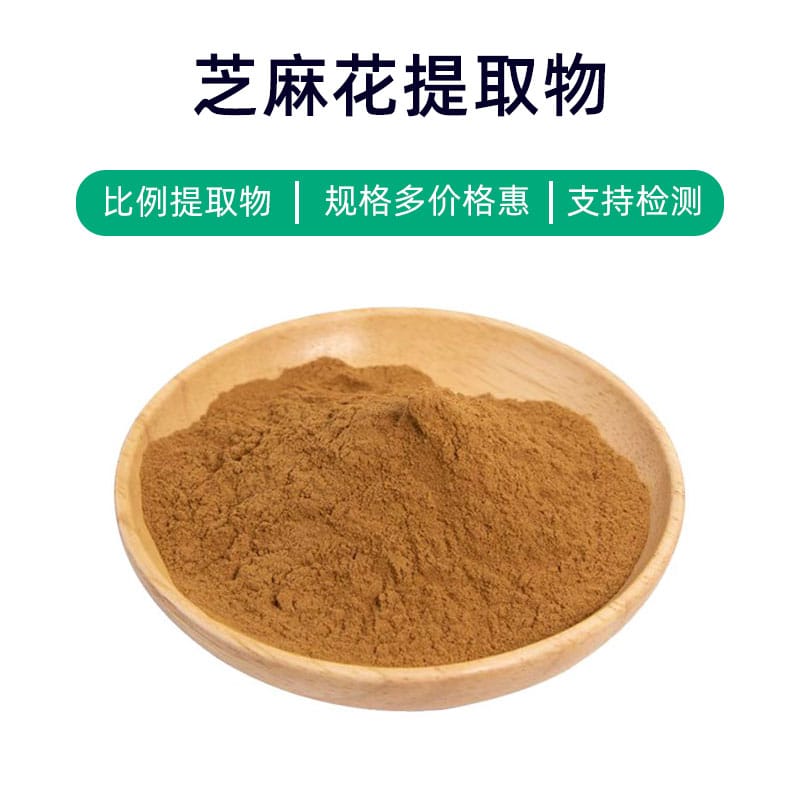



Sesame Flower Extract Product Parameters
Sesame Flower Extract Product Introduction
Sesame flower extract is a natural plant extract derived from the flowering part of sesame, rich in nutritional components and various benefits. Common main ingredients include sesamin, sesame oleic acid, and sesame glycosides. Its primary benefits and applications are as follows:
- Nutritional Health: Sesame flower extract is rich in various nutrients, such as vitamin E and unsaturated fatty acids, which help protect cell membranes, regulate blood lipids, and benefit cardiovascular health.
- Antioxidant Effects: Sesame flower extract contains a wealth of antioxidants, including anthocyanins, which can neutralize free radicals, delay aging, and maintain skin health.
- Anti-inflammatory and Antimicrobial: Sesame flower extract has certain anti-inflammatory and antimicrobial properties that aid in improving skin inflammation and preventing infections.
- Application Areas: Sesame flower extract is widely applied in dietary supplements, skincare products, and food. In dietary supplements, it is commonly used in cardiovascular health and anti-aging products; in skincare, it can be used for antioxidant and skin repair products; in food, it can act as a natural colorant and flavor enhancer.
In summary, sesame flower extract is a natural plant-derived ingredient with multiple benefits, broadly used in dietary supplements, skincare products, and food, and is favored by consumers.
Sesame Flower Extract Production Process
The production process of sesame flower extract typically includes the following key steps:
- Raw Material Preparation: High-quality sesame flowers are needed for extraction, typically harvested during the flowering period to ensure freshness and nutritional content.
- Cleaning: The harvested sesame flowers must be cleaned to remove impurities and pesticide residues, ensuring the hygiene and safety of the raw material.
- Crushing: The cleaned sesame flowers are crushed, usually through mechanical or microwave methods, processing them into powder or granules.
- Solvent Extraction: The crushed sesame flower samples are soaked in suitable solvents, such as ethanol or methanol, to extract effective components.
- Concentration and Evaporation: The extract obtained is concentrated and evaporated to remove excess solvent, yielding concentrated sesame flower extract.
- Filtration and Purification: The concentrated extract undergoes filtration and purification to remove impurities, improving its purity and quality.
- Freeze-Drying: The purified extract is freeze-dried to turn it into a powder form, facilitating storage and use.
- Packaging and Storage: Finally, the freeze-dried sesame flower extract is packaged in moisture-proof, light-proof, and airtight materials and stored in a cool, dry place, avoiding direct sunlight and high temperatures.
Through these processes, high-quality sesame flower extract can be obtained, suitable for various applications in dietary supplements, skincare products, and food.
Effects, Benefits, and Side Effects of Sesame Flower Extract
Sesame flower extract, derived from the sesame flower, offers a range of benefits and effects, primarily including the following aspects:
- Antioxidant Properties: Sesame flower extract is rich in antioxidants, such as polyphenols and vitamin C, which can neutralize free radicals, reduce oxidative stress on cells, protect cells from oxidative damage, and delay aging.
- Anti-inflammatory Properties: Components like sesamin in sesame flower extract possess certain anti-inflammatory effects, helping to alleviate inflammation and symptoms associated with it.
- Vascular Constriction Inhibition: Research shows that certain components in sesame flower extract can inhibit vascular constriction, aiding in lowering blood pressure and improving cardiovascular health.
- Blood Circulation Promotion: Sesame flower extract promotes blood circulation, enhances microcirculation function, and improves blood supply, helping relieve symptoms of coronary heart disease and angina.
- Antibacterial Properties: Active components in sesame flower extract have antibacterial properties, helping to inhibit the growth of bacteria, fungi, and viruses, which is beneficial for preventing infections and inflammation.
- Liver Protection: Some components of sesame flower extract offer protective effects on the liver, promoting the repair and regeneration of liver cells and reducing liver damage.
- Digestive Aid: Sesame flower extract has protective effects on the gastrointestinal tract, promoting secretion of digestive juices, increasing appetite, and improving digestive function.
While sesame flower extract has many benefits, individual differences and appropriate dosages should be considered. Long-term or excessive use may lead to side effects such as gastrointestinal discomfort or skin allergies; therefore, it is recommended to use it under the guidance of a doctor or professional.
Application Scenarios and Dosage of Sesame Flower Extract
Sesame flower extract has wide applications in the medical, food, and cosmetics fields. Below is a detailed introduction to its applications in these areas:
- Applications in Medicine:
- Antioxidant Health: As a dietary supplement, sesame flower extract is rich in antioxidants, helping to prevent diseases caused by oxidative stress, such as cardiovascular diseases and cancer. The recommended dosage is typically 100-200 mg per day.
- Blood Pressure and Lipid Reduction: Components like sesamin can help regulate blood pressure and lower cholesterol and blood lipids, suitable for patients with hypertension and hyperlipidemia. The recommended dosage is generally 100-200 mg per day.
- Anti-inflammatory and Antibacterial: Sesame flower extract has certain anti-inflammatory and antibacterial properties, suitable for treating inflammatory diseases and infections. The recommended dosage is usually 100-200 mg per day.
- Applications in Food:
- Food Preservation: Sesame flower extract has antioxidant and antibacterial properties, useful for food preservation.
- Flavoring and Enhancing: It has a unique aroma and flavor that can be used for flavoring and enhancing.
- Nutritional Health: Rich in various nutrients, it can be used in health foods.
- Applications in Cosmetics:
- Moisturizing and Hydrating: Sesame flower extract is rich in moisturizing factors, suitable for moisturizing skincare products.
- Antioxidant: It helps to delay skin aging due to its antioxidant properties.
- Anti-inflammatory and Soothing: It has certain anti-inflammatory and soothing effects, suitable for sensitive skin.
Overall, sesame flower extract has excellent prospects for application in medicine, food, and cosmetics. However, specific usage and dosage should be determined based on product formulation and individual conditions, ideally under professional guidance.
Overview of the Source Plant, Distribution, and Growth Environment of Sesame Flower Extract
The primary source of sesame flower extract is sesame (scientific name: Sesamum indicum L.). Below are detailed information about the source plant, its distribution, and growth environment:
- Sesame Plant Overview:
Sesame (Sesamum indicum L.) belongs to the Pedaliaceae family and is an annual or perennial herbaceous plant, growing about 50-150 cm tall with a well-developed root system. The stems are upright and branching, with oval or elongated leaves that are smooth on the surface and have wavy edges. The flowers are pale purple or white with trumpet-shaped petals and a distinct aroma. - Distribution:
Sesame is native to East Africa and is now widely distributed across Asia, Africa, and the Americas. In Asia, especially in countries like China, India, Myanmar, and Bangladesh, sesame is grown extensively and is one of the important economic crops. - Growth Environment:
Sesame plants are highly adaptable and thrive in warm, humid climates with high light and soil quality requirements. They generally grow in low hills and areas below 500 meters in elevation, preferring well-drained soil with a varying pH level. While sesame plants are drought-resistant, they still require adequate rainfall or irrigation during their growth period. - Sesame Flower Growth Requirements:
The growth of sesame flowers requires suitable temperature and light conditions, generally thriving in warm seasons. Sesame flowers need ample sunlight and well-drained, fertile soil. During the growth period, a moderate supply of water and appropriate fertilization are key to ensuring healthy growth.
Overall, sesame plants are highly adaptable with relatively flexible growth requirements; however, they thrive best in warm, humid climates with plenty of sunlight. Under suitable growth conditions, sesame flowers can flourish, producing high-quality seeds and sesame flower extract.
Processing and Storage of Sesame Flower Extract
The processing and storage of sesame flower extract are critical for ensuring its quality and stability.
- Processing:
Initially, cleaning and preliminary handling of sesame flowers are performed to remove impurities and contaminants. Then the extraction process is conducted, commonly through methods like water extraction, alcohol extraction, or supercritical fluid extraction. The extracted sesame flower extract undergoes filtration, concentration, and drying to ensure the quality and purity of the final product. - Storage:
Sesame flower extract should be stored in a cool, dry, well-ventilated place, avoiding direct sunlight and damp environments. Sealed containers are recommended to prevent exposure to air and moisture, thus preventing oxidation and degradation. Regular checks of storage conditions and product status are essential to ensure the quality remains stable.
Proper processing and storage methods can effectively protect the active components and stability of sesame flower extract, extending its shelf life and maintaining its efficacy.

Monica Sun is a seasoned expert in the plant extraction industry with over a decade of experience in research and production. She specializes in the extraction and purification of plant active ingredients, focusing on driving innovation in natural product applications. Monica has participated in the development of multiple functional plant extracts, delivering high-value natural raw material solutions for the health food, pharmaceutical, and dietary supplement sectors.