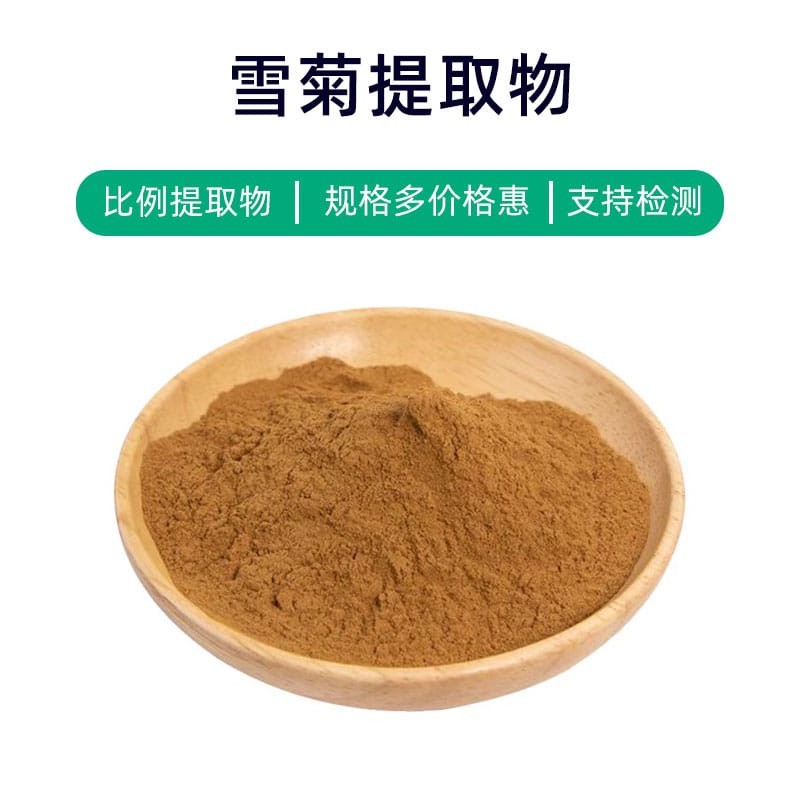



Snow Chrysanthemum Extract Product Introduction
Snow chrysanthemum extract is a natural plant extract derived from snow chrysanthemum (Chrysanthemum nivium). Its main components include flavonoids, volatile oils, polysaccharides, and terpenoids, which provide various benefits and applications.
First and foremost, snow chrysanthemum extract is rich in flavonoids, offering significant antioxidant properties that can neutralize free radicals, slow down aging, and protect cells from oxidative damage. Its volatile oil components possess anti-inflammatory and antibacterial effects, aiding in the relief of inflammation and the prevention of infections. Additionally, the polysaccharides found in snow chrysanthemum extract have immune-modulating functions that can enhance the body's immune defense.
In terms of applications, snow chrysanthemum extract is commonly utilized in health products, pharmaceuticals, and cosmetics. In health supplements, it is often crafted into products aimed at antioxidant and anti-aging benefits, helping to improve skin quality, boost immune function, and maintain overall health. In pharmaceuticals, snow chrysanthemum extract can be made into oral liquids or capsules for regulating blood sugar, lowering lipids, and providing pain relief for inflammation. In cosmetics, it is frequently used in skincare products for its moisturizing, soothing, and antioxidant properties, helping to enhance skin condition and delay skin aging.
In summary, snow chrysanthemum extract, as a natural plant product, exhibits various effects such as antioxidant, anti-inflammatory, and immune regulation, and is widely applied in health products, pharmaceuticals, and cosmetics, providing benefits for health and beauty.
Snow Chrysanthemum Extract Production Process
The production process for snow chrysanthemum extract typically includes the following steps:
- Raw Material Preparation: Fresh snow chrysanthemum flowers are selected as the extraction material. These flowers should be uncontaminated and harvested when fully bloomed to ensure a rich source of active components.
- Cleaning and Processing: The harvested flowers need to be washed and processed to remove impurities and surface dirt. Following this, initial processing methods such as drying or dehydrating are applied to prepare for subsequent extraction.
- Extraction Process: Common methods of extraction include water extraction, ethanol extraction, or supercritical fluid extraction. During extraction, the active components of snow chrysanthemum dissolve into the extraction solvent, forming an extract solution. Extraction conditions such as temperature, pressure, and time must be strictly controlled to ensure extraction efficiency and quality.
- Concentration and Separation: After extraction, concentration and separation steps are needed. Methods like evaporation or reduced-pressure concentration are usually employed to remove the solvent, yielding a concentrated extract. Subsequently, operations like filtration or centrifugation are performed to isolate the target components.
- Refinement and Purification: The resulting extract may contain impurities or undesired components, necessitating a refining and purification process. Common methods include column chromatography and gel filtration to increase the purity and quality of the extract.
- Drying and Pulverizing: Finally, the refined extract undergoes drying to eliminate residual solvent and reduce moisture content. The dried extract is then pulverized or milled into a powdered form of snow chrysanthemum extract.
Through these procedural steps, high-quality snow chrysanthemum extract is produced for applications in pharmaceuticals, health products, and cosmetics.
Effects and Side Effects of Snow Chrysanthemum Extract
Snow chrysanthemum extract is a common natural plant extract with various effects and benefits:
- Antioxidant Effects: Rich in natural antioxidants like flavonoids and vitamin C, snow chrysanthemum extract can neutralize free radicals, slow down cellular aging, and protect cells from oxidative damage.
- Anti-inflammatory Effects: Studies have shown that snow chrysanthemum extract possesses certain anti-inflammatory properties that can inhibit the release of inflammatory factors, alleviating inflammation and serving as adjunct treatment for inflammatory diseases.
- Immune Regulation: The active ingredients in snow chrysanthemum extract can modulate immune system functions, enhancing the body's immunity and resistance to infections and diseases.
- Antibacterial Effects: Some studies indicate that snow chrysanthemum extract exerts certain inhibitory effects against specific bacteria and fungi, aiding in the prevention and treatment of bacterial and fungal infections.
- Liver Protection: Certain components in snow chrysanthemum extract protect the liver, reducing liver damage and improving liver function, providing some protective effects against hepatitis and fatty liver disease.
- Anti-diabetic Effects: Some components in snow chrysanthemum extract can lower blood sugar levels, improve insulin sensitivity, and have an adjunct therapeutic effect for diabetes.
- Anti-allergic Effects: Some active ingredients found in snow chrysanthemum extract exhibit anti-allergic properties, reducing allergic reactions and alleviating symptoms of allergic diseases.
- Skincare and Beauty Benefits: Rich in various nutrients, snow chrysanthemum extract is packed with moisturizing, nourishing, anti-wrinkle, and whitening properties, making it suitable for cosmetics to improve skin texture and delay skin aging.
As a natural plant extract, snow chrysanthemum extract is generally considered safe, but individual differences should be taken into account, as allergic reactions or adverse effects may occur. It is best to conduct a skin sensitivity test before use and to follow the advice of a healthcare professional.
Application Scenarios and Dosage of Snow Chrysanthemum Extract
Snow chrysanthemum extract has widespread applications in the fields of medicine, food, and cosmetics. Below are details regarding its application scenarios and dosages in these three domains:
- Medical Applications:
- Anti-inflammatory and Antioxidant: Snow chrysanthemum extract is commonly formulated into anti-inflammatory and antioxidant medications for the adjunct treatment of arthritis and skin inflammations. The typical dosage is 20-50 mg taken orally per day, adjusted as per doctor's recommendations.
- Immune Modulation: This extract can be used in the preparation of immune modulators to enhance overall immune function and prevent infections. The usual dosage is 30-100 mg daily, adjusted according to individual circumstances.
- Food Applications:
- Food Additive: Snow chrysanthemum extract can serve as a food additive, enhancing nutritional value and functionality (such as antioxidant properties, preservation, and flavor enhancement). The dosage varies based on the types of food and production processes while adhering to food safety standards.
- Nutritional Supplements: This extract can be formulated into health products like dietary supplements and functional beverages for boosting immunity and delaying aging. The typical dosage ranges from 20-50 mg taken orally per day, adjusted according to the product instructions.
- Cosmetic Applications:
- Skincare Products: Snow chrysanthemum extract is frequently used in skincare products for its moisturizing, antioxidant, and anti-aging effects, making it suitable for creams, lotions, and masks. Dosage should follow the product formulation and intended efficacy.
- Cosmetic Additives: It can also function as an additive in cosmetics to enhance properties such as moisturization and antioxidant benefits. The typical dosage should comply with cosmetic safety standards and be used according to the product formulation.
Overall, snow chrysanthemum extract is extensively applied in the fields of medicine, food, and cosmetics. However, it is crucial to follow the product instructions or medical advice while controlling dosages to ensure safe and effective use.
Snow Chrysanthemum Plant Introduction, Distribution, and Growth Environment
Snow chrysanthemum (scientific name: Saussurea involucrata), also known as snow lotus or snow grass, is a high-altitude plant from the Asteraceae family. Here are details regarding the source plant, its distribution, and growth environment.
- Source Plant:
Snow chrysanthemum is a perennial herbaceous plant primarily utilizing its rhizome as the medicinal part. Its rhizome is robust, cylindrical, yellow-brown on the outside, hard in texture, and rich in medicinal components. The leaves of snow chrysanthemum are broad, often arranged in a rosette pattern, hairy on the surface, with a beautiful white underside. - Distribution:
Snow chrysanthemum mainly grows in the high mountainous regions of Asia, particularly in the Himalayas, Pamir Plateau, and Altai Mountains. In China, it is widely distributed on the Tibetan Plateau and in regions like Xinjiang, Tibet, and Gansu at altitudes above 3,000 meters. - Growth Environment:
Snow chrysanthemum thrives in harsh high-altitude environments, typically found at elevations above 3,000 meters in cold mountain areas, often seen in alpine meadows, rocky slopes, and crevices. The characteristics of its growth environment include:
- Low Temperatures: Due to high altitudes, the climate is cold, with extremely harsh winters and cool summers.
- Abundant Sunshine: The sun-drenched high mountain areas allow snow chrysanthemum to absorb ample sunlight for photosynthesis.
- Moderate Humidity: The growth environment possesses moderate humidity, usually obtaining sufficient moisture during the snowmelt season and rainy periods.
In conclusion, snow chrysanthemum is a plant adapted to high-altitude, cold mountain environments, flourishing despite challenging conditions while accumulating a wealth of medicinal components, which is why it is extensively utilized in the preparation of pharmaceuticals and health products.
Processing and Storage of Snow Chrysanthemum Extract
The processing of snow chrysanthemum extract typically includes the following steps: first, the snow chrysanthemum plants are gathered, with the rhizome being the main medicinal part; then, an initial cleaning and handling process is done to remove impurities and dirt; next, grinding, soaking, and other methods are employed to extract the active ingredients; lastly, filtration, concentration, and drying steps yield the finished product.
For storage, snow chrysanthemum extract should be kept in a cool, dry, and well-ventilated environment, avoiding direct sunlight and humidity to prevent caking and mold. Additionally, it should be stored in a sealed container to prevent moisture or external odors from contaminating it, ensuring the stability and effectiveness of its medicinal components.

Monica Sun is a seasoned expert in the plant extraction industry with over a decade of experience in research and production. She specializes in the extraction and purification of plant active ingredients, focusing on driving innovation in natural product applications. Monica has participated in the development of multiple functional plant extracts, delivering high-value natural raw material solutions for the health food, pharmaceutical, and dietary supplement sectors.