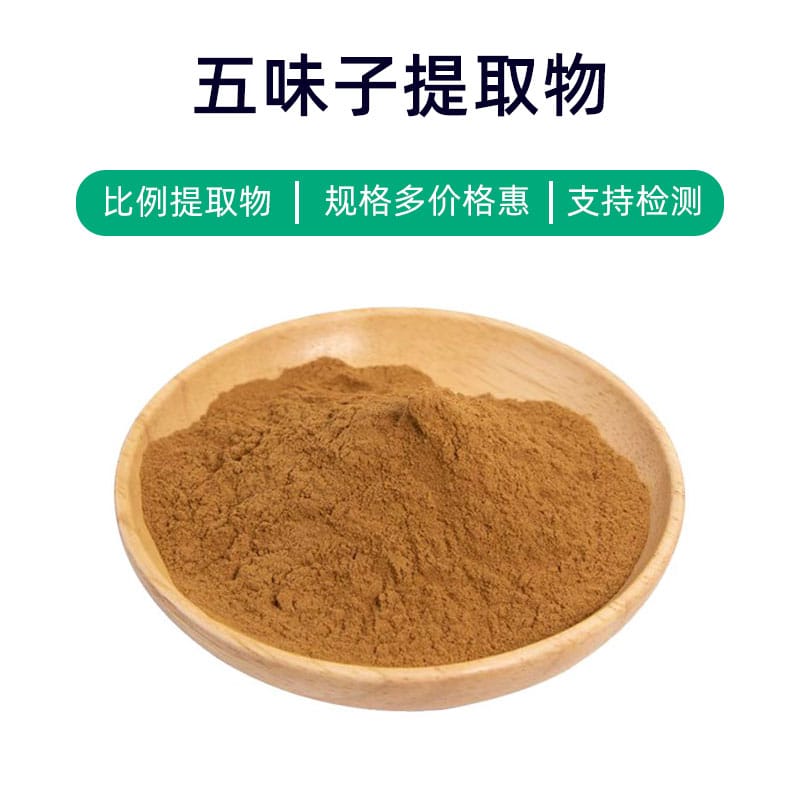



Schisandra Extract Product Introduction
Schisandra extract is a natural plant extract derived from Schisandra fruit, primarily composed of various active ingredients like schisandrin and schisandrol. These components provide Schisandra extract with a range of benefits and uses.
First, Schisandra extract finds extensive use in the pharmaceutical field. It helps regulate liver function, enhances immunity, and possesses antioxidant properties, making it suitable for formulating therapeutic drugs for liver diseases, immune modulators, and antioxidants.
Second, Schisandra extract is utilized in health supplements. People often convert it into supplements for bodily regulation, enhancing physical strength, and improving resistance and immunity, promoting overall health.
Moreover, Schisandra extract is commonly used in the food industry. It's employed as a food additive to enhance flavor and taste, allowing for products like Schisandra-flavored beverages and candies.
Lastly, in the cosmetics industry, Schisandra extract is frequently found in skincare and beauty products. Its antioxidant and anti-aging properties make it a popular ingredient for wrinkle reduction, skin tightening, and improving skin glow and elasticity.
In summary, Schisandra extract, as a natural plant extract, is rich in active components and has various benefits. It holds promising applications across the pharmaceutical, health supplement, food, and cosmetics sectors.
Schisandra Extract Production Process
The production of Schisandra extract typically involves the following steps:
- Harvesting Schisandra Fruit: Mature Schisandra fruit is collected, usually during its ripe stage. Immediate processing is crucial to prevent damage and decline in quality.
- Cleaning and Processing: The harvested fruit undergoes cleaning and processing to remove impurities and dirt, keeping the fruit clean.
- Grinding and Crushing: After cleaning, the Schisandra fruit is ground and crushed into a powder form to prepare for the extraction process.
- Solvent Extraction: The crushed fruit is soaked with an appropriate solvent (like ethanol or water) to dissolve the active ingredients, forming an extract liquid.
- Concentration: The extract liquid is concentrated to remove the solvent, achieving the necessary concentration of Schisandra extract.
- Filtration and Purification: The concentrated extract undergoes filtration and purification to eliminate impurities and unwanted components, ensuring the purity and quality of the extract.
- Drying: The purified extract liquid is dried to convert it into powder form for packaging and storage.
- Packaging and Storage: Finally, the dried Schisandra extract is packaged, typically in sealed containers, and stored in a cool, dry place, avoiding direct sunlight and moisture to maintain quality and stability.
Through these processes, high-quality Schisandra extract is obtained for use in pharmaceuticals, health supplements, food, and cosmetics.
Schisandra Extract Efficacy and Side Effects
Schisandra extract is derived from Schisandra fruit and offers various benefits, primarily including:
- Regulating Liver Function: Schisandra extract is widely used to enhance liver function, aiding in metabolism and detoxification, reducing liver burden, and protecting liver health.
- Boosting Immunity: Rich in bioactive components, Schisandra extract strengthens the immune system, helping the body resist infections and diseases.
- Antioxidant Effects: Schisandra extract contains multiple antioxidants that effectively eliminate free radicals, slow down cellular aging, and protect body tissues from oxidative damage.
- Enhancing Mental State: Schisandra extract has neurological regulatory effects, influencing the central nervous system to improve mood, boost mental energy, and alleviate anxiety and stress.
- Improving Sleep Quality: Schisandra extract is believed to enhance sleep quality, aiding in alleviating insomnia and anxiety, promoting restful sleep.
In addition to these primary benefits, Schisandra extract is also used for respiratory system support, skin health improvement, and digestive health. Overall, as a natural plant extract, Schisandra has positive effects on human health.
As for side effects, current research has not confirmed significant adverse effects of Schisandra extract, but individual differences and allergic reactions should be considered. It should be used as directed to avoid excessive intake, especially among pregnant women, nursing mothers, and children, and should follow medical advice.
Schisandra Extract Application Scenarios and Dosage
As a natural plant extract, Schisandra extract has broad applications in pharmaceuticals, food, and cosmetics.
- Pharmaceutical Applications:
- Schisandra extract is used for preparing various traditional Chinese medicine compounds, such as Schisandra oral solutions and granules, aimed at regulating liver function and boosting immunity.
- Dosage: For oral use, typically 5-10 grams per dose, which can be adjusted based on medical advice and individual conditions. For topical application, it can be formulated into ointments or tinctures to be applied to affected areas.
- Food Applications:
- In the food industry, Schisandra extract serves as a food additive to enhance taste and flavor, such as in the production of Schisandra-flavored pastries, beverages, and candies.
- Dosage: Add to food products as required by the recipe, generally following product formulation guidelines.
- Cosmetics Applications:
- Schisandra extract is commonly used in skincare and beauty products for its antioxidant, anti-aging, and skin balancing properties, suitable for creams, serums, and masks.
- Dosage: Can be directly added to cosmetic products or used in specialized formulations, following product instructions.
- Dosage Control:
- The dosage of Schisandra extract should be determined based on the specific product formulation and intended use. Generally, it should be regulated according to production processes and formulation requirements to ensure safety and efficacy.
- In pharmaceutical use, dosage should be adjusted as per medical guidance to avoid adverse reactions.
- In food and cosmetic applications, compliance with relevant regulations is essential to ensure product safety and quality.
In summary, Schisandra extract, as a natural plant extract, has extensive applications in pharmaceuticals, food, and cosmetics. It is essential to use and control its application based on product characteristics and intended uses to ensure safety and effectiveness.
Schisandra Extract Source Plant Introduction, Distribution, and Growth Environment
Schisandra, scientifically known as Schisandra chinensis (Turcz.) Baill., is an evergreen vine belonging to the Schisandraceae family. Below is an introduction to the source plant of Schisandra extract, including its distribution and growth environment:
- Plant Introduction:
- Schisandra is an evergreen, woody vine with dark gray bark that splits longitudinally. The leaves are elongated and elliptical, arranged oppositely, with blunt teeth along the edges—deep green on top and light green underneath.
- The flowers are small, green, and arranged in umbrella-shaped clusters in leaf axils, with separate male and female flowers.
- The fruit is a compound drupe, round in shape, approximately 6 mm in diameter, with a red or purplish outer skin that turns black when ripe, and bright red pulp.
- The fruit of Schisandra is known for its five distinct flavors: sweet, sour, astringent, bitter, and spicy, hence the name "Schisandra."
- Distribution:
- Schisandra is widely distributed, mainly in Northeast Asia, including the Russian Far East, Northeast China, the Yangtze River basin, and regions like Korea and Japan.
- In China, Schisandra is found in mountainous and hilly areas of the Changbai Mountains, Xiaoxing'an Mountains, and Daxing'an Mountains, with the Changbai Mountain variety being the most famous.
- Growth Environment:
- Schisandra thrives in mild and humid environments, is not very demanding in terms of soil, shows strong adaptability, but has a high light requirement.
- It usually grows on slopes, valleys, forest edges, ravines, and damp areas under trees, with a wide altitude range, capable of growing up to about 2000 meters above sea level.
- Cultivation and Propagation:
- Schisandra can also be cultivated artificially, with suitable cultivation areas featuring favorable environmental conditions, loose soils, and good drainage.
- When cultivating, it is essential to maintain optimal moisture and light conditions, apply fertilizers regularly, and carry out appropriate pruning to promote growth.
In summary, Schisandra is a broadly distributed evergreen vine primarily found in Northeast Asia. It has a suitable and adaptable growth environment, flourishing both in the wild and under cultivation. Its fruit has rich medicinal value and is often used in traditional medicine or for extracting plant components for pharmaceuticals and health products.
Schisandra Extract Processing and Storage
The processing of Schisandra extract generally involves the following steps: harvesting, cleaning, drying, crushing, solvent extraction, concentration, drying, and packaging. After harvesting, the Schisandra fruit must be cleaned and then appropriately dried to reduce moisture content. Next, the dried fruit is crushed into powder, followed by solvent extraction to obtain the Schisandra extract. Finally, the extract is concentrated and dried to create either a powder or liquid form, and then packaged. For storage, it should be kept in a cool, dry, and ventilated environment, avoiding direct sunlight and humidity to prevent spoilage and maintain the stability of its quality and active ingredients.

Monica Sun is a seasoned expert in the plant extraction industry with over a decade of experience in research and production. She specializes in the extraction and purification of plant active ingredients, focusing on driving innovation in natural product applications. Monica has participated in the development of multiple functional plant extracts, delivering high-value natural raw material solutions for the health food, pharmaceutical, and dietary supplement sectors.