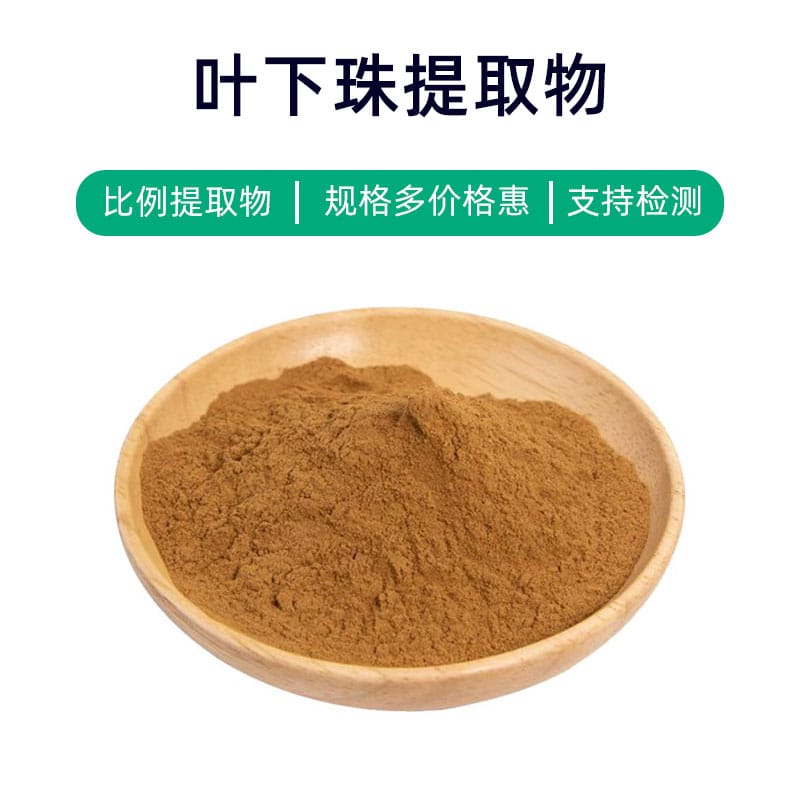



Leaves Extract of Pearl Product Description
Leaves Extract of Pearl is a natural botanical extract derived from the Pearl Leaf plant, primarily containing flavonoids, polysaccharides, and terpenes. These components have been extensively researched and are believed to possess various bioactive properties and benefits.
Main Benefits Include:
- Antioxidant Effects: The extract is rich in flavonoids, which have strong antioxidant activity that can neutralize free radicals and protect cells from oxidative damage.
- Anti-inflammatory Effects: Some studies indicate that the active components in the extract can inhibit the production of inflammatory factors, providing certain anti-inflammatory benefits and helping to alleviate inflammation.
- Skin Care Effects: It is commonly used in cosmetics as a skincare ingredient that hydrates the skin, enhances elasticity, reduces the appearance of fine lines and wrinkles, and makes skin feel smoother.
- Immune Regulation: The polysaccharides have immune-regulating properties that can enhance the body's immune function, boost resistance, and help prevent infections and illnesses.
In terms of applications, Leaves Extract of Pearl is widely utilized in the fields of medicine, health products, and cosmetics. In medicine, it is often used to formulate drugs with antioxidant, anti-inflammatory, and immune-regulating effects; in health products, it is used for producing anti-aging and beauty-enhancing supplements; in cosmetics, it is frequently included in skincare products, masks, emollients, etc., to improve skin texture, reduce wrinkles, and increase skin elasticity.
Leaves Extract of Pearl Production Process
The production process of Leaves Extract of Pearl typically includes several key steps:
- Raw Material Preparation: Begin by collecting fresh Pearl Leaf plants, followed by initial cleaning and removal of impurities to ensure quality and purity.
- Grinding: The cleaned plants are ground, typically using a grinder or ultrasonic methods, which help break down plant cells for easier extraction of components.
- Extraction Process: Extraction is one of the critical steps in producing the extract. Common methods include water extraction, ethanol extraction, and supercritical fluid extraction. Suitable solvents and extraction conditions are used to effectively extract active components from the plants.
- Filtration and Concentration: The resulting solution needs to be filtered and concentrated to remove impurities and solvents, achieving the desired concentration. Common concentration methods include vacuum concentration and spray drying.
- Purification and Separation: The concentrated extract is then purified and separated using methods such as gel filtration, partition extraction, or column chromatography to obtain a higher purity of the extract.
- Drying and Grinding: Finally, the purified extract is dried to remove any remaining solvents and moisture and then ground into a powder for easier packaging and application.
Throughout the production process, strict control over the manufacturing environment and process parameters is necessary to ensure the quality and stability of the extract. Compliance with relevant production standards and regulations is also critical to ensure product safety and reliability.
Leaves Extract of Pearl Efficacy and Side Effects
Leaves Extract of Pearl is a commonly used natural botanical extract with various benefits, mainly including:
- Antioxidant Effects: Rich in natural antioxidants like polyphenols and flavonoids, the extract effectively neutralizes free radicals, slows cellular oxidative damage, and protects cells from oxidative stress, promoting cell health.
- Anti-inflammatory Effects: Active components in the extract have significant anti-inflammatory effects, inhibiting the release of inflammatory mediators and alleviating tissue inflammation, which can benefit conditions like rheumatoid arthritis and skin inflammation.
- Blood Sugar Regulation: Some components of the extract have been shown to help regulate blood sugar levels, improving insulin sensitivity, which may provide supportive treatment for diabetic patients.
- Digestive Support: The extract contains dietary fibers and plant enzymes that promote digestive secretion, enhance digestive function, and improve gastrointestinal health, helping prevent and relieve indigestion.
- Sleep Improvement: Certain active components in the extract have calming effects, helping to regulate the nervous system, alleviate anxiety and tension, improve sleep quality, and reduce insomnia occurrences.
Typically, Leaves Extract of Pearl does not present significant side effects when used as a natural botanical extract. However, individual differences exist; a small number of people might experience allergic reactions or digestive discomfort. Therefore, caution is advised when using it, and one should stop usage and consult a doctor immediately if any adverse reactions occur.
In summary, as a natural botanical extract, Leaves Extract of Pearl offers various benefits and can be utilized in food, health products, and cosmetics; however, caution is still advised, following the product instructions.
Leaves Extract of Pearl Application Scenarios and Dosage
Leaves Extract of Pearl is utilized in pharmaceuticals, food, and cosmetics, with a broad range of applications. Here are the key applications, along with usage instructions and dosages:
- Pharmaceutical Applications:
- Anti-inflammatory and Pain Relief: The extract can be used in the formulation of anti-inflammatory and pain relief products, such as ointments and patches.
- Antimicrobial and Disinfectant: Its natural antimicrobial properties make it suitable for oral care products and external antiseptics.
- Gastrointestinal Regulation: It supports digestion and enhances gastrointestinal function, making it useful for formulating gastrointestinal health products or supplements.
- Food Applications:
- Nutritional Supplements: Rich in various nutrients, the extract can be formulated into nutritional supplements, such as oral liquids and capsules, to supplement nutrition and boost immunity.
- Seasonings: The extract has a distinct flavor, making it suitable for food seasonings, like sauces and flavor enhancers.
- Cosmetic Applications:
- Skincare Products: Due to its rich antioxidant content, it can be used in formulating antioxidant skincare products, such as creams and masks, to help delay skin aging and maintain skin health.
- Cleansing Products: With its cleansing properties, it can be used in formulating face washes and creams to help remove skin impurities and keep the skin fresh.
Usage Instructions and Dosage:
- Pharmaceutical Products: Follow the recommendations of a doctor or the medication’s instructions. Typically, topical products can be applied to the affected area, while oral products should be taken according to the specified dosage.
- Food Products: As a supplement, follow the dosage indicated on the product packaging or as suggested by a healthcare professional.
- Cosmetics: Use according to the product’s instructions, generally applying to clean skin and gently massaging until fully absorbed.
When using Leaves Extract of Pearl, it is essential to adhere to the product instructions; if discomfort or allergic reactions occur, it is advisable to stop using the product and consult a healthcare professional.
Leaves Extract of Pearl Source Plant Introduction, Distribution, and Growing Environment
Leaves Extract of Pearl (scientific name: Ruscus aculeatus), also known as Butcher's Broom, belongs to the lily family. It is a perennial evergreen shrub with flat flower stems and needle-like leaves. Below is an introduction to the plant’s source, distribution, and growing environment.
Plant Source:
The Pearl Leaf is native to the Mediterranean coastal regions of Europe, primarily found in Western Europe, Mediterranean countries, and North Africa. Today, due to its medicinal and horticultural value, it has been introduced to temperate regions worldwide, including North America, Asia, and Australia.
Distribution:
- Europe: The original natural distribution includes Mediterranean coastal regions such as Spain, France, Italy, and Greece.
- North Africa: It is also widely distributed in North Africa, including countries like Morocco and Algeria.
- Introduced Regions: The Pearl Leaf has been introduced to North America (United States, Canada), Asia (Japan, China), and Australia.
Growing Environment:
The Pearl Leaf prefers cool and moist environments, often found in slopes, forested areas, shrublands, and wetlands. It is not picky about soil conditions, thriving in rocky, sandy, and clay soils. The plant is quite cold-resistant and adaptable to various climates and soil types, but prolonged exposure to intense sunlight can cause leaf desiccation.
In general, the Pearl Leaf is a highly adaptable plant and can be found in various regions due to its wide environmental tolerance.
Leaves Extract of Pearl Processing and Storage
The processing of Leaves Extract of Pearl primarily involves the following steps: first, fresh Pearl Leaf plants are harvested and cleaned to remove impurities, then ground or crushed to extract active ingredients, and finally, through solvent extraction, infusion, or other methods, the Leaves Extract of Pearl is obtained.
For storage, the extract should typically be kept in a dry, cool, well-ventilated environment to avoid direct sunlight and high temperatures. Additionally, it should be stored in sealed containers to prevent moisture and external contaminants from affecting its stability and quality.

Monica Sun is a seasoned expert in the plant extraction industry with over a decade of experience in research and production. She specializes in the extraction and purification of plant active ingredients, focusing on driving innovation in natural product applications. Monica has participated in the development of multiple functional plant extracts, delivering high-value natural raw material solutions for the health food, pharmaceutical, and dietary supplement sectors.