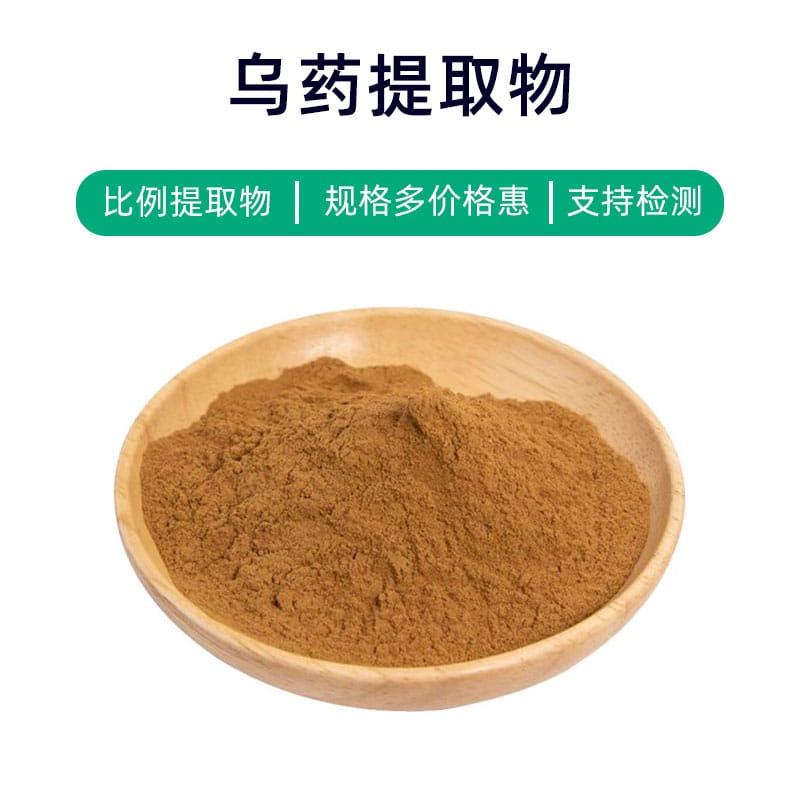



Wu Yao Extract Product Introduction
Wu Yao Extract is a natural plant extract obtained from the Wu Yao fruit, primarily composed of eugenol, isoeugenol, and quercetin. It is widely used in traditional Chinese medicine, demonstrating benefits in the following areas:
- Digestive Regulation: Wu Yao Extract warms the midsection, promotes Qi flow, and aids spleen and dampness health, improving gastrointestinal function and alleviating discomfort.
- Digestive Promotion: It stimulates gastrointestinal motility and increases digestive fluid secretion, assisting in food digestion and alleviating indigestion issues.
- Invigorating Blood Circulation: The extract helps improve blood circulation and alleviates pain and discomfort associated with stagnant blood.
Wu Yao Extract is utilized as a medicinal ingredient in Chinese medicine, either on its own or in combination with other herbs to enhance efficacy. It is often used to address gastrointestinal discomfort, indigestion, and stomach pain, as well as to regulate blood circulation and improve microcirculation. Overall, Wu Yao Extract holds significant value in traditional medicine.
Wu Yao Extract Production Process
The production process of Wu Yao Extract typically involves the following main steps:
- Raw Material Preparation: Select fresh, high-quality Wu Yao fruit, wash, and remove impurities to ensure cleanliness and integrity.
- Grinding and Crushing: Grind or crush the cleaned Wu Yao fruit to increase extraction efficiency and surface area for the extraction process.
- Solvent Extraction: Use suitable solvents (such as ethanol or water) to extract from Wu Yao fruit. Common extraction methods include steeping or repetitive infusion, controlling extraction conditions for optimal temperature, time, and pH to ensure quality.
- Concentration and Evaporation: Evaporate and concentrate the mixed solution to remove most moisture from the solvent, yielding a concentrated liquid.
- Precipitation and Separation: Control temperature or add appropriate precipitating agents to allow insoluble substances in the Wu Yao Extract to settle, then filter to obtain the concentrated extract.
- Drying: Dry the separated concentrated liquid using methods such as spray drying or vacuum drying to achieve a dry extract powder.
- Crushing and Screening: Crush and screen the dried powder to ensure uniformity and fineness.
- Quality Inspection: Conduct quality checks on the final Wu Yao Extract product, including appearance, physicochemical properties, and microbiological indicators, to ensure compliance with relevant standards.
- Packaging and Storage: Package the quality-approved Wu Yao Extract using materials such as aluminum foil bags or plastic containers, sealing and storing them to maintain product quality and stability.
Wu Yao Extract Effects and Side Effects
Wu Yao Extract is a traditional medicinal herb with several key effects and actions:
- Antibacterial and Anti-inflammatory: It has strong antibacterial properties that inhibit the growth of various bacteria and fungi, aiding in the prevention and treatment of infections, such as skin and respiratory infections.
- Anti-inflammatory and Pain Relief: Containing multiple active components, it can relieve pain and discomfort caused by inflammation, making it suitable for aiding rheumatic arthritis, sprains, and fractures.
- Antioxidant: Rich in multiple antioxidants, it helps eliminate free radicals and reduce damage caused by oxidative stress, promoting cell health and delaying aging.
- Digestive Promotion: It stimulates digestive fluid secretion and increases gastrointestinal motility, improving symptoms of indigestion, stomach pain, and diarrhea.
- Immune Regulation: Wu Yao Extract contains biologically active substances that can modulate immune functions, enhancing resistance and helping to prevent illnesses like colds and flu.
- Liver Protection: It demonstrates liver-protecting effects, promoting liver cell regeneration and reducing liver damage, aiding in the prevention and treatment of hepatitis and fatty liver disease.
- Blood Sugar Regulation: Active components in Wu Yao Extract can regulate blood sugar levels, contributing to the control of diabetes and preventing complications.
- Circulation Improvement: It can dilate blood vessels and improve microcirculation, increasing blood flow and alleviating symptoms of angina and hypertension.
Despite its numerous benefits, certain side effects may arise during use, such as allergic reactions and digestive discomfort. It is advisable to follow medical guidance and use proper dosage to avoid unnecessary risks.
Wu Yao Extract Applications and Dosage
Wu Yao Extract finds widespread application in medicine, food, and cosmetics, with specific applications and dosages outlined below:
- Medical Applications:
- Digestive System Disorders: Commonly used for ailments like gastritis, stomach ulcers, and indigestion, typically taken orally in doses of 15-30 grams, decocted into a soup, 2-3 times daily.
- Respiratory System Disorders: As an adjunct treatment for conditions like bronchitis and asthma, it can be used in soups or granules, each dose around 10-20 grams, taken 2-3 times daily.
- Rheumatic Pain: Frequently used for rheumatic pain treatment, it can be applied externally as an ointment or taken as a decoction, with specific methods and dosage depending on the condition and medical advice.
- Food Applications:
- Health Supplements: Used in health products to enhance immunity and promote well-being. Typically processed into capsules or tablets, with dosages as directed on the product label.
- Seasoning: Wu Yao Extract can enhance food flavors and aromas, generally added in small amounts adjusted to specific food types and tastes.
- Cosmetic Applications:
- Skincare Products: With antioxidant and anti-inflammatory properties, it is often included in skincare formulations to combat aging and improve skin conditions. Typically used as one of the ingredients in toners and creams according to product instructions.
- Hair Care Products: Added to shampoos and conditioners to address dandruff and oily hair, promoting hair health. Usage is generally as per product guidelines, usually in concentrations of 1-5%.
Dosages for Wu Yao Extract should be based on specific product instructions or medical advice, and adjustments should not be made independently. During use, individual differences and adverse reactions should be monitored, and any allergic symptoms should prompt immediate discontinuation and medical consultation.
Wu Yao Plant Description, Distribution, and Growth Environment
Wu Yao, known scientifically as Fructus Evodiae, is a common medicinal herb with extracts widely used in medicine, health products, and foods. Below is detailed information about the source plant, its distribution, and growth conditions:
1. Plant Description:
Wu Yao is a perennial deciduous small tree belonging to the Rutaceae family. The plant grows approximately 2-6 meters tall, with dark gray or blackish bark that flakes off in scales when dried. Its crown is multi-branched, and the leaves are compound with a feather-like appearance, often red.
2. Distribution:
Originally from China, Wu Yao is primarily found in East, South, and Central China, particularly common in provinces like Hubei, Hunan, Jiangxi, Fujian, Guangdong, and Guangxi. It can also be found in Korea and Japan.
3. Growth Environment:
Wu Yao thrives in warm, humid environments and is adaptable to various altitudes in valleys, hills, riverbanks, and ditches. It often grows in sparse forests or shrub areas, near streams, rocky slopes, and at the edges of mixed woods. It is not overly demanding on soil but prefers loose, fertile, and well-drained loam.
4. Growth Characteristics:
The growth cycle of Wu Yao is lengthy, with trees living for several decades. Most growth occurs in summer, with fruits ripening in autumn. The medicinal part is the fruit, harvested in autumn when ripe, which turns red or black with a distinctive aroma and bitter taste.
5. Main Cultivation and Gathering Areas:
Hunan, Hubei, and Jiangxi are primary cultivation and gathering areas for Wu Yao, providing suitable climate, soil conditions, and cultural factors for its growth and development. Additional cultivation and harvesting occur in regions like Guangxi and Fujian.
As an important medicinal material, Wu Yao extracts offer extensive medicinal and application value across traditional Chinese medicine, health products, and food industries.
Wu Yao Extract Processing and Storage
The processing of Wu Yao Extract usually includes these steps: first, washing, sun-drying, or drying the Wu Yao fruit; next, grinding and milling to facilitate subsequent extraction; then, using appropriate extraction methods (such as water or alcohol extraction) to isolate effective components; finally, concentrating, filtering, and drying to obtain the extract.
For storage, Wu Yao Extract should be kept in a dry, cool, and ventilated environment, avoiding direct sunlight and high temperatures. The extract must be sealed to prevent moisture ingress, maintaining its stability and quality. Under suitable conditions, Wu Yao Extract can have a relatively long shelf life.

Monica Sun is a seasoned expert in the plant extraction industry with over a decade of experience in research and production. She specializes in the extraction and purification of plant active ingredients, focusing on driving innovation in natural product applications. Monica has participated in the development of multiple functional plant extracts, delivering high-value natural raw material solutions for the health food, pharmaceutical, and dietary supplement sectors.