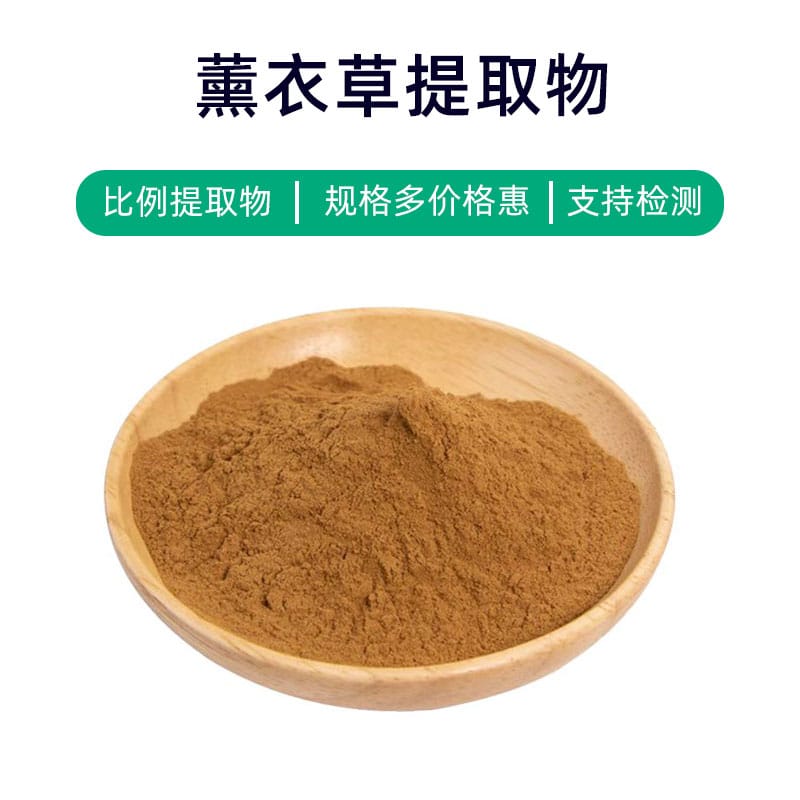



Lavender Extract Product Introduction
Lavender extract is a natural extract derived from the flowers of the lavender plant. Its key components include linalool, linalyl acetate, and hesperidin. This extract is widely employed in cosmetics and personal care products such as creams, shampoos, and soaps. It is known for its soothing, antioxidant, and antimicrobial effects, helping to relieve skin discomfort, reduce inflammation, and promote skin repair and regeneration. Additionally, lavender extract has calming and relaxing properties that can help enhance relaxation and improve sleep quality. In the pharmaceutical field, it is also used in some formulations to boost effectiveness. It’s important to note that lavender extract is for external use only and not suitable for internal consumption.
Lavender Extract Production Process
The production process of lavender extract typically includes the following key steps:
- Raw Material Preparation: Select fresh lavender flowers as raw materials, usually harvested when the flowers are in full bloom to retain their maximum active ingredients. The flowers must be initially cleaned and free from impurities.
- Extraction Process: This is one of the critical steps in the production of lavender extract. Common extraction methods include steam distillation and solvent extraction. Steam distillation involves heating lavender flowers with water, using steam to evaporate the active ingredients, which are then collected through condensation. The solvent extraction method uses organic solvents like ethanol or acetone to dissolve the active components from the lavender flowers, with the extract obtained by evaporating the solvent.
- Filtration and Concentration: The extract solution is filtered to remove suspended solids and impurities, followed by concentration to increase the active ingredient content.
- Refinement and Purification: The concentrated extract undergoes refinement and purification to eliminate residual solvents and other impurities, resulting in a pure lavender extract.
- Testing and Quality Control: Throughout production, the extract is tested and monitored for quality to ensure it meets relevant standards and safety requirements. Common testing methods include High-Performance Liquid Chromatography (HPLC) and UV-Visible spectrophotometry.
- Packaging and Storage: Finally, the extract is appropriately packaged, typically in sealed containers or bottles, and stored in a cool, dry environment to maintain its stability and the effectiveness of its active constituents.
Lavender Extract Benefits and Side Effects
Lavender extract, derived from the lavender plant, offers several benefits:
- Calming and Relaxing: It is widely used for alleviating anxiety and stress, providing notable calming effects. Its aroma can soothe the nervous system, promote relaxation, and support better sleep quality.
- Antimicrobial and Anti-inflammatory: Lavender extract has strong antimicrobial and anti-inflammatory properties, making it useful in treating skin infections, inflammation, and aiding wound healing. The active ingredients help inhibit the growth of bacteria and fungi, reducing skin discomfort.
- Antioxidant: Rich in antioxidants like polyphenols and vitamins, lavender extract can neutralize free radicals, protect cells from oxidative damage, and slow the aging process.
- Soothing for the Skin: Lavender extract is effective in soothing skin irritations, relieving itching, dryness, and sensitivity while providing moisturizing and hydrating benefits to keep skin soft and smooth.
- Improving Scalp Health: It is often found in scalp care products, helping to cleanse the scalp, balance oil production, reduce dandruff, promote hair growth, and improve scalp health.
- Mood Enhancement: The aroma of lavender extract is believed to elevate mood, improve emotional balance, and relieve depression and mood swings.
- Antispasmodic: Lavender extract has antispasmodic effects, which can help relieve muscle tension and cramps, particularly easing discomfort during menstruation.
Generally, lavender extract is safe, but it’s important to consider the following:
- Allergic Reactions: Some individuals may be allergic to lavender extract, so a skin sensitivity test should be conducted before use to avoid allergic reactions.
- Dilution Required: Lavender extract usually needs to be diluted before use; high concentrations may cause skin irritation, so it’s advised to follow appropriate mixing ratios.
- Caution for Pregnant Women and Infants: Use should be cautious for pregnant women and infants; it's recommended to consult with a healthcare provider before use.
In summary, lavender extract has numerous benefits and applications in medicine, beauty, and health, but proper dilution and consideration of individual sensitivities are important for safe and effective use.
Lavender Extract Applications and Dosages
Lavender extract has a wide range of applications in medicine, food, and cosmetics, with detailed information on its applications and dosages as follows:
- Medical Field:
- Uses: Lavender extract is often used in the preparation of medications such as lavender essential oil, ointments, and sprays for treating anxiety, insomnia, headaches, skin infections, and more.
- Dosage: Lavender essential oil can be used through inhalation, massage, or bathing. Generally, each use should not involve too much; a few drops of lavender oil can be added to carrier oils according to need.
- Food Industry:
- Uses: In the food industry, lavender extract is commonly used as a flavoring or food additive, giving dishes a distinctive aroma and taste.
- Dosage: The use of lavender extract in food must comply with food additive regulations, typically added in moderation based on production needs, without exceeding specified limits to avoid adverse health effects.
- Cosmetic Industry:
- Uses: Lavender extract is frequently included in skincare products and shampoos, known for soothing skin, improving skin texture, and purifying the scalp.
- Dosage: In cosmetics, lavender extract is typically diluted and can be added directly to skincare or shampoo products as per formulation requirements, rather than used independently.
- Home and Fragrance Industry:
- Uses: Lavender extract is commonly used in creating aromatherapy products, candles, and air fresheners to enhance indoor environments, improve air quality, and relieve stress.
- Dosage: Its use can involve adding to diffusers, sprays, or directly to candles and other fragrance products, with amounts adjusted according to personal preference and room size.
Overall, lavender extract is widely applicable across medicine, food, and cosmetics, but it is important to use it in appropriate amounts and adhere to regulations to ensure safe and effective applications.
Introduction to the Lavender Plant, Distribution, and Growing Environment
Lavender (scientific name: Lavandula angustifolia) is a common perennial herbaceous plant belonging to the mint family. Below is detailed information on the source plant of lavender extract, its distribution, and growing environment:
- Plant Description:
- Lavender is a perennial semi-shrub usually growing between 24 to 36 inches tall. It has upright stems, leafy branches, and narrow, gray-green leaves covered with tiny hairs, giving them a fuzzy appearance.
- Renowned for its unique fragrance, lavender is widely cultivated for medicinal and culinary purposes, as well as for ornamental use.
- Distribution:
- Native to the Mediterranean region, lavender is predominantly found in countries like France, Spain, and Italy. Due to its adaptability to various climates and soils, it is now widely cultivated globally.
- When cultivated, lavender typically thrives in warm, dry climates and requires ample sunlight, preferring temperatures between 59-86°F (15-30°C).
- Growing Environment:
- Lavender grows best in well-drained, stony, or sandy soils and has specific pH requirements, generally preferring soils with a pH of 6.5-7.5.
- It needs plenty of sunlight, usually found at altitudes between 1,968 and 6,561 feet (600-2000 meters), where plants are more vigorous and yield higher in sunlight.
- Requires moderate moisture; while it does not tolerate flooding, it shouldn’t be exposed to prolonged drought; balanced moisture levels support its growth.
In summary, lavender is a herbaceous plant thriving in the Mediterranean, characterized by its strong adaptability and thriving in warm, dry climates with significant sunlight, commonly used across medicinal, culinary, and ornamental fields.
Lavender Extract Processing and Storage
The processing of lavender extract includes several steps: first, fresh lavender plants are harvested, followed by cleaning and initial preparation, then the extraction process, typically using steam distillation or solvent extraction methods to obtain lavender oil or extract. Finally, the extracted product undergoes filtration, concentration, and drying to yield the final lavender extract.
For storage, lavender extract should be kept in a cool, dry, well-ventilated environment, away from direct sunlight and high temperatures, and protected from air, moisture, and harmful substances. It should also be sealed to prevent oxidation and volatility. Proper storage methods can extend the shelf life of lavender extract and maintain its stable quality and effectiveness.

Monica Sun is a seasoned expert in the plant extraction industry with over a decade of experience in research and production. She specializes in the extraction and purification of plant active ingredients, focusing on driving innovation in natural product applications. Monica has participated in the development of multiple functional plant extracts, delivering high-value natural raw material solutions for the health food, pharmaceutical, and dietary supplement sectors.