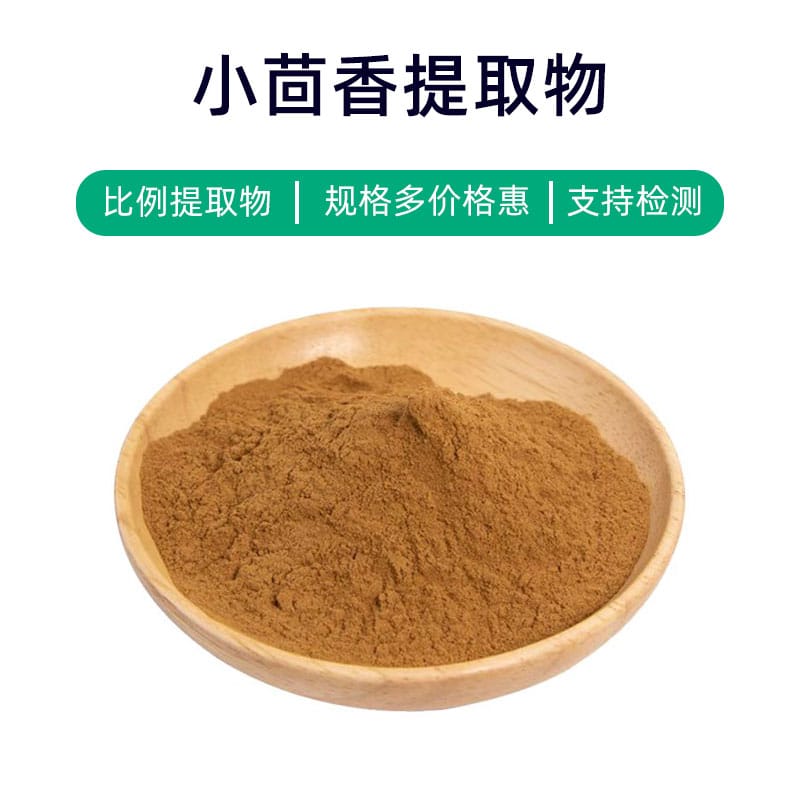



Fennel Extract Product Introduction
Fennel extract is a natural plant extract derived from the fruit of the fennel plant. Its main components include volatile oils, phenolic compounds, and flavonoids. Fennel extract is widely used in the pharmaceutical, health supplement, food, and cosmetic industries.
This extract has various benefits, the most notable being its ability to promote digestion. Fennel extract can stimulate the secretion of digestive fluids and alleviate symptoms of indigestion and bloating. Additionally, it possesses calming, anti-inflammatory, and antioxidant properties that help improve skin health and reduce inflammation.
In pharmaceuticals, fennel extract is commonly used to formulate digestive system medications and relaxants. In health supplements, it serves as an ingredient that helps regulate gastrointestinal function. In food applications, fennel extract is often found in seasonings and food additives, enhancing flavor and aroma. In cosmetics, it is added to skincare products to soothe the skin, mitigate inflammation, and provide antioxidant effects.
In summary, fennel extract, as a natural plant extract, has extensive applications in multiple fields and offers numerous benefits, making it a promising multifunctional ingredient.
Fennel Extract Production Process
The production process of fennel extract primarily includes the following steps:
- Raw Material Preparation: Select fresh fennel fruits as raw materials for extraction to ensure high quality. The fruits should be initially cleaned and processed to remove impurities and surface dirt.
- Crushing and Grinding: The processed fennel fruits are crushed and ground to increase extraction efficiency. Mechanical grinding or a grinder is typically used to turn the fruits into a powder.
- Extraction Process: The crushed fennel fruits are soaked and extracted with a solvent (such as ethanol or water). During extraction, methods like heating and stirring are often applied to promote the dissolution of effective components. The extraction can be conducted at room temperature or through hot reflux methods.
- Filtration and Separation: After soaking for a specified period, a filter is used to separate the extraction liquid from solid residues, yielding the liquid fennel extract.
- Concentration and Drying: The liquid extract is concentrated, typically through evaporation or vacuum concentration, to remove the solvent, resulting in concentrated fennel extract. Subsequently, the concentrated material is dried to form a powder for packaging and storage.
- Quality Inspection: The extract undergoes quality inspections, including appearance, color, aroma, and solubility testing, to ensure compliance with relevant standards and regulations.
- Packaging and Storage: The extract is placed in suitable containers for sealed packaging, labeled with product name, production date, batch number, etc. The extract should be stored in a cool, dry, and light-protected environment to maintain its quality and stability.
Fennel Extract Effects and Side Effects
As a natural plant extract, fennel extract offers various effects and functions, mainly including the following aspects:
- Digestive Health: Traditionally, fennel extract is used to promote digestion, alleviating symptoms of indigestion and bloating. Its active components stimulate intestinal movement, facilitating food digestion and easing gastrointestinal discomfort.
- Anti-Inflammatory and Antibacterial: Fennel extract contains volatile oils and other active ingredients with certain anti-inflammatory and antibacterial properties, useful for treating mild intestinal infections and inflammation.
- Calming Effects: The components in fennel extract can have a calming effect, helping to relieve anxiety and tension, and promote sleep, thereby improving sleep quality.
- Antioxidant: Fennel extract is rich in various antioxidants that can eliminate free radicals in the body, delaying cellular aging and contributing to anti-aging health benefits.
- Respiratory Relief: The volatile oils in fennel extract may soothe the respiratory tract, helping to relieve discomfort from colds, such as cough and throat pain.
- Menstrual Regulation: In traditional herbal medicine, fennel extract is used to regulate menstrual cycles and alleviate menstrual discomfort, such as cramps and irregular periods.
- Immune System Boost: Active components in fennel extract possess certain immune-regulating effects, enhancing the body's immunity and resistance to infections.
Generally, fennel extract is considered safe, with minimal side effects. However, individual differences may lead to allergic reactions or adverse effects, so a skin sensitivity test is recommended before use, and following the advice of a doctor or pharmacist is advised. Long-term or excessive use may cause discomfort, so it's essential to adhere to recommended dosages to avoid adverse reactions.
Fennel Extract Applications and Dosage
Fennel extract has widespread applications in the pharmaceutical, food, and cosmetic industries, detailed as follows:
- Pharmaceutical Applications:
- Digestive Health: Fennel extract is used to make digestive health products, like oral liquids and capsules, to promote digestion and relieve bloating or indigestion. Recommended dosage is typically 100-200 mg per use, 2-3 times a day.
- Respiratory Relief: Fennel extract can be formulated into cough syrups or throat lozenges to alleviate cough and throat pain associated with colds. Generally, it is advised to take 10-20 ml per use, 2-3 times daily.
- Nervous System Regulation: Fennel extract may be made into calming medications, such as oral liquids or tablets, to relieve anxiety and stress. Typical dosage is 50-100 mg per use, 2-3 times a day.
- Food Applications:
- Flavoring Agent: Fennel extract is used as a flavoring agent in food processing to impart a distinctive aroma and taste. It is commonly utilized in cooking for meats, soups, and breads.
- Beverages: Fennel extract can be added to tea beverages and juices, enhancing aroma and flavor while providing certain health benefits.
- Cosmetic Applications:
- Skincare Products: Rich in antioxidants, fennel extract is used in skincare products like masks and creams, helping delay skin aging and maintain healthy skin. Typically, a suitable amount should be applied to clean facial skin and gently massaged until absorbed.
- Oral Care: Fennel extract can be used in oral care products like toothpaste and mouthwash, providing fresh breath and antibacterial effects. It is generally advised to use an appropriate amount for rinsing, 2-3 times daily.
It is important to follow the usage and dosage instructions provided with fennel extract products and avoid excessive use, especially for specific populations like pregnant women and children, who should use under a doctor's guidance. Additionally, individuals with allergy sensitivities should conduct a skin test before use to ensure safety.
Introduction to the Source Plant, Distribution, and Growing Conditions of Fennel Extract
Fennel (Latin name: Pimpinella anisum) is a plant with medicinal and flavoring value, commonly utilized in the pharmaceutical, food, and cosmetic industries. Below are detailed insights into the source plant of fennel, its distribution, and growing conditions:
- Source Plant Information:
- Scientific Name: Pimpinella anisum
- Common Names: Anise, Sweet Anise, and others.
- Plant Characteristics: Fennel is an annual or biennial herb, growing to about 30-60 cm in height with feather-like compound leaves that are slender and have an anise fragrance. The flowers are small and white, occurring in umbrella-shaped clusters at the top of the stems, and the fruit is an oval-shaped achene that is yellow-brown and has a distinctive aroma.
- Distribution:
- Fennel is native to the Mediterranean region and mainly distributed across Europe, Western Asia, and North Africa.
- It has now been widely cultivated across the globe, including Asia, North America, and Australia.
- Growing Conditions:
- Climate: Fennel adapts well and prefers warm, dry climates with high light requirements.
- Soil: Fennel thrives in well-drained, fertile sandy loam or loam and has no strict soil requirements.
- Growing Season: Typically sown in spring and harvested in autumn, with a growing period of about 100-120 days.
- Main Cultivation Regions:
- Mediterranean countries in Europe, such as Spain, Italy, and Greece.
- Asian regions, including Turkey, Iran, and India.
- North African countries, such as Egypt and Morocco.
Fennel’s growth environment and distribution are quite extensive, flourishing best in warm, sunny climates. Due to its unique flavor and medicinal value, it has garnered significant attention from cultivators worldwide as an important economic crop.
Processing and Storage of Fennel Extract
The processing and storage of fennel extract are critical to ensuring its quality and effectiveness.
The processing process generally includes the following steps:
- Harvesting and Drying: Mature fennel fruits are harvested and dried in a well-ventilated area to reduce moisture content.
- Grinding: The dried fennel fruits are usually ground into a powder or granules to extract their active components.
- Extraction: Using appropriate extraction methods (such as steam distillation, solvent extraction, etc.), the active components in fennel are extracted.
- Filtration and Concentration: The extraction liquid is filtered and concentrated to remove impurities and enhance the concentration of effective components.
- Drying: The concentrated extract is dried to obtain the final fennel extract powder.
Regarding storage, the following points should be noted:
- Moisture Control: Fennel extract should be stored in a dry, ventilated area to avoid humid environments that can lead to mold and bacterial growth.
- Light Protection: It should be kept away from direct sunlight, stored in a cool location to prevent the degradation of light-sensitive substances.
- Sealed Storage: The extract should be stored in a tightly sealed container to prevent oxidation and hydrolysis from air oxygen and moisture.
- Stable Temperature: Try to maintain a stable temperature, avoiding extreme heat or cold to prevent affecting the quality and stability of the extract.
Proper processing and storage methods can help ensure that the quality and effectiveness of fennel extract are maintained, extending its period of usability.

Monica Sun is a seasoned expert in the plant extraction industry with over a decade of experience in research and production. She specializes in the extraction and purification of plant active ingredients, focusing on driving innovation in natural product applications. Monica has participated in the development of multiple functional plant extracts, delivering high-value natural raw material solutions for the health food, pharmaceutical, and dietary supplement sectors.