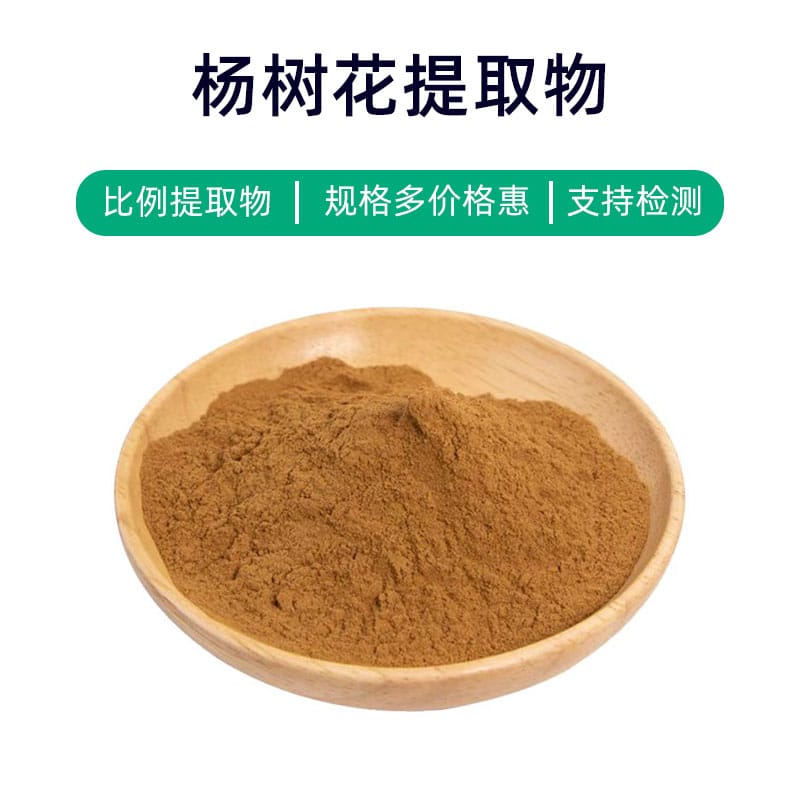



Introduction to Poplar Flower Extract
Poplar flower extract is a natural plant extract derived from the flowers of the poplar tree, primarily composed of flavonoids, polyphenols, and essential oils. These components provide a range of benefits and applications.
Firstly, poplar flower extract boasts excellent antioxidant properties, capable of neutralizing free radicals, slowing down oxidative damage to cells, and delaying skin aging, thus promoting healthy skin. Secondly, its flavonoids provide anti-inflammatory effects, which can reduce skin inflammation, soothe sensitive skin, and help improve skin conditions.
In the pharmaceutical industry, poplar flower extract is often utilized in the preparation of medications that are antioxidant, anti-inflammatory, and anti-allergic, used for treating skin inflammation and allergic skin conditions. In the dietary supplement sector, it is frequently added to products aimed at anti-aging and beauty, such as antioxidant capsules and beauty beverages. Furthermore, poplar flower extract is widely employed in cosmetics, included in skincare products and masks for antioxidant, soothing, and skin-repairing effects.
Overall, as a natural plant extract, poplar flower extract offers a variety of benefits, including antioxidant, anti-inflammatory, and skin-soothing properties, making it a valuable option for health and beauty across pharmaceuticals, dietary supplements, and cosmetic applications.
Production Process for Poplar Flower Extract
The production process of poplar flower extract typically includes the following main steps:
- Material Preparation: Fresh poplar flowers should be selected as raw material. These flowers must be uncontaminated and of good quality. After harvesting, the flowers should be processed promptly to maintain their freshness and the integrity of active components.
- Extraction: This is one of the critical steps in production. Generally, methods like water extraction, alcohol extraction, or supercritical fluid extraction are used. Depending on the need, multiple extractions can be performed to ensure thorough extraction of active components in the poplar flower.
- Concentration: The liquid obtained from extraction needs to be concentrated to reduce volume and increase the concentration of active ingredients. Technologies such as vacuum concentration or membrane concentration are typically used to remove solvents from the extract, yielding a concentrated extract.
- Purification: The purification process removes impurities and enhances the purity and quality of the extract. Techniques like precipitation, filtration, and crystallization can be employed during purification to obtain pure poplar flower extract.
- Drying: Finally, the concentrated and purified extract undergoes drying to lower moisture content, enhancing stability and extending shelf life. Common drying methods include spray drying and vacuum drying.
- Packaging: The dried poplar flower extract must be packaged, usually in sealed containers to prevent moisture, oxidation, and contamination. Proper packaging material and method are essential for protecting the quality of the extract.
- Quality Testing: Lastly, the product undergoes quality testing. Common testing items include active ingredient content, heavy metal residues, and microbial limits to ensure compliance with relevant standards and regulations, guaranteeing product quality and safety.
Effects and Side Effects of Poplar Flower Extract
Poplar flower extract has various effects and functions, including:
- Antioxidant Effects: Rich in antioxidants such as flavonoids and polyphenols, poplar flower extract can neutralize free radicals and inhibit oxidation, protecting cells from oxidative damage.
- Anti-inflammatory Effects: Studies indicate that poplar flower extract has significant anti-inflammatory properties, inhibiting the release of inflammatory mediators and alleviating inflammation, assisting in the management of inflammatory diseases.
- Antimicrobial Effects: The active components in poplar flower extract possess certain antimicrobial activity, capable of inhibiting the growth of various bacteria and fungi, effective for preventing and treating skin infections.
- Anti-aging Effects: Thanks to its abundant antioxidants, poplar flower extract can slow down the aging process of cells, protecting the skin from environmental damage and delaying skin aging, helping maintain youthful skin.
- Moisturizing: Rich in moisturizing factors and nutrients, poplar flower extract can effectively hydrate the skin, alleviating dryness and roughness, leaving the skin soft and smooth.
- Whitening: The active components in poplar flower extract can inhibit melanin production, reducing the occurrence of dark spots and freckles, promoting a more even and radiant complexion.
- Soothing Skin: Poplar flower extract has soothing properties that can reduce skin irritation and redness, alleviating discomfort and making the skin feel more comfortable.
Generally, poplar flower extract is a natural, safe plant extract, and when used in appropriate doses, is unlikely to cause significant side effects. However, individual skin types and allergies can lead to reactions in some people, such as redness or itching. Therefore, attention should be paid to individual differences, and if adverse reactions occur, use should be discontinued immediately and advice from a professional should be sought.
Application Scenarios and Dosage of Poplar Flower Extract
Poplar flower extract is widely applied in the fields of pharmaceuticals, food, and cosmetics, with the following main applications and recommended dosages:
- Pharmaceuticals:
- Skin Inflammation Treatment: Poplar flower extract's anti-inflammatory and antimicrobial properties make it suitable for treating various skin inflammations such as eczema and dermatitis. Generally, creams made with poplar flower extract are applied externally 2-3 times daily, following a doctor's guidance.
- Antioxidant Supplements: Due to its high antioxidant content, poplar flower extract can be formulated into supplements that offer anti-aging and immune-boosting benefits. A daily intake of 5-10 grams is usually recommended, or as directed by the product label.
- Food:
- Functional Foods: Poplar flower extract can be incorporated into various functional foods, including health drinks and nutritional supplements. Typically, it is added according to food processing requirements, usually around 0.1%-0.5%.
- Seasonings: It can also enhance the flavor and nutritional value of food products. The amount added varies based on product formulation and taste preferences, generally around 0.05%-0.2%.
- Cosmetics:
- Skincare Products: With antioxidant, anti-inflammatory, and moisturizing effects, poplar flower extract can be used in skincare products such as creams, lotions, and masks. It is generally advised to apply a suitable amount on clean facial skin, gently massaging until absorbed.
- Beauty Products: Poplar flower extract may also be utilized in beauty products such as whitening creams and anti-wrinkle essences. Usage should follow product label instructions, avoiding excessive application.
The methods and dosages of poplar flower extract vary slightly across different applications, and specific usage should depend on product type, formulation, and individual circumstances. During use, attention to product quality is essential, purchasing through reliable channels, and adhering to product labels or medical advice to ensure safety and effectiveness.
Introduction to the Source Plant of Poplar Flower Extract, Distribution, and Growth Environment
Poplar flowers, scientifically known as Populus, belong to the deciduous tree category and are a common and ancient tree widely used for extracting medicinal and cosmetic materials. Here’s an introduction regarding the source plant of poplar flowers, distribution, and growth environment:
- Plant Introduction:
- Poplar flowers belong to the Salicaceae family and are part of the Populus genus, featuring yellowish-green small flowers in cone-shaped clusters that create a beautiful sight in the spring canopy of the poplar tree.
- Poplar trees are fast-growing and typically medium-sized with straight trunks and gray bark; young bark is smooth while older trees develop longitudinal fissures.
- Distribution:
- Poplar trees are widely distributed across temperate and cold regions globally, primarily growing in most areas of Europe, Asia, North America, and Africa. In China, poplar trees are prevalent across regions including Northeast, North China, Northwest, Southwest, and East China.
- Growth Environment:
- Preferring moist environments, poplar trees require ample water, commonly found along riverbanks, around lakes, marshes, and valleys. They have a broad tolerance for soil conditions, thriving in both wet and moderately dry areas, but prefer fertility with well-drained soils.
- As a cold-resistant species, poplar trees can grow well in colder regions, although extreme cold may impact their growth.
The growth environment for poplar flowers mirrors that of the poplar tree itself, requiring moist conditions and suitable soil for optimal growth. Given ideal growing conditions, poplar flowers flourish abundantly, producing attractive blossoms.
Processing and Storage of Poplar Flower Extract
The processing of poplar flower extract typically involves several steps: First, fresh poplar flowers are harvested, cleaned, and dried to remove impurities. Next, appropriate extraction methods (such as water or alcohol extraction) are utilized to extract the active components. This is followed by filtration, concentration, and drying steps to yield pure poplar flower extract. Finally, it undergoes packaging, quality inspection, and is prepared for storage. Poplar flower extract should be kept in a cool, dry place, avoiding direct sunlight and high temperatures to ensure its stability and shelf life.

Monica Sun is a seasoned expert in the plant extraction industry with over a decade of experience in research and production. She specializes in the extraction and purification of plant active ingredients, focusing on driving innovation in natural product applications. Monica has participated in the development of multiple functional plant extracts, delivering high-value natural raw material solutions for the health food, pharmaceutical, and dietary supplement sectors.