


Bearberry Leaf Extract Product Introduction
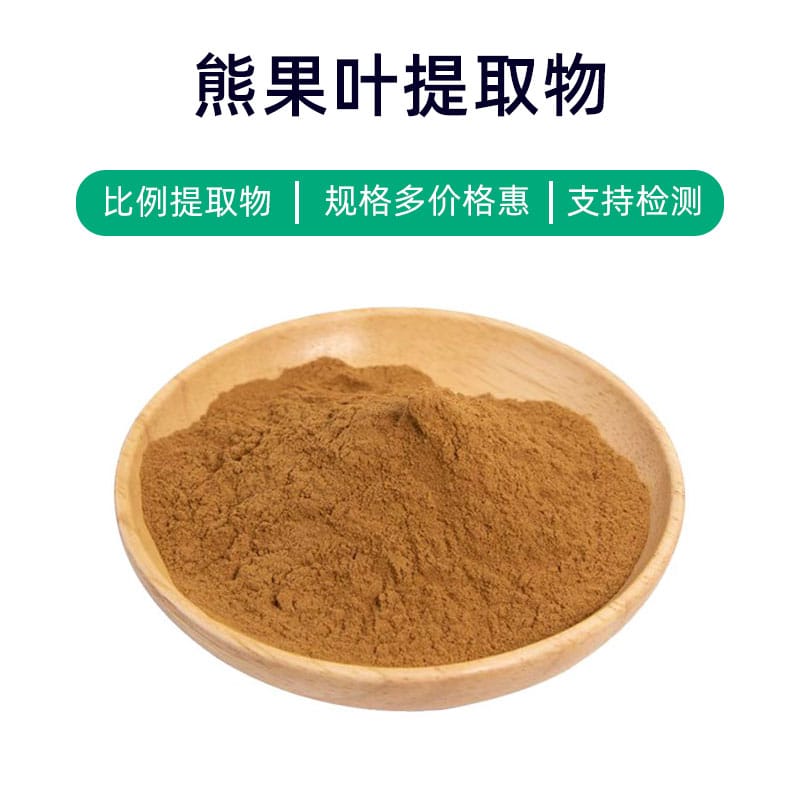
Bearberry leaf extract is a natural plant extract derived from bearberry leaves, with active components such as tannins and arbutin. These ingredients give bearberry leaf extract a variety of benefits and applications.
First, bearberry leaf extract is widely used in the medical field. It possesses diuretic, anti-inflammatory, and antibacterial properties, often being used to treat urinary tract infections and inflammation. Due to its antibacterial characteristics, bearberry leaf extract is also employed to prevent and treat related diseases, like urinary tract infections.
Secondly, bearberry leaf extract has gained attention in the cosmetics industry. It is added to skincare products to provide effects like whitening, spot reduction, and antioxidant benefits. Bearberry leaf extract effectively lightens dark spots and brightens skin tone, contributing to overall skin health.
Additionally, bearberry leaf extract is commonly used as an ingredient in health supplements. It is often used as a natural plant extract for maintaining urinary tract health and preventing urinary tract infections and stone formation. Its natural composition and multiple benefits make it highly favored by consumers and an important raw material in the pharmaceutical, cosmetics, and health product industries.
Bearberry Leaf Extract Production Process
The production process of bearberry leaf extract typically involves the following steps:
- Raw Material Preparation: Select fresh bearberry leaves as raw materials, ensuring quality standards are met, removing impurities, and cleaning thoroughly.
- Extraction Process: Chop or grind the cleaned bearberry leaves into fine particles, then use suitable solvents (such as water, ethanol, etc.) for extraction. Common extraction methods include infusion and circulating extraction to extract the active components.
- Concentration: Concentrate the extracted solution to remove excess solvent and moisture, concentrating the effective components in the solution.
- Filtration: Filter the concentrated extract to remove impurities and solid particles, resulting in a relatively clear extract.
- Concentration and Drying: Further concentrate and dry the filtered extract to obtain solid bearberry leaf extract. Common drying methods include spray drying and vacuum drying.
- Grinding and Screening: Grind and screen the resulting solid extract to achieve the desired particle size and granule consistency.
- Packaging and Storage: Finally, package the bearberry leaf extract, usually using sealed packaging to prevent moisture, oxidation, and contamination, ensuring product quality and stability. Store in a cool, dry place, avoiding direct sunlight.
Through these process steps, high-quality bearberry leaf extract can be produced, preserving its natural active components for use in pharmaceuticals, health products, and cosmetics.
Bearberry Leaf Extract Benefits and Side Effects
As a natural plant extract, bearberry leaf extract offers various benefits and effects, mainly including:
- Antioxidant Effects: Rich in natural antioxidants such as polyphenols and vitamins, bearberry leaf extract can effectively neutralize free radicals, slow down cellular oxidative damage, and protect cells from oxidative stress.
- Anti-inflammatory Effects: Research indicates that bearberry leaf extract has notable anti-inflammatory activity, capable of inhibiting the release of inflammatory factors and alleviating inflammation, providing auxiliary effects for inflammatory diseases.
- Antibacterial Effects: The active components in bearberry leaf extract can inhibit various bacteria and fungi, useful for preventing and treating skin infections and oral inflammations, demonstrating certain antibacterial and anti-inflammatory properties.
- Anti-aging Effects: The polyphenols in bearberry leaf extract are believed to have anti-aging benefits, promoting collagen synthesis, improving skin elasticity, reducing wrinkles and fine lines, and slowing down skin aging processes.
- Blood Sugar Regulation: Some studies suggest that the active components in bearberry leaf extract can help regulate blood sugar levels and lower blood glucose concentration, contributing to the prevention and supportive treatment of diabetes.
- Digestive Aid: Bearberry leaf extract can promote digestion, stimulate gastric secretions, enhance appetite, and improve digestive discomfort and gastrointestinal dysfunction.
- Cardiovascular Health Protection: Research shows that the active components in bearberry leaf extract benefit the cardiovascular system, helping to lower blood pressure, lipids, and improve blood circulation, preventing cardiovascular diseases.
- Anti-allergic Effects: Some studies indicate that bearberry leaf extract has anti-allergic properties, capable of easing allergic reactions and relieving symptoms of allergic diseases.
It is important to note that while bearberry leaf extract provides numerous benefits, individual differences and potential allergic reactions or side effects should be considered. Using it under the guidance of a healthcare professional is advised, avoiding prolonged or excessive use to prevent adverse effects.
Bearberry Leaf Extract Application Scenarios and Dosage
Bearberry leaf extract has broad applications in the pharmaceutical, food, and cosmetic fields due to its various benefits. Here are the application scenarios and dosages in different areas:
- Pharmaceuticals:
- Application Scenario: Bearberry leaf extract is commonly used to prepare traditional Chinese medicine injections, oral liquids, capsules, etc., for treating symptoms like colds, fever, and sore throat, offering heat-clearing, detoxifying, and anti-inflammatory pain-relief effects.
- Dosage: The typical oral dose is 10-20 mL per intake, three times daily; injection dosages depend on the severity of the condition and are usually recommended at 1-2 times daily, 2-5 mL each time.
- Food:
- Application Scenario: Bearberry leaf extract can be used in health foods, functional beverages, etc., often added to tea drinks, juices, and drinking water to enhance immunity, promote digestion, and improve gut health.
- Dosage: Generally according to product instructions, it is recommended to consume 10-20 mL per intake, 1-2 times daily, adjustable based on individual needs and physical condition.
- Cosmetics:
- Application Scenario: Bearberry leaf extract is often used in skincare products, shampoos, conditioners, etc., with antioxidant, anti-aging, and soothing properties, helping improve skin texture and reduce fine lines and wrinkles.
- Dosage: Follow product instructions, typically apply a suitable amount after washing the face and before toning, gently massaging until fully absorbed.
Overall, the use of bearberry leaf extract in pharmaceuticals, food, and cosmetics is safe and effective, but attention should be paid to product quality and dosage control during use, avoiding excessive or continuous use to prevent adverse reactions. Also, pregnant women, nursing mothers, and children should use it under medical guidance.
Bearberry Leaf Source Plant Introduction, Distribution, and Growing Environment
Bearberry, scientifically known as Ilex latifolia Thunb., is an evergreen shrub or small tree belonging to the holly family. Below is a detailed introduction of the source plant, its distribution, and growing environment.
Source Plant Introduction:
Bearberry is a common subtropical plant native to southern China, primarily distributed in regions such as South, East, and Southwest China. It is an evergreen plant with oval or elliptical leaves, serrated edges, a smooth surface, and a prominent net-like venation on the underside, featuring dark green, glossy foliage.
Distribution:
Bearberry predominantly grows in subtropical and temperate regions of China, including provinces like Guangdong, Guangxi, Fujian, Zhejiang, Jiangxi, Hunan, Guizhou, and Sichuan. In these areas, bearberry is often found in mountains, valleys, by streams, forest edges, and hilly regions, typically at elevations ranging from 100 to 1500 meters.
Growing Environment:
Bearberry thrives in warm, humid climates and is not particularly strict about light and soil conditions, showing strong adaptability. It usually grows on mountain slopes, thickets, forest edges, by streams, and in valleys, often in acidic or neutral soils but not demanding regarding soil quality. Bearberry growth requires relatively high humidity and sufficient rainfall, flourishing in areas with abundant moisture and a humid climate.
Overall, bearberry is a common subtropical plant predominantly found in southern China, favoring warm, humid environments, growing in mountainous areas, forest edges, and along streams, and is an important medicinal and ornamental plant.
Bearberry Leaf Extract Processing and Storage
The processing of bearberry leaf extract typically includes the following steps: First, fresh bearberry leaves are collected, cleaned, and processed to remove impurities. Next, the leaves are crushed and ground to extract effective components. Following that, appropriate extraction methods, such as water or alcohol extraction, are employed to obtain the active ingredients from the bearberry leaves. Finally, the resulting product undergoes filtering, concentration, drying, and other processes to yield bearberry leaf extract.
For storage, bearberry leaf extract should be kept in a dry, cool, and ventilated environment, protected from direct sunlight and moisture. It is advisable to use sealed containers to prevent moisture and air from entering. Additionally, care should be taken to avoid contact with harmful chemicals to ensure product quality and stability.

Monica Sun is a seasoned expert in the plant extraction industry with over a decade of experience in research and production. She specializes in the extraction and purification of plant active ingredients, focusing on driving innovation in natural product applications. Monica has participated in the development of multiple functional plant extracts, delivering high-value natural raw material solutions for the health food, pharmaceutical, and dietary supplement sectors.