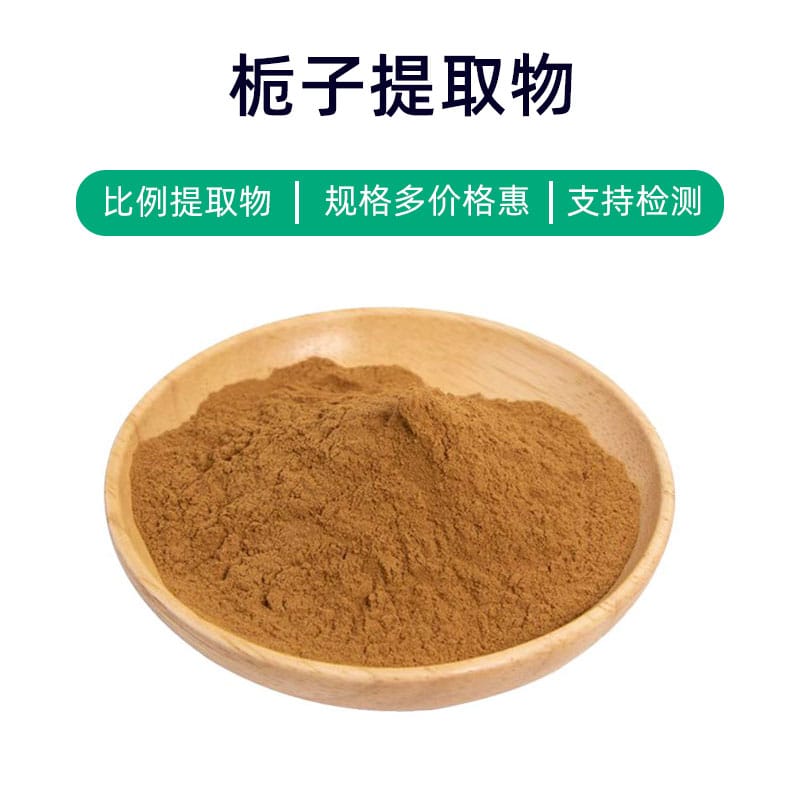
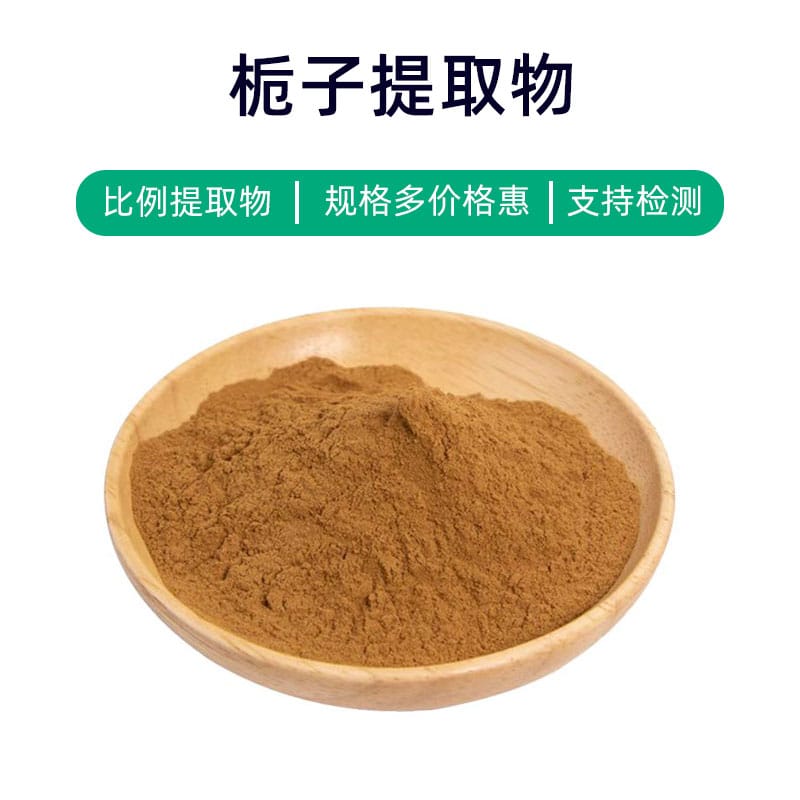



Gardenia Extract Product Introduction
Gardenia extract is a natural plant extract derived from the gardenia fruit, primarily composed of bioactive substances like geniposide, gardenoside, and others. These components provide a range of benefits and broad applications.
First, gardenia extract has antioxidant properties that neutralize free radicals and slow down oxidation processes, helping maintain cellular health. Secondly, it exhibits anti-inflammatory effects, alleviating skin inflammation, redness, and itching, making it suitable for skincare products and pharmaceuticals. Additionally, gardenia extract has skin-brightening effects, helping to fade spots and even skin tone, commonly used in beauty and skincare products.
In pharmaceuticals, gardenia extract is often used in the preparation of antioxidants, anti-inflammatory drugs, and skin-whitening medications; in dietary supplements, it serves as an active ingredient with antioxidant and immune-boosting properties; in cosmetics, it is found in skincare products, whitening treatments, and anti-inflammatory products such as creams, lotions, and masks.
In summary, as a natural plant extract, gardenia extract possesses multiple benefits, including antioxidant, anti-inflammatory, and skin-whitening effects, showing promising applications across the fields of pharmaceuticals, dietary supplements, and cosmetics.
Gardenia Extract Production Process
The production process of gardenia extract typically includes the following steps:
- Raw Material Preparation: Select fresh, thoroughly dried gardenia fruits as extraction materials, ensuring quality meets standards.
- Cleaning and Processing: Wash and process the gardenia fruits to remove surface impurities, ensuring the purity and quality of the extract.
- Crushing: Crush the cleaned gardenia fruits into smaller pieces, facilitating the subsequent extraction process.
- Solvent Extraction: Use appropriate solvents (such as ethanol, ethyl acetate) to extract the effective components from the crushed gardenia fruits.
- Concentrating Extract: Concentrate the effective components extracted with solvents using methods like evaporation or freeze concentration.
- Filtering and Purification: Filter and purify the concentrated extract to remove impurities and residues, enhancing product purity and quality.
- Drying and Final Product: Dry the filtered and purified extract to obtain the final gardenia extract, ensuring stability and shelf life.
- Packaging and Storage: Package the final gardenia extract using moisture-proof, light-proof, and oxidation-resistant materials, then store in a cool, dry place, avoiding direct sunlight and high temperatures.
- Quality Control: Implement strict quality control and testing throughout the production process to ensure compliance with national standards and quality requirements.
By following these steps, a stable and high-purity gardenia extract can be produced for use in pharmaceuticals, dietary supplements, and cosmetics.
Gardenia Extract Effects and Side Effects
Gardenia extract is a common traditional Chinese medicine with various benefits, primarily including:
- Antioxidant Effects: Rich in antioxidants such as flavonoids and Vitamin C, it effectively neutralizes free radicals, protects cells from oxidative damage, and slows the aging process.
- Anti-Inflammatory Effects: Contains components with anti-inflammatory activity that help relieve inflammation, pain, and swelling.
- Antibacterial and Anti-Inflammatory: Exhibits inhibitory effects on certain bacteria and viruses, useful in treating infectious diseases or preventing infections.
- Regulation of Sebum Production: Some components can regulate sebaceous gland activity, helping control oil production and improve oily skin issues.
- Gastrointestinal Health Promotion: Contains flavonoids that aid in promoting gastrointestinal motility, alleviating indigestion and improving gastrointestinal function.
- Whitening and Anti-Aging: Certain components in gardenia extract have skin-brightening and anti-aging properties, used in skincare products to improve complexion and reduce wrinkles.
- Diuretic and Decongestant: Exhibits mild diuretic effects, useful in assisting the treatment of edema and nephritis.
- Mood Improvement: Some studies indicate that it may help improve mood and alleviate stress and anxiety, contributing to mental health support.
It is important to note that gardenia extract is generally safe at appropriate doses; however, overuse or prolonged use may cause side effects such as indigestion or skin allergies. Therefore, it is advisable to follow medical guidance when using gardenia extract, especially for pregnant women, children, and individuals with certain health conditions.
Gardenia Extract Application Scenarios and Dosage
Gardenia extract has widespread applications in the fields of medicines, food, and cosmetics. Here are detailed descriptions of its application scenarios and dosage:
- Medical Applications:
- Commonly used in traditional Chinese medicine preparations like gardenia lung-clearing syrup and gardenia dampness-relieving syrup, effective for heat-clearing, detoxifying, relieving dampness-related pain, and promoting digestion. Dosage typically involves oral administration, adjusted based on specific situations, generally 5-10 ml per dose for adults, taken 2-3 times daily.
- For topical use, it is often found in ointments and lotions for treating burns, scalds, eczema, hemorrhoids, and other skin conditions. Apply a suitable amount to the affected area 2-3 times daily, depending on the condition.
- Food Applications:
- Gardenia extract has certain health benefits and is commonly used to make health drinks and functional foods, enhancing immune function and regulating gastrointestinal health. Suggested dosage is based on the specific product formulation, generally consumed 1-2 times daily.
- Cosmetic Applications:
- Due to its skin-brightening and antioxidant properties, it is frequently incorporated into creams, lotions, and face masks for whitening, anti-aging, and related effects. Apply according to product instructions to the face or areas needing care 1-2 times daily.
- Precautions:
- When using gardenia extract products, follow medical advice or product instructions without exceeding recommended dosages to prevent adverse reactions.
- Pregnant women, nursing mothers, infants, and individuals with specific health conditions should consult a healthcare provider before use.
- If skin irritation or allergic reactions occur with topical products, discontinue use immediately and consult a healthcare professional.
As a natural herbal extract, gardenia extract offers various benefits, but attention should be paid to dosage and application to avoid adverse effects.
Gardenia Plant Overview: Distribution and Growth Environment
The source plant for gardenia extract is gardenia, scientifically named Gardenia jasminoides. Below is a detailed overview of gardenia, its distribution, and growth environment:
- Gardenia Overview:
- Gardenia is a common evergreen shrub or small tree belonging to the Rubiaceae family, native to southern China, Japan, and the Korean Peninsula. Its fruit is usually oval-shaped, maturing to an orange-yellow color with many seeds inside.
- Distribution Areas:
- Gardenia is primarily distributed in southern China, particularly in provinces like Guangdong, Guangxi, Fujian, Jiangxi, Hunan, and Yunnan, as well as in Japan and the Korean Peninsula. Guangdong Province has particularly high gardenia production, notably in regions like Yangjiang, Huizhou, and Jieyang.
- Growth Environment:
- Gardenia thrives in warm, humid climates and requires ample sunlight. The ideal growth temperature is between 20-30 degrees Celsius, as high summer temperatures can adversely affect fruit development. While it is not strictly demanding in terms of soil, fertile and loose sandy loam with good drainage is preferred.
- Growth Characteristics:
- As an evergreen plant, gardenia displays strong adaptability, capable of thriving in various soil and climate conditions. It prefers environments with higher humidity, but excessive moisture or drought can negatively impact growth and fruit yield. During the growth phase, a suitable fertilizer and irrigation management is needed to ensure healthy growth and high yield.
Overall, gardenia is a highly adaptable plant with a wide growth range, primarily distributed in southern China and surrounding regions, performing best in sunny, temperate conditions with well-drained soil.
Gardenia Extract Processing and Storage
The processing of gardenia extract typically involves the following steps: first, selecting and harvesting the gardenia fruits, then cleaning, airing, or drying them, followed by crushing or slicing, then solvent extraction or supercritical fluid extraction, and finally filtering, concentrating, and drying to obtain the gardenia extract.
For proper storage of gardenia extract, the following measures are generally recommended: first, store the gardenia extract in a cool, dry, and well-ventilated environment, avoiding direct sunlight and high temperatures. Second, ensure that the extract is sealed to prevent moisture or dust contamination. Additionally, regularly check the quality and storage condition of the gardenia extract to ensure its safety and efficacy.

Monica Sun is a seasoned expert in the plant extraction industry with over a decade of experience in research and production. She specializes in the extraction and purification of plant active ingredients, focusing on driving innovation in natural product applications. Monica has participated in the development of multiple functional plant extracts, delivering high-value natural raw material solutions for the health food, pharmaceutical, and dietary supplement sectors.