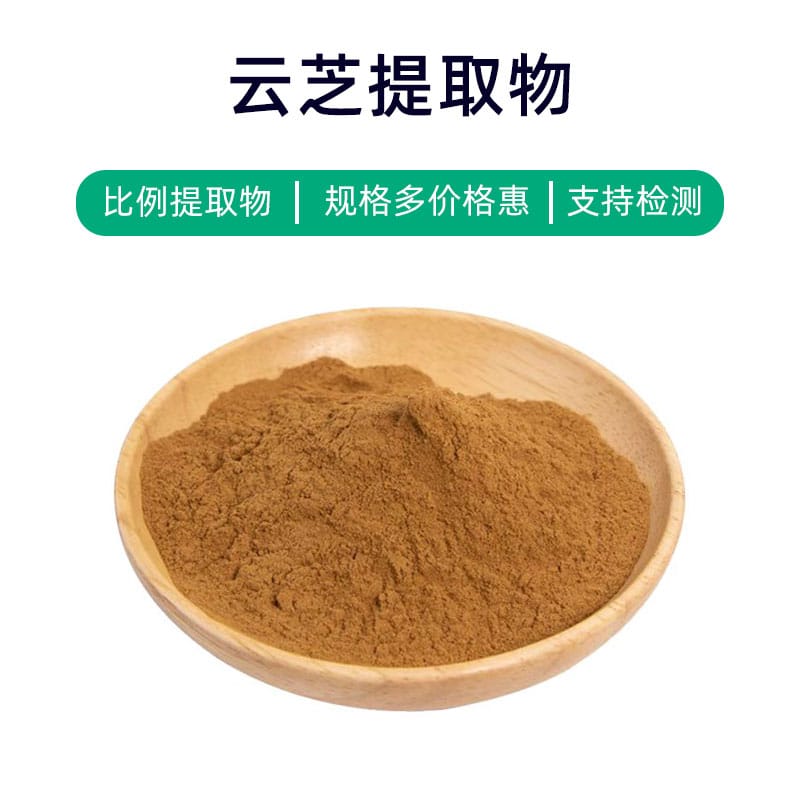



Yunzhi Extract Product Introduction
Yunzhi extract is a natural plant extract derived from the Yunzhi mushroom (Coriolus versicolor), with key components including polysaccharides, proteins, and triterpenoids. These ingredients provide Yunzhi extract with various benefits and applications.
Firstly, Yunzhi extract is rich in polysaccharides, which enhance the immune system and regulate immune functions, improving the body's resistance to diseases and playing a significant role in maintaining immune system balance.
Secondly, Yunzhi extract contains abundant proteins and amino acids, which facilitate metabolic processes, boost physical strength, and combat fatigue, positively affecting body functions and slowing down aging.
Additionally, the triterpenoid compounds in Yunzhi extract are believed to have antioxidant, anti-inflammatory, and anti-tumor effects, promoting overall health and protecting cells from damage, potentially aiding in the prevention and treatment of certain diseases.
In terms of applications, Yunzhi extract is often used in immune-regulating products in the medical field, as well as in dietary supplements, food additives, and cosmetics. Medically, it can serve as a supportive treatment for immune imbalances, blood sugar regulation, and lipid control. In the food industry, it can be added to nutritional supplements to enhance vitality. In cosmetics, it can be included in skincare and anti-aging products.
In summary, Yunzhi extract, as a natural plant extract, has multiple benefits and widespread applications, contributing positively to health maintenance, immune enhancement, and bodily recovery.
Yunzhi Extract Production Process
The production process for Yunzhi extract typically includes the following steps:
- Raw Material Preparation: Fresh Yunzhi mycelium is selected as the raw material, which is then washed, crushed, and ground to facilitate the extraction of active ingredients.
- Extraction Process: The main extraction methods include water extraction, ethanol extraction, or supercritical fluid extraction. Water extraction is one of the most common processes, where Yunzhi raw materials are soaked at the appropriate temperature, allowing active compounds to dissolve in the water, followed by filtration and concentration.
- Concentration and Drying: The obtained liquid is concentrated, usually through vacuum concentration or spray drying techniques, evaporating the water from the solution to produce concentrated Yunzhi extract.
- Refinement: The concentrated Yunzhi extract undergoes further refinement, including filtration, impurity removal, and crystallization to enhance product purity and activity.
- Packaging and Storage: The refined Yunzhi extract is packaged, typically in airtight containers to protect against oxygen and moisture, and stored in a cool, dry place away from direct sunlight and high temperatures.
- Quality Control: Strict quality control measures are implemented throughout the production process, including raw material testing, monitoring of production processes, and analysis of product composition and activity to ensure stable quality that meets standards.
In conclusion, the production process for Yunzhi extract involves multiple stages such as raw material preparation, extraction, concentration and drying, refinement, packaging and storage, and quality control. Each stage requires careful management to ensure the quality and activity of the final product.
Yunzhi Extract Benefits and Side Effects
Yunzhi extract, derived from the Yunzhi mushroom, offers a variety of benefits, including:
- Immune Regulation: Containing active components like β-glucans and triterpenoids, Yunzhi extract can enhance the immune system and regulate its function, contributing to increased resistance.
- Anti-Inflammatory Effects: Some constituents of Yunzhi extract demonstrate anti-inflammatory properties by inhibiting the release of inflammatory factors and alleviating inflammatory responses, which may offer relief for certain inflammatory diseases.
- Antioxidant Activity: Rich in antioxidants such as polyphenols and vitamins, Yunzhi extract helps combat free radicals, reduce oxidative stress, slow aging processes, and protect cellular health.
- Blood Sugar and Lipid Regulation: Research suggests that Yunzhi extract may help regulate blood sugar levels and lower lipid content, providing supportive treatment for certain metabolic disorders.
- Anti-Tumor Properties: The active ingredients in Yunzhi extract are considered to possess anti-tumor effects, inhibiting tumor cell proliferation and metastasis while promoting apoptosis, which may be beneficial in cancer prevention and support.
- Improved Sleep: Some studies indicate that Yunzhi extract can enhance sleep quality, reducing insomnia symptoms and promoting better rest.
While Yunzhi extract has numerous benefits, it's important to note the following:
- Side Effects: Generally, Yunzhi extract has few side effects, but some individuals may experience allergic reactions or digestive issues. Consulting a healthcare professional before use is advisable.
- Dosage and Frequency: Adhere to the dosage and frequency indicated on the product label or as advised by a healthcare professional to avoid adverse reactions.
Overall, Yunzhi extract serves as a natural supplement or auxiliary treatment, offering effects in immune enhancement, anti-inflammatory and antioxidant properties, blood sugar and lipid regulation, and anti-tumor capabilities, though caution is advised during use according to professional guidance.
Yunzhi Extract Applications and Dosage Recommendations
Yunzhi extract is widely used in the fields of medicine, food, and cosmetics. The following details outline the applications and recommended dosages:
- Medical Applications:
- Yunzhi extract is commonly employed in medicines to regulate immune functions, provide anti-inflammatory and antioxidant support, and combat tumors.
- The typical dose for immune enhancement is 50-200 mg of Yunzhi extract taken daily.
- Dosages for supporting treatment of inflammatory diseases may be adjusted according to specific conditions and physician recommendations.
- Food Applications:
- In the food sector, Yunzhi extract is frequently used in dietary supplements as a nutritional aid.
- Generally, a daily intake of 50-200 mg is recommended, with individual adjustments based on specific needs.
- Cosmetic Applications:
- Within cosmetics, Yunzhi extract is often incorporated into skincare products for its antioxidant, moisturizing, and anti-aging properties.
- A suitable amount of Yunzhi extract is suggested for addition to cosmetic products based on guidelines.
- Dosage Considerations:
- Follow dosage and frequency guidelines from the product label or health professionals when using Yunzhi extract.
- Dosages may differ across age groups, health conditions, and intended uses and should be tailored accordingly.
- It is advisable to take Yunzhi extract post-meal or as directed by a healthcare provider to optimize absorption and minimize potential side effects.
In summary, Yunzhi extract is widely applicable in the medical, food, and cosmetic fields, but attention should be given to dosage and usage to ensure safe and effective application per product guidelines or professional recommendations.
Yunzhi Plant Overview, Distribution, and Growth Environment
Yunzhi (Scientific Name: Hericium erinaceus) is a rare fungus, also known as lion's mane mushroom or monkey head fungus. It belongs to the Basidiomycota phylum, the order of Agaricales, and the family of Hericiaceae, being a nutritious edible mushroom with medicinal value. Here is detailed information about the source plant of Yunzhi extract, its distribution, and growth environment.
- Plant Overview:
- Yunzhi is not a traditional plant but a fungal organism classified in the Basidiomycota. Its unique appearance resembles a monkey’s head, which inspires its name.
- Characteristic features include a smooth cap with hair-like or fuzz-covered hyphae, a drooping cap, and a color ranging from white to creamy white, developing in clusters.
- Distribution:
- Yunzhi is widely distributed across the globe, particularly common in temperate and subtropical regions. It primarily grows in forests, mountainous areas, and humid environments in the Northern Hemisphere.
- It can be found and utilized in countries such as China, Japan, South Korea, North America, and Europe.
- Growth Environment:
- Yunzhi thrives in mountainous forests or bamboo groves at elevations of 500-1500 meters, in areas with humid climates and moderate temperatures.
- It often grows on decaying wood, stumps, and tree trunks, and can also be found around bamboo shoots or tree roots.
- Yunzhi does not require much light and prefers shady, damp environments, flourishing in wet forests and areas with abundant rainfall.
In conclusion, Yunzhi, as a valuable fungal ingredient, primarily grows in temperate and subtropical mountainous forests and humid settings. It is distributed globally and represents an important natural resource with significant economic and medicinal value.
Yunzhi Extract Processing and Storage
The processing of Yunzhi extract typically involves collecting fresh Yunzhi, washing, slicing, and drying, followed by grinding, extraction, and other methods to yield the final product. To maintain its quality and shelf life, Yunzhi extract should be stored in a dry, cool, and well-ventilated area, protecting it from direct sunlight and high temperatures. Common storage methods include using sealed containers or bags, regularly checking for any off odors or mold. For long-term storage, it is advisable to avoid moisture and consider refrigeration or freezing to extend the effective lifespan of the Yunzhi extract.

Monica Sun is a seasoned expert in the plant extraction industry with over a decade of experience in research and production. She specializes in the extraction and purification of plant active ingredients, focusing on driving innovation in natural product applications. Monica has participated in the development of multiple functional plant extracts, delivering high-value natural raw material solutions for the health food, pharmaceutical, and dietary supplement sectors.