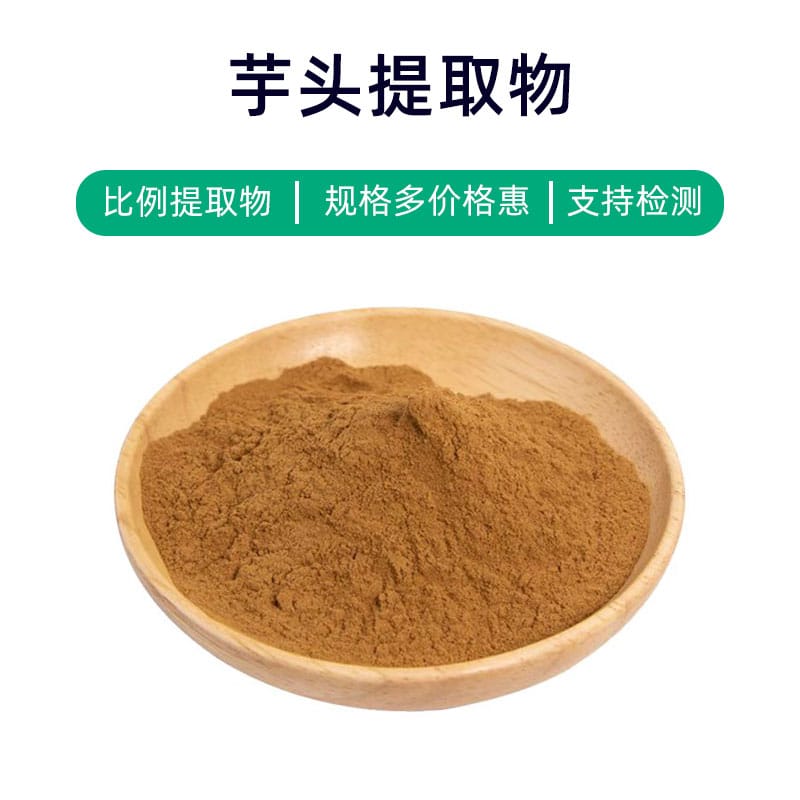



Introduction to Taro Extract
Taro extract is a natural plant extract derived from the taro root, mainly consisting of starch, protein, and cellulose. It finds extensive application in food, health products, and cosmetics.
First, taro extract is rich in starch, which has significant nutritional value. It can be used as a food ingredient, such as for making taro powder and taro bread, providing energy and nutrients to the body.
Secondly, the proteins and fibers in taro extract also offer certain benefits. Protein helps maintain skin elasticity and glow and can be used in cosmetics, such as masks and lotions. Fiber aids digestive health and can be included in health products, such as dietary fiber supplements.
Additionally, taro extract has antioxidant and anti-aging properties. It is rich in natural antioxidants, which can help protect the skin from environmental pollution and UV damage, slowing down the aging process.
In summary, taro extract, as a natural plant extract, boasts a variety of benefits and applications. It can be used in food processing, health product manufacturing, and cosmetics production, providing various options for health and beauty.
Taro Extract Production Process
The production process of taro extract typically includes the following main steps:
- Raw Material Preparation: Fresh, mature taro is selected as raw material. It is harvested at maturity, peeled, and thoroughly cleaned to ensure the quality and purity of the extract.
- Cutting and Grinding: The cleaned taro is cut into small pieces or slices, then ground into fine particles or a paste using grinding equipment.
- Water Extraction: The taro particles or paste are mixed with an appropriate amount of water, followed by an extraction process. This step aims to extract the active components from the taro, usually conducted under specified temperature and time conditions.
- Filtration and Concentration: After extraction, the liquid is filtered to remove solid particles and impurities. Then, concentration equipment is used to reduce the extract to a certain concentration for subsequent processing and use.
- Dehydration and Drying: The concentrated extract undergoes dehydration, typically through evaporation or spray drying, controlling moisture content to ensure product stability and shelf life.
- Grinding and Packaging: The dehydrated taro extract is ground into powder form. Finally, the extract is packaged, usually in sealed packaging to ensure stability and safety during transport and storage.
Through these process steps, a high-purity and high-activity taro extract is obtained, suitable for production and application in food, health products, and cosmetics. Strict control over conditions and parameters is essential throughout the production to ensure product quality meets standards and requirements.
Taro Extract Efficacy and Side Effects
Taro extract offers various benefits and effects in health and beauty, but potential side effects should also be considered. Here’s a detailed overview of the efficacy, functions, and side effects of taro extract:
1. Antioxidant Effects: Taro extract is rich in various antioxidants, such as vitamin C and polyphenols, providing strong antioxidant effects that can neutralize free radicals and delay aging.
2. Anti-inflammatory Properties: Some active components in taro extract exhibit anti-inflammatory effects, helping to alleviate the body's inflammatory responses and promote tissue repair and recovery.
3. Blood Sugar Regulation: Some studies suggest that certain components in taro extract may help regulate blood sugar levels, providing some supportive benefits for diabetes patients.
4. Digestive Promotion: Taro extract contains a wealth of dietary fibers and enzymes, aiding intestinal peristalsis, improving digestion, and alleviating constipation.
5. Skin Beauty: The vitamins and minerals in taro extract benefit the skin by moisturizing, enhancing elasticity, and reducing issues like dryness and wrinkles.
6. Immune Regulation: The active components in taro extract help enhance the body's immune function, improving resistance and reducing the likelihood of infections and diseases.
7. Blood Pressure Reduction: Some research indicates that certain components in taro extract may help lower blood pressure, offering supportive effects for patients with hypertension.
Side Effects and Precautions: While taro extract has numerous benefits, it’s essential to consider the following points during use:
- Overconsumption may cause digestive discomfort: Due to the starch and dietary fiber content, excessive consumption can lead to gastrointestinal discomfort, such as bloating or diarrhea.
- Individual Differences: Reactions to taro extract can vary among individuals, with some possibly allergic to taro, necessitating cautious use.
- Drug Interactions: If taking any medications, especially blood sugar or blood pressure medications, consult a doctor or professional for guidance to avoid potential drug interactions.
Overall, taro extract is beneficial for the body when used in moderation, but individual differences and precautions must be considered. Consulting a doctor or professional before use is advisable to prevent adverse reactions.
Taro Extract Application Scenarios and Dosage
As a natural plant extract, taro extract has wide applications in medicine, food, and cosmetics. Here’s a detailed overview of its application scenarios, usage, and dosage in different fields:
1. Medical Applications:
Taro extract is used in various medical contexts, primarily including the following:
- Antioxidant Therapy: Its antioxidant-rich properties can be utilized to treat diseases related to oxidative stress, such as oxidative anemia.
- Blood Sugar Reduction: Some components in taro extract are believed to have blood sugar-lowering effects, making it a potential adjunct treatment for diabetes.
- Anti-inflammatory Treatment: The active components in taro extract exhibit inhibiting effects on inflammation and can be used in supporting the treatment of inflammatory diseases.
Dosage:
- Oral Use: Typically used as an oral medication, the dosage varies by individual and is advised to be taken under a doctor's guidance, generally 5-10 grams per dose, 2-3 times daily.
- Topical Use: Some medical products also utilize taro extract in topical preparations, such as external patches, with usage and dosage following the product instructions or doctor's recommendations.
2. Food Applications:
Taro extract is primarily used as an additive in the food sector, with the following applications:
- Food Preservation: The natural antioxidants in taro extract can be used for food preservation, extending the shelf life of food products.
- Flavoring Agent: Taro extract can also serve as a natural flavor enhancer, improving the taste and nutritional value of food.
Dosage:
- Additive: Typically added to food in powder or liquid form, the amount should be determined based on specific food types and production processes, adhering to food additive standards and regulations.
3. Cosmetic Applications:
Taro extract has various applications in cosmetics, mainly including:
- Skincare Products: The nutritional components benefit the skin and can be used in skincare formulations, such as masks and lotions, offering moisturizing and antioxidant effects.
- Hair Care: Taro extract can also be included in hair care products like shampoos and conditioners to enhance hair shine and moisture.
Dosage:
- Skincare Products: Apply as per product guidelines, generally a suitable amount to be gently massaged into the face or body until absorbed.
- Hair Care: Use according to product instructions, typically an adequate amount evenly applied to wet hair, massaged, and thoroughly rinsed off.
Overall, taro extract has extensive applications in medicine, food, and cosmetics, but careful attention to usage and dosage in compliance with product guidelines or medical advice is necessary to ensure safety and efficacy.
Taro Extract Source Plant Introduction, Distribution, and Growth Environment
The source plant for taro extract is a species in the Araceae family—taro (scientific name: Colocasia esculenta). Below is a detailed overview of taro's plant characteristics, distribution areas, and growth environment.
1. Taro Plant Characteristics:
Taro is a perennial herb with thickened stems, large heart-shaped leaves, long petioles, and smooth, glossy leaf surfaces. The plant's flowers are not prominent, and mainly, its roots and leaves are utilized for extract preparation.
2. Distribution Areas:
Taro is a common crop in tropical and subtropical regions, predominantly found in Southeast Asia, South Asia, Pacific islands, and some African countries. In China, taro is widely distributed in Guangdong, Guangxi, Fujian, Hainan, and other regions.
3. Growth Environment:
- Climate Requirements: Taro thrives in warm, humid climates, requiring abundant light and enjoying ample sunlight.
- Soil Requirements: Taro is adaptable to a variety of soils but prefers loose, fertile, well-drained soils with moderate acidity or alkalinity.
- Water Needs: Taro thrives in moist environments and has high water needs but should avoid prolonged waterlogging to prevent root rot.
Throughout its growth, taro engages in sufficient photosynthesis, utilizing sunlight and carbon dioxide to synthesize nutrients while accumulating the necessary effective components for extraction in its roots and leaves. Additionally, suitable climate conditions and soil environments contribute to the healthy growth of taro plants.
In summary, taro is a common crop in tropical and subtropical regions, with specific requirements for temperature, light, and moisture; a suitable growth environment ensures both the growth of the taro plant and the quality of the extract.
Taro Extract Processing and Storage
The processing of taro extract mainly includes the following steps: First, the taro is thoroughly washed and peeled, then cut into appropriately sized chunks or slices, followed by the preparation process for the extract, which typically includes soaking, solvent extraction, filtration, concentration, and drying. Finally, the obtained taro extract is sealed and stored in a dry, cool, and dark environment to maintain its stability and quality. Common storage methods include vacuum packaging and sealed jar storage, which can extend the shelf life and efficacy of the taro extract.

Monica Sun is a seasoned expert in the plant extraction industry with over a decade of experience in research and production. She specializes in the extraction and purification of plant active ingredients, focusing on driving innovation in natural product applications. Monica has participated in the development of multiple functional plant extracts, delivering high-value natural raw material solutions for the health food, pharmaceutical, and dietary supplement sectors.