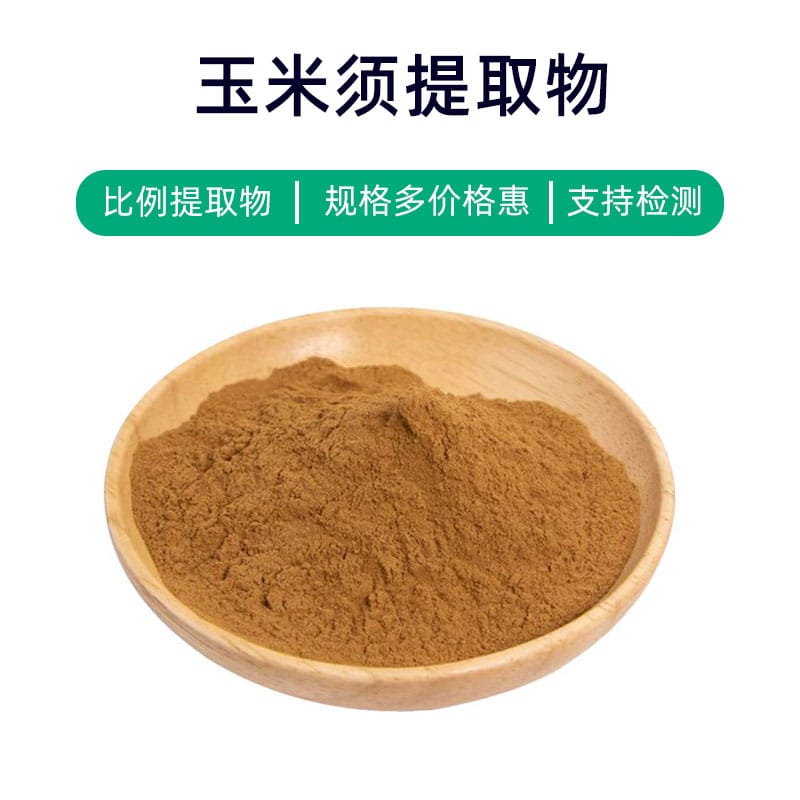



Corn Silk Extract Product Introduction
Corn silk extract is a natural plant extract derived from the silk parts of corn. Its main components include various nutrients such as flavonoids, vitamin C, vitamin K, proteins, and carotenoids. The extract has extensive value in medicine and health care.
Firstly, corn silk extract has diuretic properties that help promote the elimination of excess water from the body, aiding in issues like frequent urination and urgency. Secondly, it is considered to have blood sugar-lowering effects that help regulate blood sugar levels, providing some support for individuals with diabetes.
Furthermore, corn silk extract is widely used for its antioxidant and anti-inflammatory properties. Rich in flavonoids, it exhibits good antioxidant activity, helping to eliminate free radicals in the body and slow down cellular aging. It also has certain anti-inflammatory effects that can alleviate inflammation responses and reduce joint pain.
In terms of application, corn silk extract is commonly used in dietary supplements, pharmaceuticals, and cosmetics. In dietary supplements, it often serves as a functional ingredient for diuretic and blood sugar reduction effects, sometimes combined with other herbs. In cosmetics, its antioxidant and anti-inflammatory properties are widely utilized in skincare products like creams and serums. In pharmaceuticals, it is frequently used to develop diuretic and blood sugar-regulating medications to help alleviate related health issues.
Overall, corn silk extract is a natural plant extract rich in various nutrients and functional components, offering benefits in diuretic, blood sugar regulation, antioxidant, and anti-inflammatory properties, with extensive applications in medicine, health products, and cosmetics.
Corn Silk Extract Production Process
The production process of corn silk extract typically includes the following steps:
- Harvesting Corn Silk: Select fresh, disease-free corn silk as raw material.
- Washing: Clean the harvested corn silk to remove surface impurities and soil.
- Grinding: Crush the cleaned corn silk into a coarse powder.
- Water Extraction: Mix the crushed corn silk with an appropriate amount of water and perform extraction, commonly using methods such as soaking or boiling.
- Filtering: Filter the extracted corn silk infusion to remove solid particles and obtain the extract.
- Concentration: Concentrate the extract using methods like vacuum or low-temperature concentration to reduce water content.
- Decolorization and Purification: Treat the concentrated extract to remove impurities and pigments, enhancing product purity.
- Drying: Dry the decolorized extract using methods like spray drying or vacuum drying to turn it into powder form.
- Milling and Screening: Grind and sieve the dried extract to achieve the desired particle size for the final product.
- Packaging and Storage: Pack the compliant products in suitable materials like aluminum foil bags or plastic drums, storing them in a dry, cool, and light-protected environment to extend shelf life.
This is a general production process for corn silk extract; specific procedures may vary among manufacturers.
Corn Silk Extract Effects and Side Effects
Corn silk extract is a natural plant extract with several effects and benefits, mainly including:
- Diuretic Effect: Widely used in diuretic medications, corn silk extract can increase urine output, promoting the elimination of excess water from the body, helping alleviate edema and hypertension.
- Blood Sugar Regulation: Studies indicate that certain active components in corn silk extract may help lower blood sugar levels, offering support in managing diabetes.
- Antioxidant Effect: Being rich in flavonoids and vitamin C, corn silk extract can scavenge free radicals, slowing down oxidative reactions and cellular aging, benefiting skin health by reducing wrinkles.
- Anti-inflammatory Effect: Some components of corn silk extract possess anti-inflammatory properties, helping to alleviate inflammation and joint pain, offering support for conditions like rheumatoid arthritis.
- Choleretic Effect: Corn silk extract is believed to promote bile secretion and cholesterol excretion, assisting gallbladder function and potentially helping with conditions like cholecystitis or gallstones.
- Digestive Improvement: Rich in dietary fiber and vitamins, corn silk extract may promote intestinal motility and improve digestive functions, aiding in the prevention of constipation and indigestion.
It is important to note that while corn silk extract has various benefits, there may also be side effects and precautions during use:
- Electrolyte Imbalance: Overuse may lead to electrolyte disturbances; long-term or excessive use may increase the excretion of sodium, potassium, and other ions, potentially resulting in hypokalemia.
- Caution for Patients with Kidney Impairment: Due to its diuretic effect, caution is necessary for those with kidney dysfunction to avoid increasing kidney burden.
- Potential Allergic Reactions: Some individuals may experience allergic reactions to corn silk extract, such as skin redness or itching; in such cases, usage should be stopped and medical attention sought.
Overall, corn silk extract, as a natural plant extract, has excellent potential in medicine and health products. However, it's essential to follow the advice of healthcare professionals regarding dosage and methods of use to avoid adverse reactions.
Corn Silk Extract Applications and Dosage
Corn silk extract is a natural plant extract that has various applications, primarily in the fields of medicine, food, and cosmetics.
Applications in Medicine:
- Diuretics: Rich in flavonoids and terpenes, corn silk extract effectively promotes urine expulsion and can help treat edema and hypertension. Common dosage is 10-20 grams orally, prepared as an infusion.
- Blood Sugar Regulators: Some active components in corn silk extract may lower blood sugar levels, assisting in blood sugar control. Generally recommended for oral use, 10-15 grams, also prepared as an infusion.
Applications in Food:
- Health Supplements: Corn silk extract is rich in various nutrients like dietary fiber and vitamins, often used in health supplements to help regulate blood sugar, promote urination, and improve digestion.
- Flavoring Agents: It can also be used as a food additive to enhance the taste and nutritional value of products, such as in tea or seasoning preparations.
Applications in Cosmetics:
- Skincare Products: Corn silk extract’s flavonoids provide antioxidant and anti-inflammatory benefits, making it suitable for skincare products aimed at improving aging skin and reducing wrinkles.
- Hair Care Products: It can also be found in hair care products like shampoos and conditioners, aiding in scalp cleansing and promoting hair growth.
Dosage:
- Common administration routes for corn silk extract are oral or topical. For oral intake, generally, 10-20 grams can be steeped in water or added to tea; for topical use, it may be applied directly or included in skincare products or shampoos.
- Dosage should be tailored to individual circumstances and the specific product’s instructions, following the advice of healthcare professionals.
Overall, corn silk extract has extensive application potential in medicine, food, and cosmetics, but attention should be paid to dosage and methods of use to prevent adverse reactions.
Corn Silk Extract Source Plant Overview
Corn silk, scientifically known as Zea mays L. subsp. mays, is the flower part of the corn plant and commonly used in traditional medicine. Here’s an overview of the source plant for corn silk extract, including its distribution and growth environment.
Source Plant Overview
Corn (scientific name: Zea mays L. subsp. mays) is an important food crop belonging to the Poaceae family. Corn silk refers to the flower structures of the corn plant, usually yellow or brownish fibers, which have certain medicinal properties. Corn is one of the most widely cultivated and highest-yielding crops globally, found across various continents.
Distribution
Corn originated in the Americas and was first cultivated by Native Americans. With the spread of European cultivation techniques, corn gradually emerged as a major food crop worldwide. Currently, corn is planted across several continents, especially in the Americas, Europe, Asia, and Africa.
Growth Environment
Corn has high adaptability, thriving in warm, moist climates with significant light and temperature requirements. The ideal temperature range for corn growth is between 15°C and 32°C, with suitable rainfall between 600 mm and 1200 mm. Corn is adaptable to different soil types but generally prefers fertile, well-drained loamy soils with a pH range of 6.0 to 7.0.
In terms of planting season, corn is an annual plant typically sown in spring or summer, with a growth cycle of about 3 to 5 months before harvest.
Overall, corn is a widely distributed and versatile food crop capable of growing in diverse climatic and soil conditions, making corn silk's source plant also capable of thriving in various environments.
Corn Silk Extract Processing and Storage
The processing of corn silk extract involves several steps: harvesting, cleaning, drying, and grinding. First, fresh corn silk is harvested and thoroughly cleaned of impurities. Next, cleaned corn silk is dried, usually using natural air drying or low-temperature drying methods. After drying, the corn silk is ground to achieve an appropriate particle size for various product preparations.
For storage, corn silk extract should be kept in a dry, ventilated, cool place, avoiding direct sunlight and humid, high-temperature conditions. Sealed containers or bags are recommended for storage to prevent moisture ingress. Proper storage methods can preserve the quality and active components of the extract, extending its shelf life.

Monica Sun is a seasoned expert in the plant extraction industry with over a decade of experience in research and production. She specializes in the extraction and purification of plant active ingredients, focusing on driving innovation in natural product applications. Monica has participated in the development of multiple functional plant extracts, delivering high-value natural raw material solutions for the health food, pharmaceutical, and dietary supplement sectors.