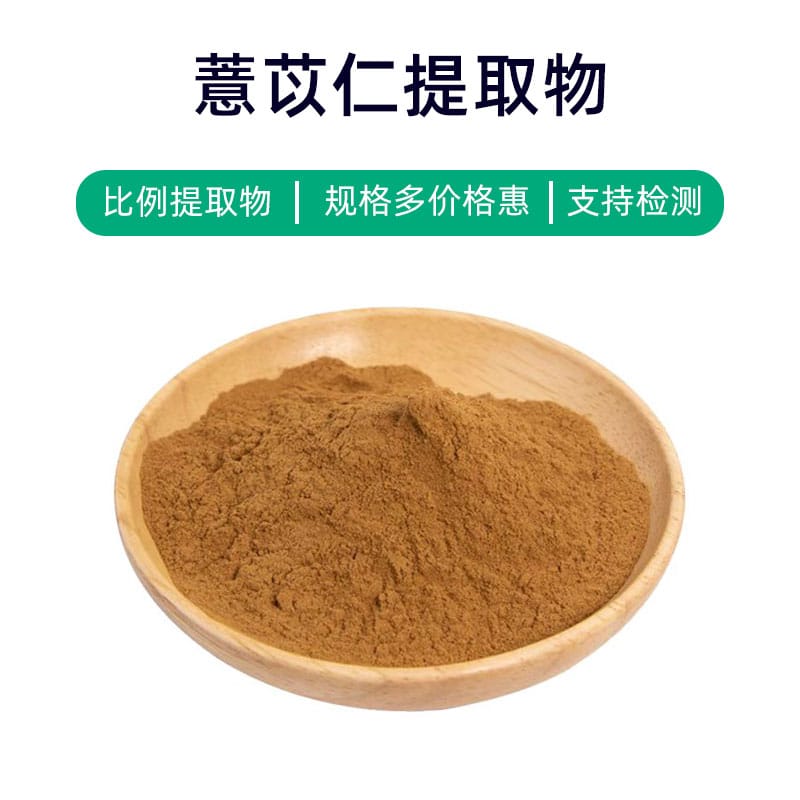



Coix Seed Extract Product Overview
Coix Seed Extract is derived from the fruits of the coix plant. Its main components include proteins, starches, fats, B vitamins, and trace elements. This extract is widely used in pharmaceuticals, health supplements, and cosmetics, offering various benefits and applications. First and foremost, it is traditionally used in Chinese medicine to clear heat and promote dampness removal, treating symptoms such as phlegm accumulation and weakened spleen and stomach. Additionally, Coix Seed Extract has antioxidant, anti-inflammatory, and melanin-inhibiting properties, making it a common ingredient in cosmetics for skincare, whitening, and spot reduction. Moreover, it is often included in health supplements to help regulate bodily dampness and enhance immunity. In summary, Coix Seed Extract is a multifunctional natural ingredient with promising applications that can aid in improving health and beauty.
Coix Seed Extract Production Process
The production process of Coix Seed Extract generally includes the following key steps:
- Raw Material Preparation: Fresh coix fruits are collected as the extraction material. These fruits undergo initial processing, including washing and removing impurities and foreign materials.
- Crushing and Grinding: The cleaned coix fruits are crushed and ground to enhance extraction efficiency, often using a crusher or grinder to turn the fruit into powder.
- Extraction: This is a crucial step in the production process. Common extraction methods include water extraction, ethanol extraction, or supercritical fluid extraction. Water extraction is one of the most common methods, utilizing water as a solvent at appropriate temperatures to extract effective components from the coix fruits.
- Concentration: The extracted liquid undergoes concentration, typically through vacuum concentration or evaporation to remove solvents and obtain a concentrated solution.
- Filtration and Refinement: The concentrated solution is filtered and refined to remove impurities and suspended particles, resulting in pure Coix Seed Extract.
- Drying: Finally, the extracted Coix Seed Extract is dried to form a powder, making it easier for subsequent packaging and storage.
Throughout the production process, it's essential to strictly control parameters such as temperature, pressure, and time to ensure the quality and stability of the final product. Additionally, hygiene standards and quality management requirements must be adhered to, ensuring safety and traceability during production.
Coix Seed Extract Benefits and Side Effects
Coix Seed Extract, derived from the fruits of the coix plant, is widely applied in pharmaceuticals, health supplements, and cosmetics. Its primary benefits and effects include:
- Dampness Removal and Detoxification: Traditionally viewed as having the ability to clear heat, remove dampness, and detoxify, helping to promote the metabolism and excretion of moisture in the body, alleviating discomfort caused by damp heat.
- Strengthening the Spleen and Promoting Digestion: It supports spleen and stomach health, stimulates digestive juice secretion, and improves digestive function, reducing gastrointestinal discomfort such as bloating and indigestion.
- Antioxidant Properties: Coix Seed Extract is rich in antioxidants, like vitamins C and E, which can eliminate free radicals in the body, reduce oxidative stress damage, and protect cell health.
- Whitening and Spot Reduction: It is believed to possess skin whitening and spot-reducing effects, inhibiting melanin production, reducing pigment deposition, and improving uneven skin tone and discoloration.
- Anti-inflammatory Effects: Certain components present in Coix Seed Extract exhibit anti-inflammatory properties, alleviating skin inflammation and symptoms such as redness and itching.
- Skin Nourishment: The nutrients in Coix Seed Extract can nourish the skin, enhance moisture retention, and improve issues like dryness and roughness, making the skin softer and smoother.
While Coix Seed Extract has numerous benefits, caution should be exercised regarding potential side effects and considerations:
- Individual Differences: Individuals may respond differently to Coix Seed Extract, with some experiencing allergic reactions such as itching and redness.
- Dosage Control: It is crucial to adhere to recommended dosages to avoid adverse effects from excessive use.
- Pregnancy Precautions: Pregnant women should avoid using Coix Seed Extract due to unclear safety measures during pregnancy and lactation, posing certain health risks.
In summary, while Coix Seed Extract offers benefits such as clearing heat, promoting dampness removal, strengthening digestion, and providing antioxidant effects, careful dosage control is essential and individual differences and pregnancy precautions should be considered to ensure its safe and effective use.
Coix Seed Extract Applications and Dosage
Coix Seed Extract is widely used in the fields of medicine, food, and cosmetics. Below are application scenarios and dosage recommendations for this product in different areas:
Medical Applications:
- Damp Heat Retention: Coix Seed Extract is used in traditional Chinese medicine to treat symptoms such as edema and eczema caused by damp heat retention. The usual dosage is 3-6 grams orally, 2-3 times a day.
- Spleen and Stomach Weakness: Due to its power in strengthening the spleen and stomach, it can be used to address digestive issues and lack of appetite resulting from spleen and stomach weakness. The dosage remains the same as above.
Food Applications:
- Food Additive: Coix Seed Extract can serve as a food additive in products like bread, cookies, and cereals, to enhance the nutritional value and functionality of these items.
- Health Supplements: It is commonly included in health supplements aimed at regulating body moisture and enhancing gut health. Common forms include capsules and tablets, with dosages of 3-6 grams daily.
Cosmetic Applications:
- Skincare Products: Coix Seed Extract is widely added to skincare products for moisturizing, whitening, and antioxidant benefits. Common forms include masks, lotions, and serums, used externally according to product instructions.
- Beauty Foods: Some beauty products include Coix Seed Extract to improve skin condition and boost skin radiance. Forms include oral liquids and beverages, with dosages as per product guidelines.
It is important to note that the formulas and dosages of different products may vary. Users should carefully read product instructions and consult healthcare professionals or nutritionists, particularly for sensitive groups. Furthermore, dosage control is crucial to prevent adverse effects from excessive use.
Coix Seed Extract Source Plant Overview, Distribution, and Growth Environment
The source plant of Coix Seed Extract is Coix (scientific name: Coix lacryma-jobi), also known as Job's tears or coix seeds, belonging to the Poaceae family. Below is an overview of the coix plant, its distribution, and growth environment:
Plant Overview:
The coix plant is an annual or perennial herb with a developed root system and erect stems that can reach heights of 1-2 meters. The leaves are long and lanceolate with a sharp tip, narrowing to the petiole at their base. The flower spikes are terminal, with multiple florets that are oval or near-round. The fruit is granular, ellipsoid, and appears white or yellow.
Distribution:
The coix plant is native to East Asia, primarily found in countries and regions like China, Japan, Korea, and Vietnam. In China, it is widely distributed, particularly in the Yangtze River Basin, South China, and Northeast China.
Growth Environment:
Coix plants thrive in warm, humid climates and prefer sunny environments. They are often found on slopes, in valleys, in fields, and along riverbanks and lakeshores in moist areas. The coix plant is not strict regarding soil requirements, but it grows best in well-draining, loose soils.
Coix plants are drought-resistant and highly adaptable to various climatic conditions, flourishing in different geographical environments. The growth cycle typically lasts 5-6 months, requiring approximately 120-150 days from sowing to harvest. Under optimal conditions, the coix plant grows quickly and yields high, making it an economically and nutritionally valuable crop.
Overall, the coix plant is a resilient and fast-growing herb, mainly distributed in East Asia, thriving in warm, humid environments, and not demanding stringent soil conditions. Its fruits are extracted to produce Coix Seed Extract, which has extensive applications in medicine, food, and cosmetics.
Coix Seed Extract Processing and Storage
The processing of Coix Seed Extract usually involves the following steps: First, the coix fruits are collected and impurities are removed; second, the fruits are crushed and ground into a powder; next, water extraction or ethanol extraction methods are employed to obtain the effective components from the coix fruits; subsequently, concentration, filtration, and refinement are carried out to obtain pure Coix Seed Extract; finally, the extract is dried to a powder form for easier storage and transportation. During storage, it should be kept in a cool, dry environment, protected from sunlight and humidity, and sealed to maintain its stability and efficacy.

Monica Sun is a seasoned expert in the plant extraction industry with over a decade of experience in research and production. She specializes in the extraction and purification of plant active ingredients, focusing on driving innovation in natural product applications. Monica has participated in the development of multiple functional plant extracts, delivering high-value natural raw material solutions for the health food, pharmaceutical, and dietary supplement sectors.