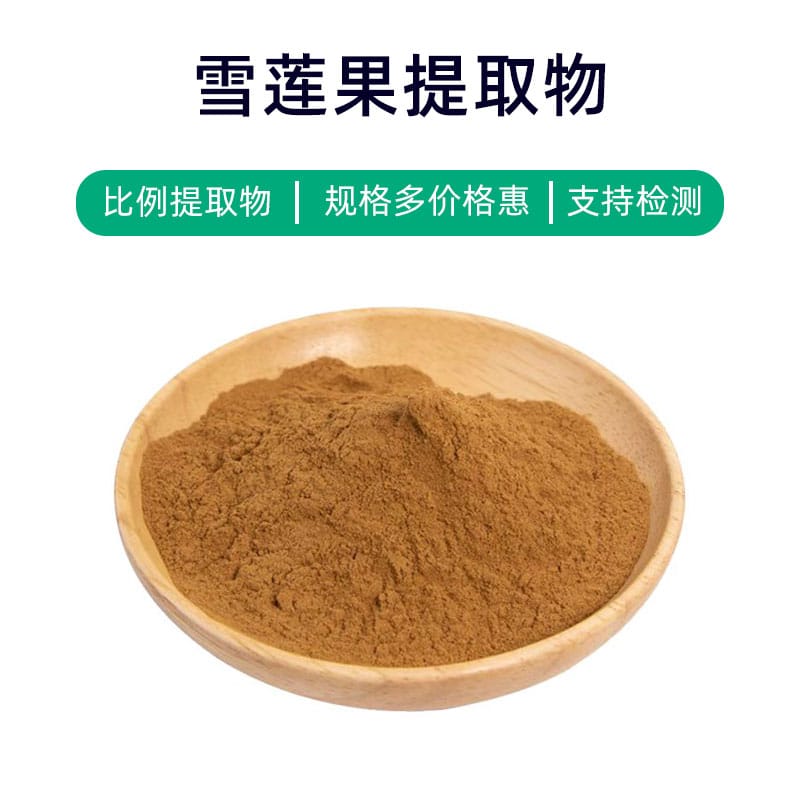



Overview of Snow Lotus Fruit Extract
Snow lotus fruit extract is a natural plant extract derived from the snow lotus fruit, containing rich polysaccharides, flavonoids, volatile oils, and other active components. It is widely applied in medicine, cosmetics, and food sectors.
In the medical field, snow lotus fruit extract is employed as a traditional herbal material, exhibiting antioxidant, anti-inflammatory, and immune-regulating effects. Its polysaccharide components enhance immune function and boost antioxidant capacity, making it suitable for health supplements and pharmaceutical formulations.
In cosmetics, it is often included in skincare and anti-aging products. The abundant flavonoids help improve skin texture, reduce oxidation and aging, resulting in a younger and healthier complexion.
In the food sector, snow lotus fruit extract serves as one of the key ingredients in health foods and functional foods. Its polysaccharides and flavonoids are beneficial to the body, helping to regulate immune function, enhance digestion and absorption, and improve overall constitution, suitable for people of different ages and health conditions.
Overall, as a natural plant extract, snow lotus fruit extract boasts a wealth of bioactive components, suitable for product development and manufacturing across multiple fields, providing a reliable choice for health and beauty.
Production Process of Snow Lotus Fruit Extract
The production process of snow lotus fruit extract generally involves several steps:
- Raw Material Preparation: Fresh snow lotus fruit is selected as the raw material for extraction, ensuring high quality. The timing and method of harvesting affect the quality of the extract, so strict control of picking time and process is necessary.
- Cleaning: The harvested snow lotus fruits are cleaned to remove surface impurities and dirt, maintaining the purity of the extract.
- Crushing and Grinding: The cleaned snow lotus fruits are crushed and ground into small particles suitable for extraction, improving extraction efficiency.
- Solvent Extraction: Appropriate solvents (such as water or ethanol) are used to extract the active components from the snow lotus fruit, dissolving them to form an extract solution.
- Concentration of Extract: The solvent in the extract solution is removed by methods such as evaporation or vacuum concentration to yield the concentrated extract.
- Filtration and Refinement: The concentrated extract is filtered to remove impurities and solid particles, enhancing the purity and clarity of the extract.
- Low-Temperature Drying: Low-temperature drying techniques are applied to dry the extract while preserving the stability and efficacy of its active components.
- Packaging and Storage: The dried extract is packaged and securely stored in a cool, dry environment, avoiding direct sunlight and moisture, to extend its shelf life.
These steps outline the typical production process of snow lotus fruit extract, where each step requires strict control over operational conditions and quality standards to ensure the quality and stability of the final product.
Efficacy and Side Effects of Snow Lotus Fruit Extract
Snow lotus fruit extract, as a natural plant extract, possesses certain applications in traditional and modern medicine. Its primary effects and functions include:
- Antioxidant Effect: Snow lotus fruit extract is rich in polyphenols and antioxidants, effectively neutralizing free radicals, slowing down cellular oxidative damage, and protecting cells from oxidative stress.
- Anti-Inflammatory Effect: Research shows that the active components in snow lotus fruit extract exhibit some anti-inflammatory properties, inhibiting the occurrence and development of inflammatory responses and alleviating symptoms of inflammatory diseases.
- Immune Regulation: Various active components in snow lotus fruit extract have immune-regulating effects, enhancing the body’s immunity and resistance. It can serve as an auxiliary treatment for patients with immune-related diseases or low immune function.
- Liver Protection: Some studies indicate that certain components of snow lotus fruit extract can protect liver function, reducing liver damage and promoting the repair and regeneration of liver cells, providing health benefits for liver disease patients.
- Anti-Aging Effects: Snow lotus fruit extract contains abundant vitamins and antioxidants, which can delay the aging process of skin cells, maintain skin elasticity and smoothness, and reduce the formation of wrinkles and pigment spots.
- Circulatory System Improvement: The active components in snow lotus fruit extract can aid in lowering blood pressure, reducing blood lipids, and increasing vascular elasticity, thereby improving cardiovascular function and preventing heart disease.
Though snow lotus fruit extract has numerous benefits, attention should be paid to the following points during use:
- Dosage: When using snow lotus fruit extract, it is essential to follow the recommended dosage from a healthcare provider or product instructions, avoiding excessive use that may lead to adverse reactions.
- Cautions: Pregnant women, breastfeeding mothers, and those with allergies should use snow lotus fruit extract with caution to prevent adverse effects.
- Drug Interactions: Some medications may interact with snow lotus fruit extract, affecting the effectiveness of the medications or increasing the risk of adverse reactions. Consultation with a healthcare professional is recommended when using medications alongside it.
In summary, snow lotus fruit extract, as a natural plant extract, has a broad range of application prospects in medicine, health supplements, and cosmetics. However, careful and reasonable use is necessary to fully exploit its benefits while avoiding adverse reactions.
Application Scenarios and Dosage of Snow Lotus Fruit Extract
As a natural plant extract, snow lotus fruit extract has various application scenarios in medicine, food, and cosmetics. The following highlights its applications in these fields along with corresponding dosages:
- Medical Applications:
- Snow lotus fruit extract is often used to formulate medications like health supplements and pharmaceutical preparations.
- Dosage: Typically taken as an oral health supplement, it is recommended to follow the dosage stated by a healthcare provider or product instructions, generally 1-3 times per day, 5-20 mg per dose.
- Food Applications:
- Snow lotus fruit extract can serve as a food additive, enhancing the nutritional value and taste of foods.
- Dosage: Added based on the formulation and production requirements, generally used according to the proportions outlined in food manufacturing processes.
- Cosmetics Applications:
- Snow lotus fruit extract is commonly found in skincare and beauty products, offering moisturizing, antioxidant, and anti-aging benefits.
- Dosage: Applied according to the recommendations in the cosmetic formulation and product instructions, generally as a suitable amount smoothed onto clean skin, gently massaged until absorbed.
- Medicinal Wine Applications:
- Snow lotus fruit extract can be used to prepare medicinal wines, such as snow lotus wine, providing benefits such as nourishing health, benefiting the spleen and liver, and harmonizing Qi and blood.
- Dosage: Typically consumed as per the advice from a healthcare provider or product instructions, generally 10-30 ml per dose, 1-3 times per day.
- Medicinal Cuisine Applications:
- Snow lotus fruit extract can also be used in medicinal cooking, crafting dishes like snow lotus soup or stewed chicken with snow lotus, aiding in body nourishment and immune enhancement.
- Dosage: Added according to cooking recipes and personal taste preferences, consumed after cooking.
Overall, snow lotus fruit extract holds significant application value in medicine, food, and cosmetics. Dosages should be tailored based on specific products and uses, with recommendations to thoroughly read product instructions or consult professionals before use.
Description, Distribution, and Growth Environment of the Source Plant of Snow Lotus Fruit Extract
Snow lotus fruit extract comes from a plant commonly known as snow lotus, scientifically named Saussurea involucrata. Below is an introduction to the plant's characteristics, distribution areas, and growth environment.
- Plant Characteristics:
- Snow lotus is a high-altitude plant, belonging to the Asteraceae family, and is a rare species among alpine flora.
- The plant generally stands between 20 and 60 centimeters tall, grows slowly, has a low profile, and features blue-green leaves covered with white, feather-like hairs, hence the name "snow lotus."
- Distribution Areas:
- Snow lotus is primarily distributed in cold regions of the Himalayas, Kunlun Mountains, and Altai Mountains, typically growing at elevations between 3,000 and 5,000 meters.
- Growth areas include regions in Tibet, Xinjiang, Qinghai, and Gansu in China, as well as countries like Russia, Mongolia, and Nepal.
- Growth Environment:
- Snow lotus flourishes in alpine meadows, crevices, and rocky terrains of high-altitude cold regions, usually selecting sunny, cold, and relatively humid environments.
- Due to the harshness of its growing environment and geographical conditions, snow lotus has a long growth cycle and slow growth rate, making it a rare and precious plant resource.
- Ecological Characteristics:
- Snow lotus is cold-resistant, drought-tolerant, and able to withstand adversity, adapting to the extreme environments of high-altitude areas.
- Due to the specificity of its growth environment, the plants do not have high soil requirements, often growing in gravel, rocky, or meadow soils that are generally poor.
- Conservation Status:
- Due to the narrow growing environment, limited geographical distribution, and factors like overharvesting and habitat destruction, the population of snow lotus is gradually decreasing and has been classified as an endangered plant, necessitating enhanced conservation efforts.
In summary, snow lotus, as a high-altitude plant, grows in cold environments at high elevations. Its distribution mainly concentrates in the Himalayan and Kunlun mountain ranges, possessing high ecological and conservation value.
Processing and Storage of Snow Lotus Fruit Extract
The processing of snow lotus fruit extract primarily includes the following steps: first, mature snow lotus fruits are harvested, followed by cleaning and impurity removal. Next, the cleaned fruits are either dried or frozen to maintain the stability of their active components. Appropriate extraction methods, such as water or alcohol extraction, are then used to extract the effective components from the fruits. Finally, the obtained product undergoes filtering, concentration, and drying processes to yield the final snow lotus fruit extract. During storage, the extract should be kept in a dry, cool, and light-protected environment to prevent moisture, degradation, or loss of active components. Sealed containers are typically used for packaging to avoid air exposure, thereby extending the product’s shelf life and stability.

Monica Sun is a seasoned expert in the plant extraction industry with over a decade of experience in research and production. She specializes in the extraction and purification of plant active ingredients, focusing on driving innovation in natural product applications. Monica has participated in the development of multiple functional plant extracts, delivering high-value natural raw material solutions for the health food, pharmaceutical, and dietary supplement sectors.