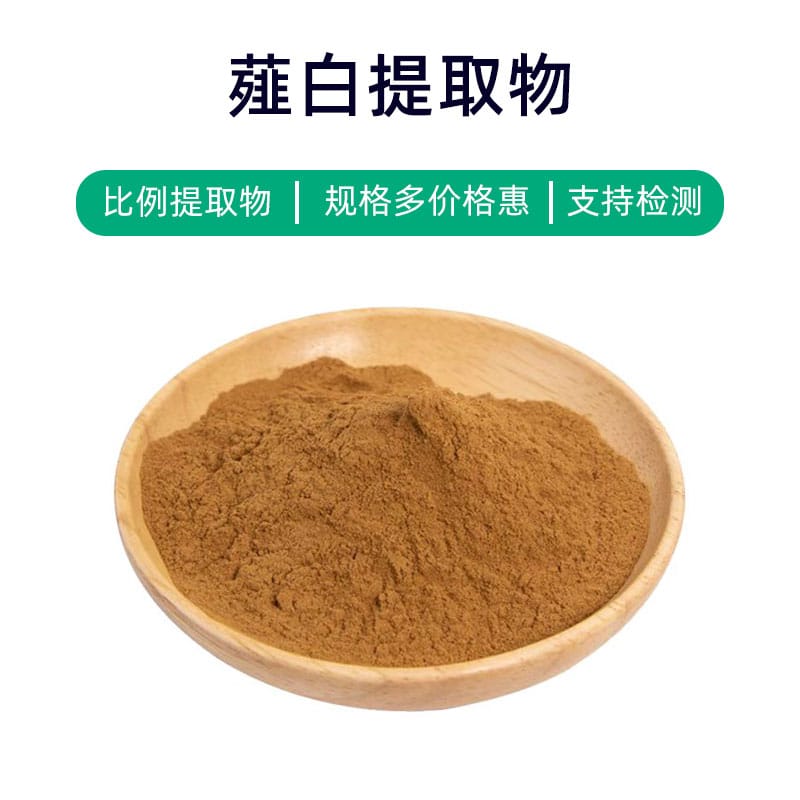



Introduction to Wild Garlic Extract
Wild garlic extract is a natural medicinal component extracted from the wild garlic plant, mainly containing alliin, sulfides, and polysaccharides. These components confer various benefits and application values to the extract. Firstly, wild garlic extract has antioxidant properties that help eliminate free radicals in the body, slowing down the aging process and protecting cells from oxidative damage. Secondly, it exhibits antibacterial and anti-inflammatory effects, assisting in the prevention and alleviation of inflammatory responses, contributing to overall health. Additionally, wild garlic extract is widely used in cosmetics as an additive in skincare products to improve skin condition, enhance elasticity, and reduce wrinkles and dark spots, resulting in smoother and softer skin. In the pharmaceutical field, it is often used to prepare health supplements or medications aimed at regulating immune function, improving well-being, and preventing diseases. In summary, as a natural plant extract, wild garlic extract has extensive applications in health, medicine, and cosmetics, bringing positive effects to health and beauty.
Production Process of Wild Garlic Extract
The production process of wild garlic extract typically includes the following steps:
- Raw Material Preparation: Select fresh wild garlic plants as extraction material, ensuring quality and purity.
- Cleaning and Processing: Clean and process the wild garlic plants to remove surface impurities and debris, ensuring the purity for subsequent extraction steps.
- Crushing and Grinding: Crush and grind the cleaned wild garlic plants into a fine powder suitable for extraction, increasing extraction efficiency.
- Extraction: Use suitable solvents like water, ethanol, or organic solvents to extract the active components from the wild garlic plant.
- Concentration: Concentrate the extract to remove excess solvents and moisture, resulting in a concentrated wild garlic extract solution.
- Filtration and Purification: Filter and purify the concentrated solution to remove suspended solids and impurities, increasing the purity of the extract.
- Drying: Dry the filtered wild garlic extract solution to eliminate moisture, resulting in dry wild garlic extract powder.
- Packaging and Storage: Package the dried wild garlic extract powder in moisture-proof, light-proof, and sealed containers to ensure quality and stability. Store it in a cool, dry environment, avoiding direct sunlight and high temperatures.
- Quality Inspection: Conduct quality testing on the finished product, including active ingredient content, microbiological testing, and detection of harmful substances like heavy metals to ensure compliance with relevant quality standards and regulations.
Through these process steps, high-quality wild garlic extract with high purity can be produced for applications in pharmaceuticals, health supplements, and cosmetics.
Effects and Side Effects of Wild Garlic Extract
Wild garlic extract is recognized for its multiple effects in traditional herbal medicine and modern medical research, mainly including the following aspects:
- Anti-Inflammatory Effects: Wild garlic extract contains various active ingredients that exhibit significant anti-inflammatory properties, inhibiting the release of inflammatory factors and reducing inflammatory responses.
- Antioxidant Effects: The polyphenolic compounds in wild garlic extract possess strong antioxidant activity, eliminating free radicals and mitigating oxidative stress damage to the body.
- Antibacterial Effects: Wild garlic extract has inhibitory effects on various bacteria and fungi, making it useful for preventing and treating infections caused by these pathogens.
- Immune Modulation: Wild garlic extract can regulate immune system functions, enhancing body resistance and increasing immune cell activity, thus aiding in the prevention and treatment of immune-related diseases.
- Anti-Tumor Effects: Some studies suggest that the active components in wild garlic extract can inhibit tumor growth and spread, potentially having therapeutic effects on certain tumors.
- Blood Sugar Regulation: Compounds in wild garlic extract may help lower blood sugar levels by promoting insulin secretion and improving insulin resistance, providing auxiliary treatment for diabetes.
- Improving Circulatory System: Wild garlic extract improves blood circulation, lowers blood lipids and cholesterol levels, and helps prevent cardiovascular diseases.
Wild garlic extract is generally safe due to its natural plant-derived nature, but may cause allergic reactions or digestive issues in some individuals. Therefore, it is advised to follow medical guidance regarding dosage and avoid excessive use. For pregnant women, breastfeeding mothers, and children, use under a doctor's supervision is recommended. If adverse reactions occur, stop usage immediately and seek medical advice.
Application Scenarios and Dosage of Wild Garlic Extract
Wild garlic extract has broad applications in the fields of medicine, food, and cosmetics. Its main application scenarios and dosages are outlined as follows:
- Medical Applications:
- Digestive System Disease Treatment: Wild garlic extract is commonly used to treat digestive system diseases, such as gastritis and gastric ulcers. The usual method is oral intake, with a recommended dose of 5-10 grams per session, taken 2-3 times daily.
- Immune Modulation: Wild garlic extract can assist in treating immune-related diseases, such as autoimmune disorders, typically with a dosage of 5-10 grams per session, taken twice daily.
- Antibacterial Treatment: For certain infectious diseases like skin infections and respiratory infections, wild garlic extract can be used topically or orally, with dosages based on physician recommendations.
- Blood Sugar Regulation: For diabetes patients, wild garlic extract can serve as an auxiliary treatment, usually advised at 5-10 grams per session, taken twice daily.
- Food Applications:
- Health Supplements: Wild garlic extract is commonly included in health food products for its immune-boosting, blood sugar and lipid-regulating, and antioxidant properties. The general dosage is 5-10 grams daily, which can be prepared as an oral liquid or in capsule form as needed.
- Flavoring Agent: Wild garlic extract can also be used as a flavoring agent, enhancing food taste and offering certain medicinal food synergy effects.
- Cosmetic Applications:
- Skincare Products: Wild garlic extract is often incorporated into skincare products for its antioxidant, anti-inflammatory, and whitening effects, beneficial for skin conditioning and brightening. Daily use of 1-2 times is suggested, with amounts depending on specific product formulations.
- Hair Care Products: Wild garlic extract can also be added to shampoos and conditioners, helping to cleanse the scalp and nourish hair strands.
When using wild garlic extract, it is advisable to follow the recommendations of healthcare professionals and pay attention to product quality and safety. Dosage and usage methods may vary depending on different application scenarios and individual circumstances, so be sure to read the product instructions carefully and consult experts beforehand.
Introduction to the Source Plant of Wild Garlic: Distribution and Growth Environment
Wild garlic (scientific name: Allium macrostemon Bunge) is a perennial herb belonging to the onion genus (Allium) in the lily family. Below is an overview of wild garlic’s source plant, distribution, and growth environment.
Source Plant Introduction:
Wild garlic is a herbaceous plant with a thickened bulb underground, long tubular leaves that are hollow, and a flowering top. Its bulbs and leaves are edible and possess certain medicinal values. In some areas, wild garlic is also used as a food seasoning.
Distribution:
Wild garlic primarily grows in Northeast, North, Northwest, and Southwest China, including provinces such as Heilongjiang, Jilin, Liaoning, Inner Mongolia, Hebei, Shanxi, Shaanxi, Gansu, Qinghai, Sichuan, Guizhou, and Yunnan. It typically thrives in mountainous, grassland, and forest edge environments.
Growth Environment:
- Climate Requirements: Wild garlic prefers a mild and humid climate, showing strong cold resistance but poor tolerance to high temperatures and drought.
- Soil Requirements: The ideal soil for wild garlic is fertile, loose, and well-drained sandy loam or loamy soil. While it is not overly picky about soil, it thrives best in loose, well-draining conditions.
- Light Requirements: Wild garlic grows best in bright environments, typically enjoying full sunlight but can adapt to partially shaded conditions.
- Altitude Range: Wild garlic can thrive at a wide range of altitudes, from low to mid-high elevations, typically between 500 to 2500 meters above sea level.
In summary, wild garlic grows under fairly flexible environmental conditions and is adaptable, but it does have requirements for soil drainage and light conditions. In suitable environments, wild garlic can grow vigorously, yielding large bulbs that provide edible and medicinal value.
Processing and Storage of Wild Garlic Extract
Processing of wild garlic extract typically includes the following steps: first, raw materials are harvested and cleaned by removing impurities from fresh wild garlic bulbs; next, the cleaned bulbs are ground into powder, and then appropriate extraction methods are used to isolate the active components; finally, through filtration, concentration, and drying, impurities are removed from the extract, and the final wild garlic extract product is obtained.
In terms of storage, wild garlic extract should be kept in a cool, dry place away from direct sunlight and high temperatures, avoiding moisture to prevent quality degradation and microbial contamination. It is best stored in sealed containers with regular checks on the extract’s appearance and aroma to ensure its quality and safety.

Monica Sun is a seasoned expert in the plant extraction industry with over a decade of experience in research and production. She specializes in the extraction and purification of plant active ingredients, focusing on driving innovation in natural product applications. Monica has participated in the development of multiple functional plant extracts, delivering high-value natural raw material solutions for the health food, pharmaceutical, and dietary supplement sectors.