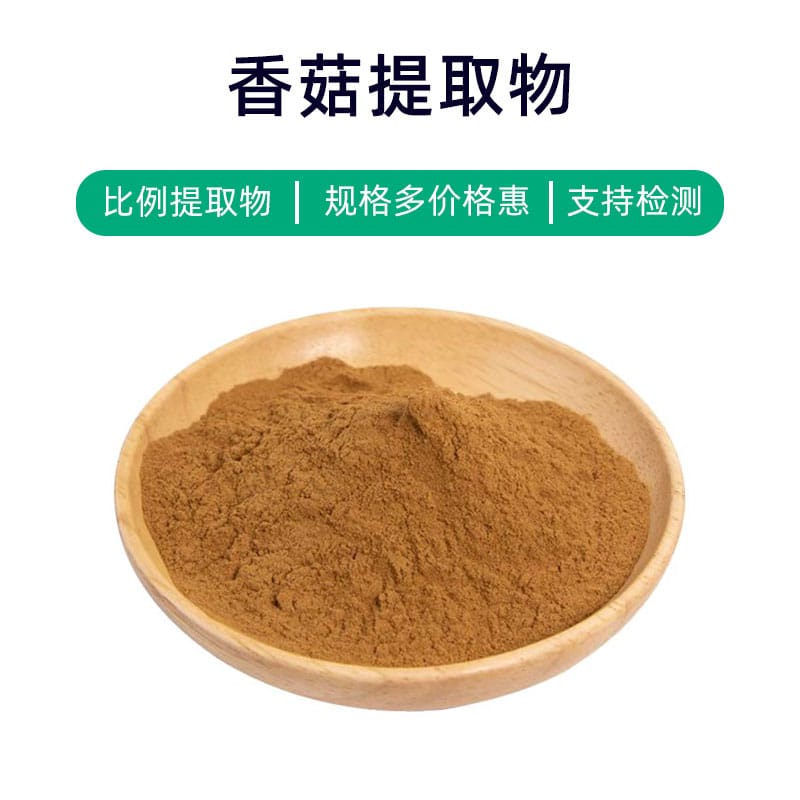



Shiitake Mushroom Extract Product Introduction
Shiitake mushroom extract is a natural plant extract derived from shiitake mushrooms (Lentinula edodes). Its main components include polysaccharides, proteins, and polyphenolic compounds. Shiitake mushroom extract is commonly used in health supplements, food, and pharmaceutical industries due to its various health benefits.
Firstly, shiitake mushroom extract is rich in polysaccharides, which are known to boost immunity and enhance the body's resistance. Secondly, the extract is high in protein, serving as a dietary supplement to provide essential nutrition.
Additionally, shiitake mushroom extract contains various polyphenolic compounds with antioxidant, anti-inflammatory, and anti-aging properties. These compounds help reduce free radical damage to cells and contribute to the health of various organs in the body.
In terms of application, shiitake mushroom extract is often included in health supplement formulations as an ingredient to enhance immunity and improve physical condition. Moreover, it is widely added to various foods, such as health foods, nutritional products, and functional foods, to increase their nutritional value and functionalities. In the pharmaceutical field, shiitake mushroom extract is also used in the formulation of drugs like immune modulators and antioxidants.
In summary, shiitake mushroom extract, as a natural plant extract, is rich in nutrients and health benefits, making it widely applicable in health supplements, food, and pharmaceuticals, providing important support for people's health.
Shiitake Mushroom Extract Production Process
The production process of shiitake mushroom extract typically includes the following key steps:
- Raw Material Preparation: Fresh shiitake mushrooms are selected, impurities are removed, and they are thoroughly cleaned to ensure quality and purity.
- Cutting and Processing: The cleaned mushrooms are chopped or ground into a powder to enhance extraction efficiency. Sometimes, heat treatment or enzymatic processes are used to break down cell walls and release active components.
- Solvent Extraction: The shiitake mushroom powder is mixed with an appropriate solvent (such as water or ethanol) and extracted under suitable temperature and time conditions. The choice of solvent and control of extraction conditions significantly influence the quality and composition of the extract.
- Filtration and Concentration: The extract is filtered to remove impurities and solid particles, followed by evaporation or concentration techniques to remove the solvent, resulting in a concentrated extract.
- Refinement and Purification: The concentrated extract undergoes further refinement and purification processes, usually including precipitation, crystallization, and separation to remove unwanted components and impurities, enhancing the product’s purity and activity.
- Drying and Milling: Finally, the refined extract is dried to remove moisture and enhance stability, then ground into a powdered form for easy packaging and use.
- Quality Control: Throughout the production process, strict quality control measures are taken, including raw material testing, monitoring production processes, and finished product testing to ensure compliance with relevant standards and regulations.
- Packaging and Storage: The final shiitake mushroom extract is packaged and stored under appropriate conditions to maintain its quality and stability, ensuring readiness for subsequent sales and applications.
Through these processes, high-quality shiitake mushroom extract with high purity and rich active ingredients can be produced to meet the needs of various industries and fields.
Shiitake Mushroom Extract Effects and Side Effects
Shiitake mushroom extract, as a natural plant extract, has broad applications and benefits across many fields. Here are its main effects and benefits:
- Antioxidant Properties: Rich in various antioxidants, such as polyphenolic compounds and polysaccharides, shiitake mushroom extract helps eliminate free radicals in the body, reducing oxidative stress on cells and promoting cell health.
- Immune Modulation: Contains various bioactive components like β-glucans and polysaccharide proteins that help modulate immune function, enhancing overall immunity and resistance.
- Anti-Tumor Effects: Research indicates that polyphenolic compounds in shiitake mushroom extract possess anti-tumor properties, suppressing the proliferation and metastasis of tumor cells and promoting apoptosis, showing potential anti-cancer effects.
- Blood Sugar Regulation: The polysaccharides in shiitake mushroom extract have blood sugar-lowering effects, helping to regulate blood sugar levels and improve insulin sensitivity, which can aid in preventing and managing diabetes-related conditions.
- Lipid Lowering: The active components in shiitake mushroom extract help regulate blood lipids, reducing cholesterol and triglyceride levels, thus preventing cardiovascular diseases.
- Digestive Improvement: Shiitake mushroom extract is rich in dietary fiber and enzymes, promoting intestinal motility, enhancing digestive function, and preventing constipation and digestive discomfort.
- Anti-Inflammatory Effects: Its bioactive components have anti-inflammatory properties, capable of inhibiting the release of inflammation-causing factors and alleviating inflammatory responses, providing some relief for inflammatory diseases.
- Liver Protection: The polysaccharides and polyphenols in shiitake mushroom extract can protect the liver, reduce liver damage, and promote the repair and regeneration of liver cells.
Generally, shiitake mushroom extract is considered safe at appropriate doses. However, long-term or high-dose use may cause allergic reactions or digestive issues in some individuals. It is advisable to consult with a doctor or nutritionist before use, especially for pregnant women, breastfeeding mothers, and people with specific health conditions.
Shiitake Mushroom Extract Applications and Dosage
Shiitake mushroom extract has wide applications in medicine, food, and cosmetics. Its application scenarios and dosages are as follows:
- Medical Applications:
- Shiitake mushroom extract is commonly included in traditional medicine formulas, known for its immune-boosting, anti-tumor, blood sugar regulation, and lipid-lowering effects. It can be used as a health supplement, pharmaceutical raw material, or adjunctive therapy for diseases.
- Dosage: Typically available in capsule, powder, or liquid form, the specific dosage should be determined according to the product instructions or medical advice. Generally, it is recommended to take 1-3 times a day, with each dose depending on the product’s concentration, and it is advised to use under a doctor’s guidance.
- Food Applications:
- Used as a food additive to enhance the nutritional value and taste of various foods, shiitake mushroom extract is commonly found in items such as meat products, seasonings, and beverages.
- Dosage: Food additives are usually added according to production processes and food recipes, adhering to food safety standards and usage guidelines. The amount depends on specific food formulations, and the production process must comply with relevant laws and standards.
- Cosmetic Applications:
- Shiitake mushroom extract is commonly used in cosmetics for its antioxidant, anti-inflammatory, moisturizing, and anti-aging properties, found in skincare products, masks, lotions, and more.
- Dosage: In cosmetic formulations, shiitake mushroom extract is typically added in specific proportions determined by the product’s formula, and it is advisable to follow product instructions to avoid excessive use.
In conclusion, shiitake mushroom extract, as a natural plant extract, has extensive applications in medicine, food, and cosmetics. When using it, it's recommended to follow product guidelines or seek medical advice to manage dosages effectively, ensuring safety and efficacy.
Shiitake Mushroom Plant Source, Distribution, and Growing Environment
Shiitake mushroom (scientific name: Agaricus bisporus) is a common fungus and an important source of edible mushrooms. Below is an introduction to the source plant, distribution, and growing environment of shiitake mushrooms.
Source Plant Introduction:
Shiitake mushrooms belong to the Basidiomycota phylum, family Agaricaceae, genus Agaricus, and their scientific name is Agaricus bisporus. Characteristics include a round or hemispherical cap that is smooth, with color varying by variety (white, light brown, or dark brown). The gills are white, the stem is hollow, and the mycelium is white. The fruiting body is rich in nutrients, making it widely used in food processing and medicinal applications.
Distribution:
Shiitake mushrooms are widely distributed edible fungi, cultivated and found in the wild around the world. They originated in Europe and, through human activities, were introduced and cultivated globally. Currently, shiitake mushrooms are one of the world's major edible fungi, widely cultivated in Asia, Europe, North America, and other regions.
Growing Environment:
Shiitake mushrooms thrive in warm and humid environments, with an optimal growing temperature between 15-25 degrees Celsius. Typically, the cultivation substrate is a mix of organic materials such as mushroom beds, which include wheat straw, corn stalks, and mushroom sawdust. These organic materials provide the nutrients and moisture needed for mushroom growth. Under suitable temperature and humidity conditions, shiitake mycelium grows within the substrate, ultimately forming the fruiting body, which is the shiitake mushroom we see.
In summary, shiitake mushrooms are a highly adaptable fungus that can grow and reproduce in various suitable environmental conditions. Their wide distribution and rich nutrient profile make them a popular choice for consumption.
Processing and Storage of Shiitake Mushroom Extract
The processing of shiitake mushroom extract typically includes the following steps: First, mature shiitake mushrooms are harvested, then cleaned and peeled. Next, the mushrooms are sliced or ground to facilitate subsequent extraction. The extraction process generally employs water or organic solvent extraction methods, yielding an extract that undergoes filtration, concentration, and drying steps to produce shiitake mushroom extract.
For storage, shiitake mushroom extract should be kept in a cool, dry environment, avoiding direct sunlight and moisture. It is usually packaged in sealed containers and stored at low temperatures to extend shelf life.

Monica Sun is a seasoned expert in the plant extraction industry with over a decade of experience in research and production. She specializes in the extraction and purification of plant active ingredients, focusing on driving innovation in natural product applications. Monica has participated in the development of multiple functional plant extracts, delivering high-value natural raw material solutions for the health food, pharmaceutical, and dietary supplement sectors.