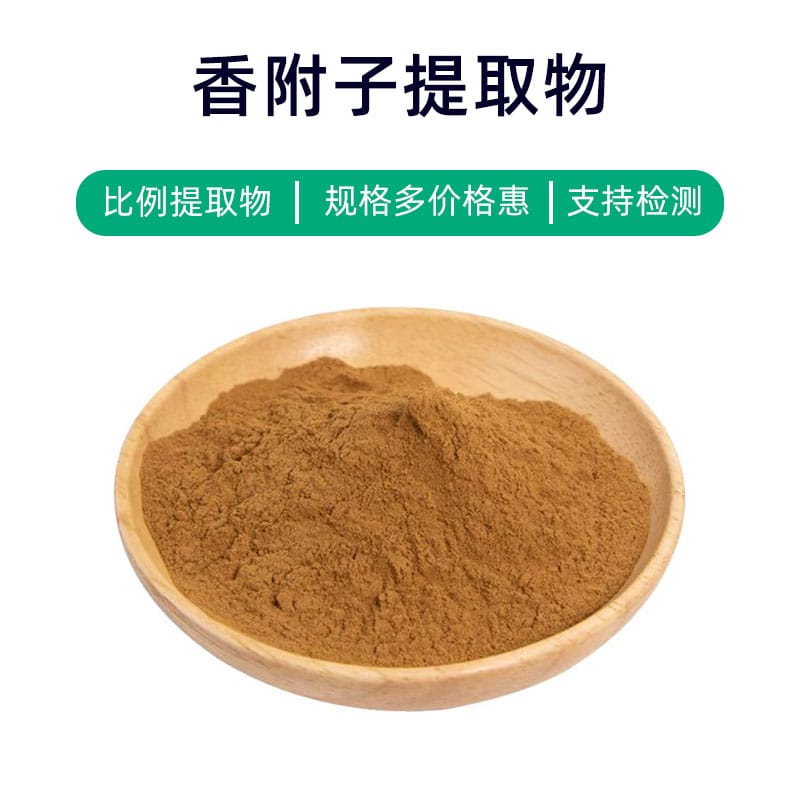



Xiang Fu Extract Product Introduction
Xiang Fu Extract is a plant extract obtained from the Xiang Fu plant, primarily consisting of active components like cyperol and cyperene. It is commonly utilized in traditional Chinese medicine formulations, health products, and cosmetics. Its effects are mainly seen in regulating Qi and relieving muscle tension. In traditional Chinese medicine, Xiang Fu Extract is often used in formulas aimed at soothing the liver and promoting blood circulation, helping to alleviate gastrointestinal discomfort and menstrual pain. In health products, it is included as a component to improve physical condition and promote blood circulation. In cosmetics, it is frequently added to skincare products due to its calming effect on the skin and ability to reduce skin discomfort. Overall, as a natural plant extract, Xiang Fu Extract offers multiple benefits and is widely applied in the pharmaceutical and cosmetic industries.
Xiang Fu Extract Production Process
The production process of Xiang Fu Extract generally includes the following major steps:
- Raw Material Preparation: Select high-quality Xiang Fu plants for extraction. Good-quality plants during their growth period are selected, picked, and initially processed to remove impurities.
- Crushing and Pre-processing: The harvested Xiang Fu plants are crushed and pre-processed to enhance extraction efficiency, utilizing methods like chopping or grinding to reduce the material to powder or granule form.
- Extraction: The crushed Xiang Fu plant material undergoes extraction using methods such as water extraction, ethanol extraction, or supercritical CO2 extraction. Different extraction techniques affect the composition and quality of the extract.
- Filtration and Concentration: The extracted mixture needs to be filtered and concentrated to remove impurities and increase the concentration of the extract. Common filtration methods include pressure filtration or vacuum filtration, and concentration can be done via evaporation or reduced pressure concentration.
- Separation and Purification: The concentrated extract may contain multiple components, requiring separation and purification to obtain the desired components. This step typically uses techniques such as chromatography or gel electrophoresis.
- Drying and Crushing: Finally, the purified Xiang Fu extract is dried and crushed to produce the final product. Drying methods may include spray drying or vacuum drying, with crushing facilitated by granulators or ultrafine grinders.
- Packaging and Storage: The final Xiang Fu extract is packaged and sealed, ensuring moisture-proofing to maintain quality and stability. It should be stored in a cool, dry place, away from direct sunlight and high temperatures to prolong shelf life.
Effects and Side Effects of Xiang Fu Extract
Xiang Fu Extract is a commonly used traditional Chinese herbal material with various effects and benefits, mainly including:
- Anti-inflammatory Effects: It contains multiple active components, including compounds that exhibit anti-inflammatory properties, helping to inhibit inflammatory responses and reduce pain and swelling.
- Antimicrobial Effects: Studies have shown that Xiang Fu Extract possesses certain antibacterial properties, capable of inhibiting the growth of various bacteria and fungi, exhibiting bactericidal effects against common pathogens.
- Regulating Blood Lipids: The active components in Xiang Fu Extract can help regulate lipid metabolism, lowering cholesterol and triglyceride levels in the serum, and aiding in the prevention and treatment of hyperlipidemia.
- Antioxidant Effects: Rich in various antioxidants, Xiang Fu Extract has significant antioxidant activity that can eliminate free radicals in the body, slow down cellular aging, and protect cells from oxidative damage.
- Liver Protection: It offers protective effects on the liver, reducing damage caused by chemical substances or medications and promoting the repair and regeneration of liver cells.
- Improving Circulation: Xiang Fu Extract promotes blood circulation, enhances vascular elasticity, and helps lower blood pressure, contributing to the prevention of cardiovascular diseases.
- Antispasmodic Effects: It has certain inhibitory effects on smooth muscle, useful for alleviating intestinal cramps and menstrual discomfort.
- Wind-Damp Removal: In traditional Chinese medicine, Xiang Fu is believed to have properties to expel wind and dampness, commonly used for treating rheumatism and eczema.
While Xiang Fu Extract demonstrates numerous benefits, it also carries potential side effects and precautions. Long-term high-dose use may lead to digestive disturbances or allergic reactions; therefore, it is advisable to follow medical guidance regarding dosage and use, while considering individual differences and potential drug interactions.
Applications and Dosage of Xiang Fu Extract
Xiang Fu Extract finds broad applications in medicine, food, and cosmetics. Here are its specific applications and recommended dosages:
- In Medicine:
- Rheumatism: Used in traditional Chinese medicine to treat rheumatism, it can be administered orally or topically. The typical oral dosage is 3-9 grams per serving, which can be prepared as a decoction or a constituent of different formulas.
- Eczema: Xiang Fu Extract's ability to expel dampness and heat makes it suitable for treating eczema and other skin conditions, commonly applied as topical ointments or sprays, with frequency and amount depending on the condition.
- Digestive Disorders: It offers protective effects on the digestive system and is used to alleviate digestive issues, with an average dosage of 3-6 grams taken in 2-3 divided doses.
- In Food:
- Seasonings: The unique aroma and flavor of Xiang Fu Extract make it common in seasoning production, such as condiments and flavorings, usually used at a concentration of 0.05%-0.1% of the total product weight.
- Medicinal Food: It is also added to some health-oriented foods, with dosage and formulation varying based on specific products and ensuring compliance with food safety standards.
- In Cosmetics:
- Skincare Products: Due to its antioxidant, anti-inflammatory, and calming effects, it is integrated into skincare formulations, such as masks, lotions, and serums, typically used at a concentration of 1%-5% of the overall formula.
- Perfumes and Fragrances: Xiang Fu Extract, with its unique scent, is widely used in perfume and fragrance production, commonly included at a concentration of 0.1%-1% of the total formulation.
It’s essential to use Xiang Fu Extract according to the manufacturer's guidelines or professional advice, adhering to correct dosages and methods for safe and effective usage while considering individual differences and allergic reactions, especially for those with sensitivities.
Introduction to the Source Plant of Xiang Fu Extract, Distribution, and Growth Environment
Xiang Fu (scientific name: Nardostachys chinensis), also known as Tian Xian Zi, Tian Shan Tian Bai, or Di Xian Zi, is a tall perennial herb belonging to the Cyperaceae family. Here’s information about the source plant of Xiang Fu Extract, distribution, and growth environment:
1. Plant Description:
Xiang Fu is a robust perennial herb with thick rhizomes, typically erect or spreading, reaching up to 2 meters tall. Its leaves are pinnate, elongated or lanceolate, tapering to a point, and wedge-shaped or broadly wedge-shaped at the base, with entire edges. The flowering structure is terminal, forming a racemose inflorescence. The flowers are small, pale yellow or white, with persistent sepals, five in number, with the tips having yellow or purple protrusions. The corolla is tubular with five petals, and the filaments are fused at the base. The fruit is an elliptical achene with residual styles at the tip.
2. Distribution:
Xiang Fu is primarily found in Central to Southern Asia, including regions such as China, Nepal, India, Pakistan, Bhutan, and Afghanistan. In China, it is mainly distributed in Tibet, Sichuan, Yunnan, and Gansu, typically found at elevations above 2000 meters in alpine meadows, shrubs, and rocky areas.
3. Growth Environment:
Xiang Fu prefers growing in gravelly soil or crevices in high-altitude or mountainous regions, typically at elevations between 2000-4500 meters. While it does not require strict soil conditions, it demands high light and good drainage, thriving in ample sunlight and well-drained environments. The typical growth environment features a cold and dry plateau climate, with cold winters and cool summers, and rainfall concentrated in summer.
In summary, Xiang Fu is a perennial herb found in high-altitude or mountainous areas, mainly distributed in Central to Southern Asia, including China. Its growth environment requires good sunlight and drainage, adapting well to the cold and dry plateau climate.
Processing and Storage of Xiang Fu Extract
The processing of Xiang Fu Extract primarily involves the following steps: Start by harvesting mature Xiang Fu plants, followed by cleaning and sun-drying to remove impurities and moisture. The plants are then crushed or sliced to enhance extraction efficiency. Following this, appropriate extraction methods (such as water or alcohol extraction) are employed to obtain the Xiang Fu extract. Finally, the extract undergoes filtration, concentration, and drying to yield the finished product.
For storage, Xiang Fu Extract should be kept in a cool, dry, and well-ventilated area, away from direct sunlight and high temperatures. It's also crucial to protect it from moisture and to seal it adequately to prevent mold growth. It’s recommended to use airtight containers for storage and to include desiccants to absorb moisture. Proper storage practices can extend the shelf life and stability of Xiang Fu Extract, ensuring product quality remains intact.

Monica Sun is a seasoned expert in the plant extraction industry with over a decade of experience in research and production. She specializes in the extraction and purification of plant active ingredients, focusing on driving innovation in natural product applications. Monica has participated in the development of multiple functional plant extracts, delivering high-value natural raw material solutions for the health food, pharmaceutical, and dietary supplement sectors.