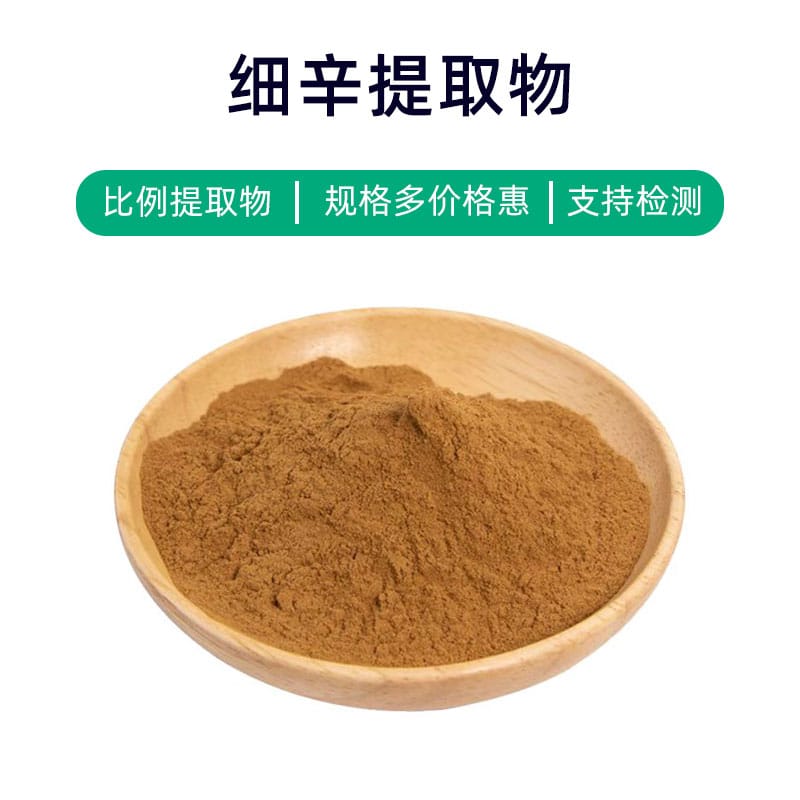



Xixin Extract Product Introduction
Xixin extract is a natural plant extract obtained from the underground stems of the Xixin plant. Its main components include asarone and asarone lactone. Xixin extract has various medicinal and health benefits and is widely used in the fields of pharmaceuticals, dietary supplements, and cosmetics.
In pharmaceuticals, Xixin extract is commonly used as a key ingredient in traditional Chinese medicine formulations, with effects such as invigorating blood circulation and alleviating pain. It is often utilized to treat symptoms like rheumatic joint pain, headaches, and toothaches. Its antibacterial and anti-inflammatory properties also make it widely applicable in traditional medicine prescriptions.
In the dietary supplement sector, Xixin extract is frequently formulated into oral health products aimed at improving overall health, boosting immunity, and promoting blood circulation. Its natural medicinal ingredients are believed to provide positive health effects.
Additionally, Xixin extract is commonly found in cosmetics, where its astringent, anti-inflammatory, and antioxidant properties are used in skincare products to help purify the skin, relieve discomfort, and regulate oil secretion, resulting in healthier, smoother skin.
Overall, as a natural plant extract, Xixin extract has various effects including invigorating blood circulation, antibacterial and anti-inflammatory properties, and health promotion. It is widely applied in pharmaceuticals, dietary supplements, and cosmetics, providing beneficial support for health and beauty.
Xixin Extract Production Process
The production process for Xixin extract typically involves the following main steps:
- Raw Material Preparation: Fresh underground stems of the Xixin plant are selected as the extraction material. The quality and freshness of the raw materials significantly influence the quality of the extract.
- Washing and Cutting: The collected underground stems of the Xixin plant are washed to remove impurities and soil, followed by cutting to enhance extraction efficiency.
- Maceration Extraction: The cleaned and cut underground stems are mixed with an appropriate extraction agent (such as ethanol or water) for maceration extraction. Extraction conditions such as time, temperature, and solvent ratio need to be adjusted according to specific circumstances to improve extraction efficiency and product quality.
- Concentration: The resulting extract is concentrated, typically using vacuum concentration or evaporation methods to remove excess solvent, yielding a concentrated extract.
- Filtering and Purification: The concentrated extract undergoes filtering and purification to eliminate impurities and unwanted components, increasing product purity and quality.
- Drying: The filtered and purified extract is dried, commonly using spray drying or vacuum drying methods, converting the extract into powder form for subsequent packaging and storage.
- Packaging and Storage: Finally, the dried Xixin extract is packaged, usually in sealed containers to prevent oxidation and moisture infiltration. It should be stored in a cool, dry place, away from direct sunlight and high temperatures to maintain stability and quality.
The above describes the typical production process for Xixin extract, with each step requiring strict control and operation to ensure the quality and safety of the final product.
Effects and Side Effects of Xixin Extract
Xixin extract is a common herbal remedy with various effects and actions, primarily including:
- Anti-Inflammatory Effects: Xixin extract contains multiple active ingredients, exhibiting significant anti-inflammatory effects that can alleviate inflammation, pain, and swelling.
- Antibacterial Effects: Xixin extract shows inhibitory effects against various bacteria and fungi, making it useful for treating diseases caused by infections such as skin and respiratory infections.
- Antispasmodic Effects: Xixin extract can dilate blood vessels and promote blood circulation, providing antispasmodic effects useful for relieving symptoms caused by smooth muscle spasms, such as bronchial or gastrointestinal spasms.
- Immune Support: Xixin extract contains several compounds that help modulate immune responses, enhancing the body's immunity and resistance, thereby preventing infections and diseases.
- Antioxidant Effects: Rich in antioxidants, Xixin extract can eliminate free radicals, delay cellular aging, and protect cells from oxidative damage.
- Blood Sugar Regulation: Some studies suggest that Xixin extract has a blood sugar-lowering effect, which may help regulate blood sugar levels and provide supplementary treatment for diabetic patients.
- Circulatory Improvement: Xixin extract can expand blood vessels, enhance blood circulation, and improve microcirculation, helping to relieve symptoms caused by poor circulation, such as headaches and dizziness.
Generally, Xixin extract is classified as a natural herbal extract, and caution should be taken regarding dosage and method of use to avoid adverse reactions from overuse or prolonged usage. While Xixin extract offers various benefits, individual reactions may vary, such as allergic reactions or digestive issues. Therefore, a skin sensitivity test should be conducted prior to use, and it’s advisable to use it under medical supervision.
Applications and Dosage of Xixin Extract
Xixin extract is widely used in the fields of medicine, food, and cosmetics, with the following focus on its applications and dosage in these areas:
- Medical Applications:
- Anti-Inflammatory Pain Relief: Xixin extract is commonly used in medicine to treat inflammatory conditions such as arthritis and rheumatic arthritis, usually in topical formulations like patches and ointments.
- Respiratory Diseases: Xixin extract can be used to treat respiratory infections such as bronchitis and pharyngitis, typically in oral formulations like syrups and capsules.
- Nerve Pain Relief: Xixin extract has some alleviation effects on neuralgia, and it can be used to treat nerve pain and sciatica. It may be applied in topical or oral formulations.
- Food Applications:
- Seasoning: Xixin extract’s unique aroma and spiciness can enhance flavor in foods, such as being added to hot sauces or sausages.
- Health Foods: Xixin extract is included in various health food products to boost immunity and promote blood circulation, typically in capsule or granular forms.
- Cosmetic Applications:
- Skincare Products: Xixin extract’s anti-inflammatory and antioxidant properties are beneficial in skincare products like creams and masks, helping to reduce skin inflammation and counteract aging.
- Hair Care Products: It is often added to shampoos and body washes, providing a cooling effect that helps alleviate dandruff and scalp itchiness.
Dosage:
- For topical formulations like patches and ointments, it should generally be used as instructed on the product packaging, typically 1-3 times daily, applied to the affected area with gentle massage.
- For oral formulations like syrups and capsules, it is advisable to follow medical guidance, with the general adult dosage being 3-6 grams per intake, taken 2-3 times daily after meals with warm water.
- For food additives, the dosage should comply with production standards, typically not exceeding the maximum limits specified for food additives.
- For cosmetic usage, follow the product instructions or manufacturer recommendations, generally applying an appropriate amount evenly on the skin and gently massaging until absorbed.
The application and dosage of Xixin extract in different fields should be determined based on specific circumstances, and it’s suggested to consult with a healthcare professional or expert prior to use to avoid adverse reactions.
Plant Source, Distribution, and Growth Environment of Xixin Extract
Xixin (Scientific Name: Asarum), commonly known as "wild ginger," is a perennial herb belonging to the Aristolochiaceae family. It possesses both medicinal and ornamental value. Below is an introduction to the source plant, distribution, and growth environment of Xixin.
Source Plant
Xixin is a terrestrial or semi-terrestrial herb that primarily distributes across areas in East Asia, North America, and Europe, encompassing multiple species. Common varieties of Xixin include:
- Chinese Xixin (Asarum sieboldii): Found in China, Japan, and Korea, it is one of the most common species in the Xixin genus.
- North American Xixin (Asarum canadense): Distributed in North America, including the United States and Canada.
- European Xixin (Asarum europaeum): Native to Europe, including Spain, France, and the UK.
Distribution
Xixin mainly distributes across temperate and subtropical regions, thriving in forests, forest edges, mountainous areas, and stream banks. Different species of Xixin show slight variations in distribution, but generally, they prefer moist, shaded, and moist environments, often growing in semi-shade or full shade in forests, damp mountainous regions, or shaded stream banks.
Growth Environment
Xixin has specific growth environment requirements, which include:
- Light Conditions: Xixin prefers shade and has low tolerance to direct sunlight, making it more suitable for cool environments such as beneath trees or in valleys.
- Soil Conditions: It has high soil requirements, favoring soft, moist, well-drained acidic soils, especially those rich in humus, which are more suitable for its growth.
- Moisture Requirements: Xixin thrives in humid environments, requiring high air humidity, commonly found in valleys and along streams.
- Temperature Preferences: Xixin has a wide temperature adaptability range but generally grows best between 10°C and 25°C.
Xixin is a slow-growing plant, requiring a long time to mature, yet it can grow robustly in suitable conditions and will flower and bear fruit when the right conditions are met, displaying ornamental value.
Processing and Storage of Xixin Extract
The processing of Xixin extract typically includes the following steps: First, the Xixin plant material is dried until fully dehydrated, followed by coarse crushing or grinding. Next, an appropriate solvent such as water, ethanol, or acetic acid is used for extraction. Finally, through filtering, concentrating, and drying processes, the Xixin extract is obtained. For storage, it should be placed in a cool, dry, and well-ventilated area, avoiding direct sunlight and high-temperature environments to maintain its stability and medicinal efficacy.

Monica Sun is a seasoned expert in the plant extraction industry with over a decade of experience in research and production. She specializes in the extraction and purification of plant active ingredients, focusing on driving innovation in natural product applications. Monica has participated in the development of multiple functional plant extracts, delivering high-value natural raw material solutions for the health food, pharmaceutical, and dietary supplement sectors.