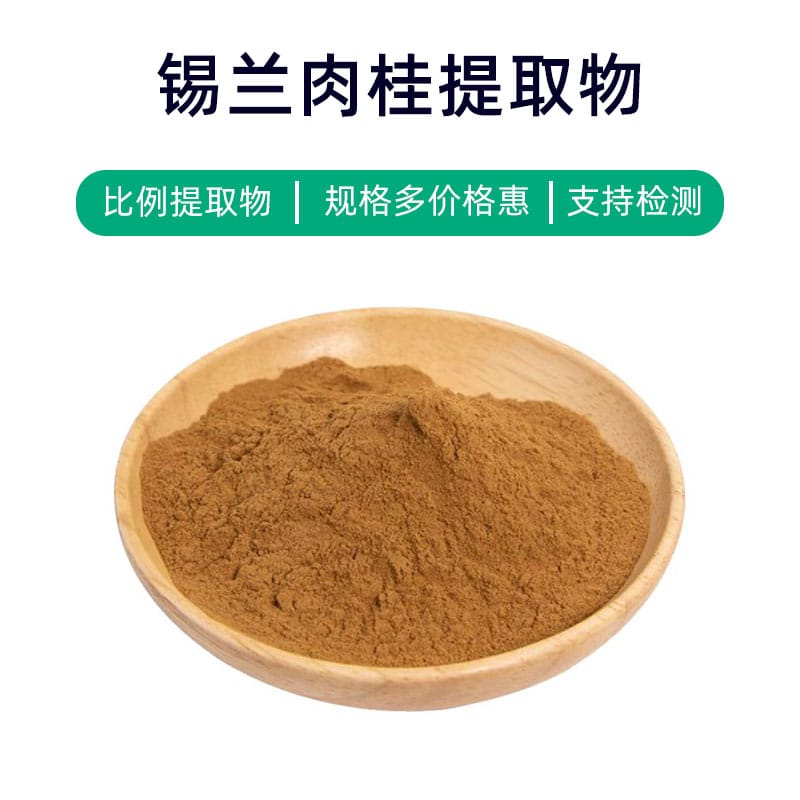



Ceylon Cinnamon Extract Product Introduction
Ceylon cinnamon extract is a natural plant extract derived from the bark of the Ceylon cinnamon tree. Its main components include active substances such as cinnamaldehyde, cinnamic acid, and cinnamate. This extract is widely used in pharmaceuticals, dietary supplements, food, and cosmetics.
The product boasts multiple benefits, with its powerful antioxidant and anti-inflammatory properties being the most notable. Rich in antioxidants, Ceylon cinnamon extract helps eliminate free radicals from the body, slow the aging process, and protect cells from oxidative damage. Additionally, it has antibacterial and antiviral properties that aid in infection prevention and boost immunity. Ceylon cinnamon extract has also been found to help lower blood sugar and lipid levels, making it significant for auxiliary treatment in diabetes and cardiovascular diseases.
In the pharmaceutical field, Ceylon cinnamon extract is commonly used to prepare dietary supplements and medications aimed at improving blood sugar control, enhancing immunity, and preventing inflammatory diseases. In the food sector, it is often added to various products such as seasonings, baked goods, and health foods for flavor enhancement and nutritional value. In cosmetics, it is frequently incorporated in skincare and oral care products, where its antioxidant and anti-inflammatory properties contribute to better skin health and oral hygiene.
Overall, Ceylon cinnamon extract is a versatile natural plant extract with broad application prospects and important biological activity, providing valuable functional ingredients for the pharmaceutical, food, and cosmetic industries.
Ceylon Cinnamon Extract Production Process
The production process of Ceylon cinnamon extract typically involves the following key steps:
- Raw Material Collection and Processing: Fresh raw materials are sourced from the bark of the Ceylon cinnamon tree. The collected bark is washed and treated to remove impurities and maintain its freshness.
- Grinding and Milling: The cleaned Ceylon cinnamon bark is sent to a grinder or mill to be finely ground or crushed, enhancing extraction efficiency and surface area.
- Solvent Extraction: The crushed bark is mixed with a suitable solvent (such as ethanol or water) for the extraction process. The soaking time and temperature must be controlled to ensure effective extraction of the target components.
- Filtration and Concentration: After filtering to remove solid particles, the extraction liquid is concentrated to enhance the purity and activity of the active ingredients.
- Crystallization and Precipitation: Under appropriate temperature and pH conditions during the concentration process, active components of the Ceylon cinnamon extract can crystallize or precipitate. These crystals or precipitates are one of the main components of the product.
- Drying and Grinding: The crystals or precipitates obtained from the solution require drying to remove residual moisture and maintain product stability. The dried product is typically further ground or milled to achieve the desired particle size.
- Packaging and Storage: Finally, the dried and ground Ceylon cinnamon extract is placed in appropriate containers and sealed to prevent moisture and light exposure. The product should be stored in a dry, cool, and well-ventilated environment, avoiding high temperatures and direct sunlight to ensure its stability and quality.
Ceylon Cinnamon Extract Effects and Side Effects
Ceylon cinnamon extract is a natural plant extract with various effects and benefits, primarily sourced from the bark of the Ceylon cinnamon tree. Its main effects and benefits include:
- Antibacterial and Anti-inflammatory Actions: Rich in active ingredients, Ceylon cinnamon extract offers strong antibacterial and anti-inflammatory effects, useful for treating skin infections, inflammation, and pain.
- Antioxidant Protection: Ceylon cinnamon extract is rich in various antioxidants that help neutralize free radicals, slowing down cellular aging and protecting the body from oxidative damage.
- Blood Sugar Regulation: Research indicates that Ceylon cinnamon extract can lower blood sugar levels, aiding in the management of blood sugar for individuals with diabetes.
- Digestive Aid: This extract stimulates gastric secretion and enhances digestive function, helping alleviate digestive discomfort and gastrointestinal issues.
- Blood Lipid Regulation: Ceylon cinnamon extract can effectively lower cholesterol and triglyceride levels, reducing the risk of cardiovascular disease.
- Immune Boosting: Containing various nutrients, Ceylon cinnamon extract can strengthen the immune system, reducing the likelihood of infections and diseases.
- Tumor Growth Inhibition: Some studies suggest that the active components in Ceylon cinnamon extract have anti-tumor effects, capable of hindering the growth and spread of tumor cells.
However, despite its numerous benefits, caution must be exercised regarding its side effects and considerations during use:
- Excessive Use May Cause Liver Damage: Long-term or excessive use of Ceylon cinnamon extract may lead to liver damage, so dosage should be controlled, and medical advice followed.
- Caution for Allergy Prone Individuals: Some individuals may have allergic reactions to Ceylon cinnamon extract, such as rashes or allergic rhinitis. Those with allergies should use it cautiously.
- Drug Interactions: Ceylon cinnamon extract may interact with certain medications, affecting efficacy or increasing potential side effects, so consulting a physician is advised when using it concurrently with medications.
- Caution for Pregnant and Nursing Women: Pregnant and nursing women should use Ceylon cinnamon extract under medical guidance to avoid adverse effects on the fetus or infant.
In summary, Ceylon cinnamon extract has various effects and benefits, but it is important to control the dosage during use, avoid side effects, and seek a physician's advice when necessary.
Applications and Dosage of Ceylon Cinnamon Extract
Ceylon cinnamon extract has wide applications in the pharmaceutical, food, and cosmetic industries, and its antibacterial, anti-inflammatory, and antioxidant properties make it a popular ingredient across these fields. Below are the key applications of this product in these three areas along with their corresponding usage and dosages.
Pharmaceutical Applications:
- Antimicrobial Agents: Ceylon cinnamon extract is used as a natural remedy for various infectious diseases, including skin and respiratory tract infections.
- Anti-inflammatory Agents: In pharmaceutical formulations, Ceylon cinnamon extract is often included to alleviate symptoms of inflammation, such as arthritis and inflammatory bowel disease.
- Blood Sugar Regulators: Some medication formulations incorporate Ceylon cinnamon extract to help regulate blood sugar levels, providing supportive treatment for diabetic patients.
Dosage: Typically administered as an oral medication, specific dosages should follow physician recommendations, generally ranging from 200-1000 mg per dose, varying with individual conditions.
Food Applications:
- Flavoring Agents: Ceylon cinnamon extract is widely used as a flavor enhancer in food, adding aroma and taste, commonly found in pastries, candies, and chocolates.
- Preservatives: Its antibacterial action makes it a natural preservative used in meat products, jams, and other foods.
Dosage: Generally added during food processing according to product characteristics and recipes, typically not exceeding 0.1%-0.5% of the total food volume.
Cosmetic Applications:
- Skincare Products: Ceylon cinnamon extract is commonly used in skincare products, offering anti-inflammatory and antioxidant benefits, aiding in skin conditioning and pore tightening.
- Oral Care Products: Ceylon cinnamon extract is also added to oral care products such as toothpaste and mouthwash due to its antibacterial properties.
Dosage: Incorporated at suitable levels based on cosmetic formulation requirements, typically between 0.1%-1%.
When using Ceylon cinnamon extract, attention should be given to the intended use and dosage requirements in different fields, following relevant industry standards and regulations to ensure the safety and effectiveness of the products.
Ceylon Cinnamon Source Plant Description, Distribution, and Growth Environment
Ceylon cinnamon (Cinnamomum verum), also known as true cinnamon or Ceylon cassia, is a commonly used spice and medicinal plant mainly found in regions like Sri Lanka (historically known as Ceylon). Below are detailed descriptions of the source plant, distribution, and growth environment of Ceylon cinnamon.
Source Plant Description:
Ceylon cinnamon belongs to the Lauraceae family and is an evergreen small tree or shrub, reaching heights of 10-15 meters. Its bark is smooth and silvery-gray with a rounded canopy. The leaves are oval, leathery, opposite, with distinct ribbed veins. The flowers are small, green, and clustered in cone-shaped inflorescences with a fragrant aroma. The fruit is berry-like, turning purple-black upon ripening.
Distribution:
Ceylon cinnamon is native to Sri Lanka and is primarily found in the central and southern regions of the country. Besides Sri Lanka, it is also distributed in the Indian subcontinent, particularly in the states of Kerala and Tamil Nadu. Additionally, Ceylon cinnamon is cultivated extensively in other tropical regions.
Growth Environment:
- Climate Requirements: Ceylon cinnamon prefers a warm and humid climate, with ideal growth temperatures ranging from 20-30 degrees Celsius.
- Soil Requirements: It is not particularly demanding in terms of soil but thrives in loose, fertile, and well-draining soils. Ceylon cinnamon can adapt to a variety of soil types, including sandy, loamy, and clay soils.
- Growth Altitude: Typically grows at altitudes of 500-1000 meters but can thrive within the range of 100-1500 meters.
Ceylon cinnamon usually grows in tropical rainforests, secondary forests, mountainous regions, and valleys, favoring damp environments, often found in humid river valleys, near streams, or in rainy areas.
Cultivation and Propagation:
- Seed Propagation: Ceylon cinnamon can be propagated through seeds, requiring moist soil conditions after planting.
- Cutting Propagation: It can also be propagated through stem cuttings, typically performed during the growing season.
Key Considerations:
- Ceylon cinnamon requires adequate sunlight and moderate moisture for healthy growth. Maintaining moist soil conditions is beneficial.
- Regular pruning and weeding are essential for sustaining healthy growth, along with timely fertilization.
- When cultivating Ceylon cinnamon, it's crucial to protect the trees from diseases and pests to ensure yield and quality.
Ceylon Cinnamon Extract Processing and Storage
The processing and storage of Ceylon cinnamon extract are vital to ensuring its quality and stability. Typically, the processing steps involve: First, washing and removing impurities from harvested Ceylon cinnamon bark; next, grinding or cutting the cleaned bark to enhance extraction efficiency; then using appropriate extraction methods (such as steam distillation or solvent extraction) to obtain active compounds from Ceylon cinnamon; finally, filtering, concentrating, and drying the extracted liquid to produce Ceylon cinnamon extract.
To ensure the quality and stability of Ceylon cinnamon extract, the following storage measures should be implemented: first, store the extract in a cool, dry place, avoiding direct sunlight and humid environments; second, use well-sealed containers to prevent oxygen and moisture intrusion; finally, regularly check the quality of the extract to ensure no unusual changes, following the manufacturer's guidelines for storage. Proper processing and storage methods can guarantee long-term preservation and stability of Ceylon cinnamon extract, allowing it to maintain effectiveness and safety during use.

Monica Sun is a seasoned expert in the plant extraction industry with over a decade of experience in research and production. She specializes in the extraction and purification of plant active ingredients, focusing on driving innovation in natural product applications. Monica has participated in the development of multiple functional plant extracts, delivering high-value natural raw material solutions for the health food, pharmaceutical, and dietary supplement sectors.