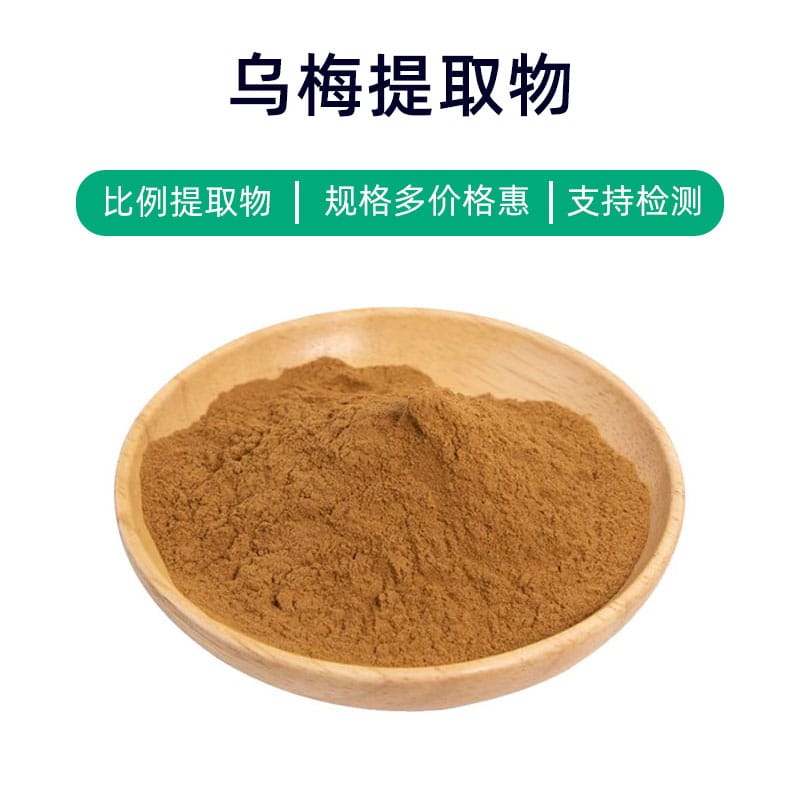



Wumei Extract Product Introduction
Wumei extract is a natural plant extract derived from Wumei fruit, primarily composed of organic acids, polyphenolic compounds, and vitamin C. In traditional Chinese medicine, Wumei extract is commonly used to improve digestion, stimulate appetite, and relieve constipation. The organic acids it contains can enhance gastric juice secretion, aiding digestion and alleviating gastrointestinal discomfort. Polyphenolic compounds have antioxidant properties that help combat free radical damage and boost immunity. Vitamin C is an essential nutrient that promotes skin metabolism, supporting skin health and radiance.
Wumei extract has extensive applications in medicine, health supplements, food, and cosmetics. In medicine, it is often used to prepare medications for indigestion, loss of appetite, constipation, and to regulate gastrointestinal function. In health supplements, Wumei extract is formulated into oral liquids, capsules, and other forms to provide nutritional support and enhance immunity. In the food industry, it can be used for flavoring, enhancing aroma, and preserving products such as pastries and jams. In cosmetics, Wumei extract is frequently included in skincare products for its pore-tightening, skin-brightening, and antioxidant effects.
Overall, Wumei extract is a natural plant extract with a variety of health benefits, widely applied in the fields of medicine, health supplements, food, and cosmetics, effectively supporting health and beauty.
Wumei Extract Production Process
The production process of Wumei extract generally includes the following main steps:
- Raw Material Collection and Processing: Fresh Wumei fruit is collected as raw material. After harvesting, the fruit is washed and impurities are removed to ensure quality and purity.
- Maceration: The cleaned Wumei fruit undergoes maceration. This typically involves soaking the fruit in water for a period to allow the active ingredients to dissolve in the water.
- Maceration Concentration: The liquid from the macerated fruit is concentrated to increase the concentration of active components. Common concentration methods include vacuum concentration and spray drying, removing moisture to obtain concentrated Wumei extract.
- Settling and Separation: The concentrated liquid may contain impurities and sediments that need to be settled and separated. This typically involves using a clarifying agent or centrifuge to remove these impurities from the extract.
- Filtration and Purification: The separated extract undergoes filtration and purification to eliminate any remaining impurities and particles, ensuring the product’s purity and quality.
- Drying and Powdering: The purified Wumei extract needs to be dried, commonly through spray drying or vacuum drying to remove moisture and obtain a dry extract. The dried extract is then ground to achieve the required particle size.
- Packaging and Storage: Finally, the powdered Wumei extract is packaged, usually in airtight containers to maintain quality and stability. After packaging, the product should be stored in a dry, cool, and dark environment to extend its shelf life and stability.
Through these production process steps, a high-quality, stable Wumei extract can be obtained for use in pharmaceuticals, health supplements, food, and cosmetics.
Wumei Extract Efficacy and Side Effects
Wumei extract is a commonly used traditional Chinese medicine with various effects and functions, primarily including:
- Digestive Regulation: Wumei extract contains rich organic acids and vitamins, promoting gastric juice secretion and enhancing digestive function, helping alleviate indigestion and bloating.
- Laxative Effect: Rich in dietary fiber and pectin, Wumei extract has effective laxative properties, softening stool and promoting bowel movements to relieve constipation.
- Antioxidant Properties: The polyphenolic compounds in Wumei extract exhibit significant antioxidant effects, helping to clear free radicals from the body and slow cellular aging, promoting overall health.
- Antibacterial and Anti-inflammatory: Wumei extract contains various bioactive components with antibacterial and anti-inflammatory properties, useful in preventing and treating oral inflammation and gastrointestinal infections.
- Blood Sugar Regulation: Research indicates that certain components in Wumei extract can lower blood sugar levels, offering supportive treatment for diabetes.
- Liver Protection: Some components in Wumei extract help protect the liver, alleviating stress on liver function and promoting the regeneration of liver cells.
- Blood Lipid Regulation: Certain active ingredients in Wumei extract can regulate blood lipids, lowering serum cholesterol and triglyceride levels, preventing atherosclerosis and cardiovascular diseases.
- Skin Improvement: Wumei extract is rich in vitamin C and polyphenols, providing beauty benefits by inhibiting melanin deposition and improving skin dullness and pigmentation issues.
Wumei extract is generally safe; however, some individuals may experience allergic reactions or digestive issues. It is best to consult a doctor or pharmacist before use and strictly follow product instructions or medical advice.
Wumei Extract Applications and Dosage
Wumei extract has extensive applications in medicine, food, and cosmetics, with various uses and benefits.
- Medical Applications:
- Digestive Health: Wumei extract serves as a natural digestive aid for discomfort, indigestion, and bloating. Common usage includes brewing it in water for drinking or in oral formulations.
- Constipation Relief: With effective laxative properties, it can treat constipation. Commonly consumed by brewing in water or in tablet form.
- Blood Sugar Regulation: The active components in Wumei extract help lower blood sugar, useful for diabetes patients, typically used in oral forms or combined with other medications.
- Food Applications:
- Baked Goods: Wumei extract is often added to baked items like cakes and cookies for a unique sweet-and-sour flavor and aroma.
- Beverages: It can be made into tea drinks that offer a refreshing taste along with health benefits, popular among consumers.
- Cosmetic Applications:
- Skincare Products: Wumei extract, rich in vitamin C and antioxidants, is known for its skin brightening effects. It is commonly incorporated into skincare items like masks and lotions.
- Oral Care Products: Due to its antibacterial and anti-inflammatory properties, Wumei extract is included in oral care products like toothpaste and mouthwash to help prevent oral issues.
Dosage:
- Medical Use: Typically, it's recommended for adults to take 5-10 grams of Wumei extract per dose, adjusting as needed. For children, doses should be halved or as directed by a doctor.
- Food Use: Wumei extract can be used as a baking ingredient, typically added according to recipe requirements.
- Cosmetic Use: Usually incorporated into skincare formulations, specific dosages should align with product formulas.
Overall, Wumei extract, as a natural plant extract, holds significant value across medicine, food, and cosmetics. It should be used properly based on specific circumstances to avoid excessive or inappropriate use.
Wumei Plant Source, Distribution, and Growth Environment
Wumei (Scientific Name: Prunus mume) is a species belonging to the Rosaceae family. Below is an introduction to the source plant, distribution, and growth environment of Wumei.
Source Plant:
Wumei is a common fruit tree with a round or umbrella-shaped crown, featuring grayish-white or light gray bark. Its leaves are elliptical or ovate with a glossy finish, and its flowers are white or pink with a strong fragrance. The fruit resembles plums, available in various colors such as red, yellow, and green, with a sweet-and-sour flavor and a hint of alcoholic aroma.
Distribution:
Wumei is native to China and is one of its unique fruit trees. It is widely distributed in southern regions of China, particularly cultivated in areas such as Jiangsu, Zhejiang, Anhui, Hunan, Hubei, and Sichuan. Additionally, Wumei is also grown in Japan and South Korea.
Growth Environment:
Wumei thrives in sunny locations with well-draining soil. It is adaptable but prefers loose, fertile loam. It requires a warm and humid climate, being sensitive to cold and dry environments. Typically, it grows at the foot of mountains, in river valleys, and hilly areas, thriving below elevations of 500 meters.
Wumei trees require ample sunlight; sufficient exposure promotes growth and fruit maturity. Adequate water and nutrient supply are also crucial for maintaining the tree's health. In suitable conditions, Wumei trees can grow robustly, producing high-quality fruit and represent an important economic fruit tree.
Wumei Extract Processing and Storage
The processing of Wumei extract typically involves the following steps: first, mature Wumei fruit is harvested, followed by washing, pitting, and chopping as pre-treatment steps. Then, appropriate extraction methods such as water extraction, alcohol extraction, or supercritical fluid extraction are employed to isolate active components from the fruit. The extracted liquid undergoes concentration, filtration, and drying processes to produce the final Wumei extract.
To store and preserve Wumei extract, it is crucial to avoid direct sunlight and damp conditions. A well-ventilated, dry, and cool place is recommended for storage. It is usually advisable to use airtight containers to keep the extract in a cool, dry environment, protecting it from exposure to air, moisture, and odors, which helps maintain its quality and stability. Under proper storage conditions, Wumei extract can retain its medicinal value and efficacy for extended periods.

Monica Sun is a seasoned expert in the plant extraction industry with over a decade of experience in research and production. She specializes in the extraction and purification of plant active ingredients, focusing on driving innovation in natural product applications. Monica has participated in the development of multiple functional plant extracts, delivering high-value natural raw material solutions for the health food, pharmaceutical, and dietary supplement sectors.