


Wangjiangnan Extract Product Introduction
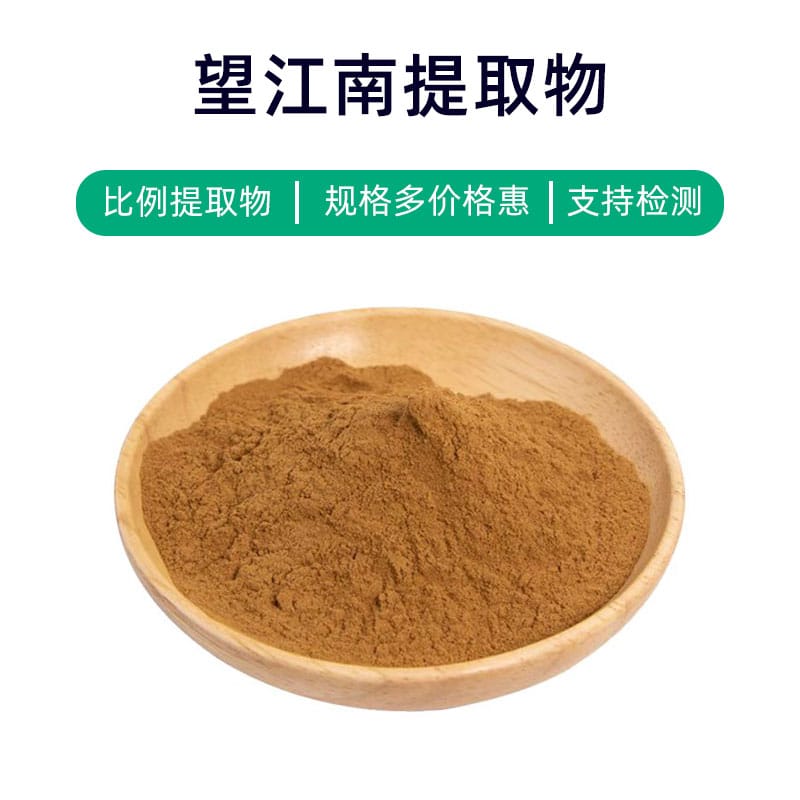
Wangjiangnan Extract is a plant extract obtained from the Wangjiangnan plant, primarily composed of rich flavonoids, polysaccharides, and alkaloids. This extract boasts various benefits, including antioxidant, anti-inflammatory, and anti-aging effects. In the pharmaceutical field, it is often used as an ingredient in traditional medicine for immune regulation and antibacterial purposes; in dietary supplements, it helps improve bodily functions and boost resistance; and in cosmetics, it is a common ingredient for skin care products, offering moisturizing and anti-aging effects. As a natural plant extract, Wangjiangnan Extract enjoys widespread usage and is favored by consumers across different sectors.
Wangjiangnan Extract Production Process
The production process of Wangjiangnan Extract typically includes the following key steps:
- Raw Material Collection and Preparation: First, high-quality Wangjiangnan plants are selected as raw materials. These plants are usually gathered during the growing season and undergo preliminary cleaning and processing to remove impurities and unwanted parts.
- Extraction Process: Extraction is the core step in the production process. The common method involves water extraction followed by alcohol precipitation, where the prepared materials are immersed in an appropriate amount of water and alcohol solvent, then subjected to soaking, extraction, concentration, and precipitation to extract the effective components from the Wangjiangnan plant.
- Filtration and Separation: After extraction, the mixture is filtered and separated to remove solid particles and impurities, resulting in a pure extract solution.
- Concentration and Drying: The extracted liquid is concentrated to increase its content, followed by a drying process to convert it into powder or liquid form.
- Packaging and Storage: Finally, the extract is packaged, typically in sealed containers, to ensure its quality and stability. During storage, it should be kept away from light, moisture, and dust, in a cool, dry place to prolong shelf life and maintain the stability of active components.
This outlines the general production process of Wangjiangnan Extract, which may be fine-tuned and improved by each manufacturer based on their own technologies and equipment.
Wangjiangnan Extract Benefits and Side Effects
Wangjiangnan Extract is a commonly used natural plant extract known for a range of benefits and effects, mainly including:
- Antioxidant Properties: Rich in various natural antioxidants such as polyphenols and vitamins, it can eliminate free radicals in the body, reduce oxidative stress, and protect cells from oxidative damage.
- Anti-inflammatory Effects: Research shows that the active components in Wangjiangnan Extract possess anti-inflammatory properties, inhibiting the occurrence and progression of inflammatory responses and alleviating symptoms related to inflammatory diseases.
- Blood Sugar Regulation: Some studies indicate that certain components in Wangjiangnan Extract can lower blood sugar levels, helping to regulate blood glucose and providing supportive treatment for metabolic diseases like diabetes.
- Digestive Support: The extract contains abundant dietary fibers and plant enzymes that can promote gastrointestinal motility, enhance digestive functions, and help relieve issues like indigestion.
- Immunity Boost: Active components in the extract have immune-regulating effects, which can enhance the body's immunity, increase resistance, and reduce the risk of infections.
- Cardiovascular Health Protection: Research suggests that some components in Wangjiangnan Extract can lower blood lipids and blood pressure and improve cardiovascular functions, helping to prevent cardiovascular diseases.
- Anti-aging Effects: The polyphenols and other active components in the extract promote collagen synthesis, maintain skin elasticity, and slow down the development of skin aging.
Wangjiangnan Extract is generally safe due to its natural origin, but users should still be aware of individual differences and potential allergic reactions. It is advisable to conduct a skin test before use to avoid adverse reactions. Furthermore, pregnant women, nursing mothers, and children should use it under medical guidance to ensure safety. Overall, using Wangjiangnan Extract in moderation can yield its beneficial health effects but should be avoided in excess to prevent unnecessary side effects.
Wangjiangnan Extract Applications and Dosage
Wangjiangnan Extract has broad applications in the fields of medicine, food, and cosmetics. Below is an introduction to its use and recommended dosage in various domains:
- Medical Applications:
- Antioxidant Supplements: Due to its rich antioxidant content, Wangjiangnan Extract can be used to formulate antioxidant supplements. The suggested daily dosage is 100-200 mg, which can be adjusted based on individual needs.
- Anti-inflammatory Drugs: With its certain anti-inflammatory capabilities, it can be formulated into oral or topical anti-inflammatory medications. Oral doses typically range from 100-300 mg, while external application doses can be adjusted as needed.
- Food Applications:
- Natural Colorants: The polyphenolic compounds in Wangjiangnan Extract can serve as natural colorants in food, providing color while also offering antioxidant benefits. The usual amount used is around 0.1%-0.5%.
- Functional Food Additives: With its high dietary fiber and other active components, it can function as a functional food additive. The recommended amount should be determined based on the product formulation.
- Cosmetics Applications:
- Skincare Products: Given its antioxidant, anti-inflammatory, and moisturizing benefits, Wangjiangnan Extract is suitable for inclusion in skincare formulations. Common dosages range from 0.1%-1%.
- Sunscreen Products: The polyphenolic compounds in Wangjiangnan Extract can be used to create sunscreens, typically at a usage level of 0.5%-5%.
When using Wangjiangnan Extract, consider these points:
- In medical applications, use it based on recommendations from healthcare providers, following the dosage guidelines in the product information.
- In food applications, adhere to relevant national laws and regulations, ensuring that the additive quantities comply with standards and do not exceed maximum allowable levels.
- In cosmetic applications, follow safety assessment requirements to ensure products meet safety standards.
- Perform a skin test prior to use to prevent allergic reactions or adverse events stemming from individual differences.
In summary, Wangjiangnan Extract shows significant potential across medicine, food, and cosmetics, but appropriate dosages and formulations should be carefully selected to ensure product safety and effectiveness.
Wangjiangnan Source Plant Overview, Distribution, and Growth Environment
The source plant for Wangjiangnan Extract is known as Wangjiangnan, scientifically named Polygonum cuspidatum, also referred to as Japanese knotweed among other names. Below are detailed characteristics of the Wangjiangnan plant:
- Plant Features:
- Wangjiangnan is a perennial herb, belonging to the buckwheat family, characterized by strong adaptability and vitality.
- The plant typically grows to a height of 1-2 meters, with upright stems that are branched, and heart-shaped or ovate leaves that have a smooth, glossy surface.
- Distribution:
- Wangjiangnan is native to China and is primarily found in the Yangtze River basin, the Yellow River basin, and southeastern coastal areas, including provinces like Jiangsu, Zhejiang, Anhui, Hunan, and Hubei.
- Beyond China, Wangjiangnan also grows in regions of Japan, Korea, and Southeast Asia.
- Growth Environment:
- Wangjiangnan thrives in moist environments and is often found on slopes, forest edges, along ditches, and near streams and lakes.
- It has non-demanding soil requirements, tolerates shade well, but prefers bright, sunny conditions.
- Growing Habits:
- Wangjiangnan is a rhizomatous plant with a long growth cycle, usually sprouting in spring, flourishing in summer, going dormant in autumn, and resting in winter.
- This plant reproduces diversely, via seeds or through underground rhizomes.
- Ecological Functions:
- Wangjiangnan plays an ecological role in natural ecosystems, helping stabilize soil, conserve water, regulate climate, and improve the environment.
- It grows along riverbanks and lake edges, effectively protecting water resources from erosion and pollution.
In conclusion, Wangjiangnan is a common perennial plant found mainly in China and nearby regions, thriving in suitable environments and providing notable ecological benefits. Its stems, leaves, and roots contain rich active components, making it widely utilized in the extraction and application across pharmaceuticals, food, and cosmetics.
Wangjiangnan Extract Processing and Storage
The processing of Wangjiangnan Extract typically involves the following steps: First, the plant is harvested and undergoes initial processing; then extraction, filtering, concentration, and drying processes are performed, followed by packaging and storage. During processing, factors like temperature, humidity, and time must be strictly controlled to ensure the quality and stability of the extract. For storage, keep it in a cool, dry, and well-ventilated area, avoiding direct sunlight and moist environments to prevent the extract from moisture, mold, and oxidation. The extract should be placed in airtight containers to avoid contact with air, extending its shelf life and efficacy.

Monica Sun is a seasoned expert in the plant extraction industry with over a decade of experience in research and production. She specializes in the extraction and purification of plant active ingredients, focusing on driving innovation in natural product applications. Monica has participated in the development of multiple functional plant extracts, delivering high-value natural raw material solutions for the health food, pharmaceutical, and dietary supplement sectors.