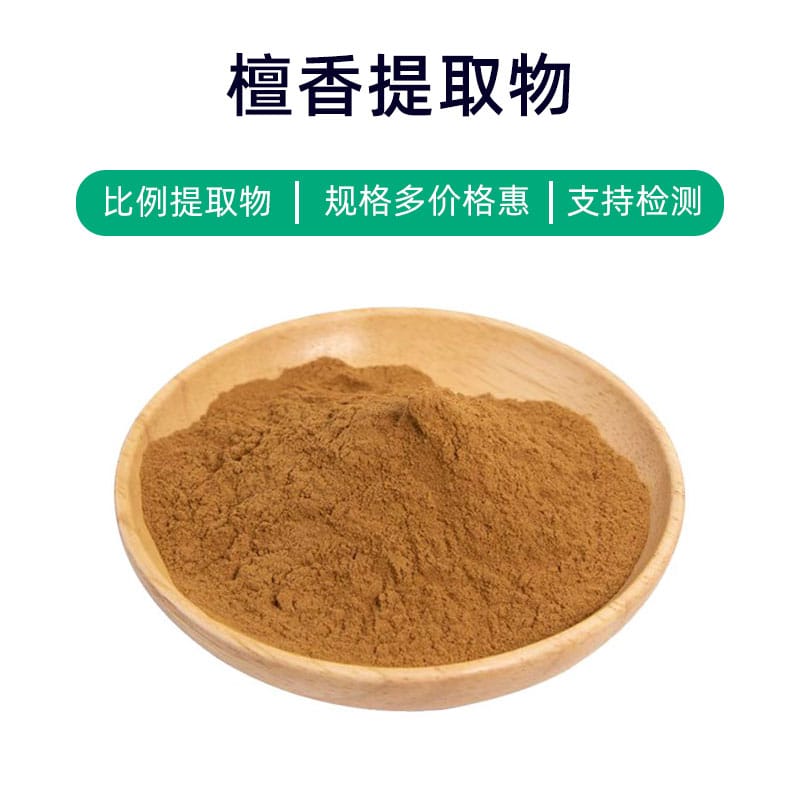



Sandalwood Extract Product Introduction
Sandalwood extract is a natural plant extract derived from the heartwood or bark of the sandalwood tree, with active ingredients including santalol, santalic acid, and santalone. These components provide various effects and applications.
Firstly, sandalwood extract is widely used in the beauty and cosmetics industry. It has antibacterial, anti-inflammatory, and soothing properties, making it suitable for calming sensitive skin, reducing inflammation, and improving skin texture and luster. Sandalwood extract is commonly found in products such as creams, lotions, and masks, helping to soothe the skin and improve uneven skin tone.
Secondly, sandalwood extract is also extensively utilized in the fragrance industry. Its unique aroma makes it one of the main components in many perfumes, aromatherapy products, and scented candles. Its deep, woody scent is often used in high-end perfumes, giving them a distinctive style and aura.
Additionally, sandalwood extract has certain medicinal values. In traditional herbal medicine, sandalwood is used as a sedative and antipyretic, helping to alleviate anxiety, tension, and insomnia. Sandalwood extract is also used in oral care products for its breath-freshening and antibacterial properties.
Overall, sandalwood extract, as a natural plant extract, has a wide range of applications in beauty, fragrance, and medicinal fields. Its rich active components provide multiple benefits, including antibacterial, anti-inflammatory, and calming effects, making it an essential ingredient in many products.
Sandalwood Extract Production Process
The production process for sandalwood extract typically involves the following steps:
- Raw Material Preparation: Select high-quality heartwood or bark from the sandalwood tree as the extraction material. The raw material should be dried and preliminarily treated to remove impurities and foreign substances.
- Grinding: Grind the prepared sandalwood raw material to increase extraction efficiency and surface area, facilitating solvent penetration during the extraction process.
- Solvent Extraction: Soak the ground sandalwood material in an appropriate solvent (such as ethanol or ethyl acetate), allowing the active components to dissolve into the solvent.
- Extraction Process: Mix the sandalwood raw material with the solvent and conduct the extraction for a specific period, often using low temperatures to prevent the loss of active components.
- Filtration and Separation: Filter the extraction solution to separate the sandalwood extract suspended in the solvent from the solid residues, yielding a clarified extract.
- Solvent Recovery: Recover the solvent from the filtered extract through distillation or other methods for the next stage of the process.
- Concentration and Purification: Concentrate the solvent-extracted solution to remove excess solvent and increase the concentration of the sandalwood extract, often using vacuum concentration or thin-film evaporation.
- Final Drying: Finally, dry the concentrated sandalwood extract to remove residual moisture, obtaining the finished sandalwood extract.
- Packaging and Storage: Package the dried sandalwood extract and store it in a cool, dry environment to ensure its quality and stability.
Effects and Side Effects of Sandalwood Extract
Sandalwood extract is a natural plant extract with various benefits and uses in medicine, beauty, and fragrance fields. The main effects and benefits of sandalwood extract include:
- Calming the Nerves: Sandalwood extract has a soothing effect that can alleviate anxiety, stress, and tension, improving emotional well-being and enhancing mental health.
- Antibacterial and Anti-inflammatory: Rich in volatile compounds, sandalwood extract has strong antibacterial and anti-inflammatory properties, useful in treating skin infections, inflammation, and ulcers.
- Mosquito and Insect Repellent: Sandalwood extract effectively repels mosquitoes and insects, making it suitable for use in repellents, bug sprays, and aromatic agents to protect against bites and irritation.
- Improving Sleep: With mild sedative and hypnotic effects, sandalwood extract can enhance sleep quality, relieve insomnia, and promote quick and deep sleep.
- Beauty and Skincare: Sandalwood extract possesses antioxidant and anti-aging properties, helping to protect the skin from free radical damage, slow aging, and provide moisture and hydration.
- Air Purification: The pleasant aroma of sandalwood extract can purify the air, eliminate odors, and improve indoor environments, creating a more comfortable and relaxing atmosphere.
- Mental Clarity: The refreshing scent of sandalwood extract can boost alertness and concentration, enhancing work efficiency and learning outcomes.
- Fatigue Relief: The refreshing aroma of sandalwood extract can help soothe the mind and body, alleviate fatigue and muscle soreness, revitalizing and restoring energy.
Despite its many benefits, caution should be observed when using sandalwood extract:
- Allergic Reactions: Some individuals may be allergic to sandalwood extract. Monitor for symptoms like redness or itching, and discontinue use if discomfort occurs.
- Concentration Control: It is essential to control the concentration when using sandalwood extract; high concentrations may cause discomfort, so it's advisable to follow product instructions or seek professional consultation.
- Caution for Children and Pregnant Women: Children and pregnant women should use sandalwood extract cautiously, preferably under medical guidance, to avoid adverse effects.
In summary, sandalwood extract offers various effects and benefits, with broad application potential in medicine, beauty, home, and fragrance fields. However, it is crucial to use it correctly to ensure safety and effectiveness.
Application Scenarios and Dosage of Sandalwood Extract
Sandalwood extract is a versatile natural plant extract with various applications across medicine, food, and cosmetics. Here are its application scenarios and dosage recommendations in different fields:
- Medical Applications:
- Scenarios: Sandalwood extract is commonly used in the preparation of herbal formulas, health supplements, and topical medicinal products.
- Dosage: Generally used as part of herbal formulations, dosages may vary based on specific recipe requirements. For external use, apply a suitable amount directly to the skin.
- Food Applications:
- Scenarios: Sandalwood extract is often used in food processing for flavoring, such as in pastries, candies, and beverages.
- Dosage: Typically added in liquid or powdered form, the amount should be determined based on the type of food and preparation method, following recipe guidelines.
- Cosmetic Applications:
- Scenarios: Sandalwood extract is used in cosmetics for fragrance blending, skincare, and hair care products.
- Dosage: Commonly included as a fragrance or flavoring agent in various cosmetics, the quantity is generally a percentage of the total formulation, adjusted according to specific product recipes and fragrance requirements.
- Household Cleaning Products:
- Scenarios: The pleasant scent of sandalwood extract is also commonly used in household cleaning products like laundry detergents and dishwashing liquids.
- Dosage: Add a suitable amount of sandalwood extract according to product formulation requirements to impart a fresh scent and enhance the cleaning experience.
- Aromatic Products:
- Scenarios: Sandalwood extract is often used to make aromatherapy products such as essential oils and scented candles for improving indoor air quality and enhancing the ambiance.
- Dosage: Choose appropriate aromatic products based on personal preference and environment, and add sandalwood extract according to product instructions.
In summary, the application methods and dosages of sandalwood extract vary across different fields. Careful selection and usage according to specific needs and product guidelines are essential to ensure safety and effectiveness.
Source Plant Introduction, Distribution, and Growing Environment of Sandalwood Extract
Sandalwood extract is a natural spice derived from plants in the sandalwood family, primarily sourced from the sandalwood tree and related species. Here’s an overview of the source plants for sandalwood extract, including their introduction, distribution, and growing environment:
1、Plant Introduction:
- Scientific Name: Aquilaria spp.
- Common Varieties: Mainly includes Aquilaria malaccensis and Aquilaria crassna.
- Plant Characteristics: The sandalwood tree is a hardwood tree that can reach over 20 meters in height, with smooth bark, elongated or oval leaves, and small white flowers; its fruit is elliptical or oval.
2、Distribution:
- Geographical Distribution: Sandalwood trees are widely found in Southeast Asia, including countries like Malaysia, Indonesia, Thailand, Laos, Cambodia, and Vietnam.
- Growing Environment: Sandalwood trees primarily grow in tropical rainforests and evergreen broadleaf forests, thriving in warm, humid climates and well-drained, organic-rich soil, typically at elevations between 200 and 1000 meters.
3、Growing Environment Requirements:
- Climate Conditions: Sandalwood trees thrive in tropical rainforests with warm and humid climates, receiving over 1500 millimeters of rainfall annually and maintaining temperatures between 20-30 degrees Celsius.
- Soil Requirements: Preference for well-drained, loose soil rich in organic matter, with slightly acidic to neutral conditions being ideal.
4、Cultivation and Wild Status:
- Cultivation: There have been attempts to cultivate sandalwood trees artificially; however, due to specific growth conditions and lengthy growth cycles, cultivation is challenging and costly.
- Wild Status: Most sandalwood trees still grow in the wild within pristine tropical rainforests, making harvesting difficult; thus, sandalwood extract is classified as a natural plant extract.
5、Sandalwood Production Mechanism:
- Infection Response: When sandalwood trees are infected by fungi or insects, they produce defensive compounds known as santalol to protect themselves.
- Scent Formation: After oxidation of santalol in the wood, sandalwood is formed; this process takes a long time, often spanning several decades to a few centuries.
Overall, sandalwood extract originates from sandalwood trees and related species primarily distributed in the tropical rainforests of Southeast Asia. Its growing environment has specific climate and soil conditions, with most plants existing in the wild, experiencing long growth cycles and challenging harvesting.
Processing and Storage of Sandalwood Extract
The processing of sandalwood extract typically includes the following steps: first, extracting the resin containing santalol from sandalwood; then concentrating, purifying, and filtering the resin to obtain pure sandalwood extract; finally, drying and grinding the extract to produce the final sandalwood extract product. When storing, keep it in a cool, dry environment, avoiding direct sunlight and high temperatures, while protecting it from moisture to maintain its fragrance and quality.

Monica Sun is a seasoned expert in the plant extraction industry with over a decade of experience in research and production. She specializes in the extraction and purification of plant active ingredients, focusing on driving innovation in natural product applications. Monica has participated in the development of multiple functional plant extracts, delivering high-value natural raw material solutions for the health food, pharmaceutical, and dietary supplement sectors.