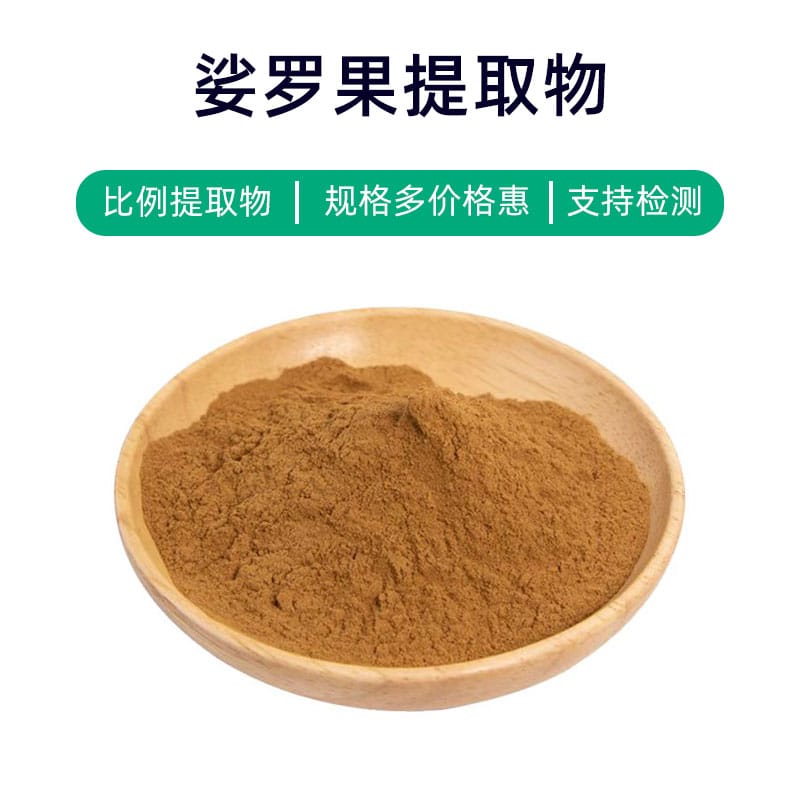
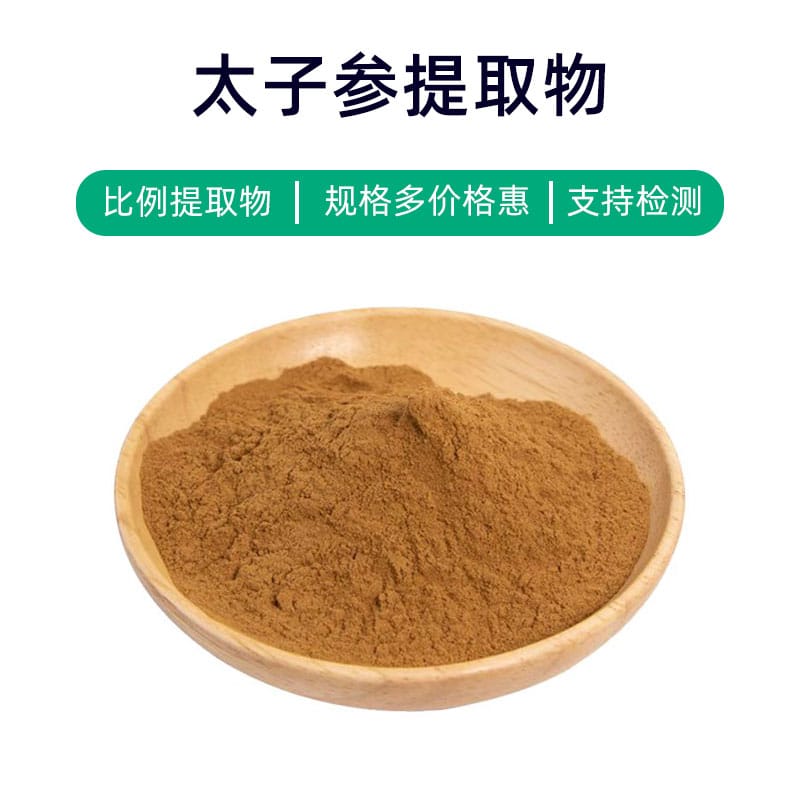



Prince's Ginseng Extract Product Introduction
Prince's Ginseng Extract is a plant extract derived from the roots of Prince's Ginseng, with key components including ginsenosides, polysaccharides, and flavonoids. These ingredients give the extract various effects and applications.
First, Prince's Ginseng Extract is commonly used in pharmaceutical formulations. It is believed to help regulate the immune system, enhancing the body's immunity and reducing the incidence and progression of diseases. Additionally, it serves as an antioxidant, combating damage from free radicals, slowing down cell aging, and protecting cardiovascular health.
Second, it is frequently used in the dietary supplement sector. Many people take it as a nutritional supplement to boost overall health and immunity. It is considered effective for increasing stamina, improving memory, and enhancing focus, making it ideal for those seeking to improve physical fitness and combat fatigue.
Moreover, Prince's Ginseng Extract is extensively used in cosmetics. Its antioxidant and anti-inflammatory properties make it an ideal ingredient in various skincare products. It can help reduce skin inflammation, promote wound healing, and maintain skin health and youthfulness.
Overall, as a natural plant extract, Prince's Ginseng Extract holds significant promise across pharmaceutical, dietary supplement, and cosmetic fields, providing numerous benefits for health and beauty due to its rich active ingredients.
Production Process of Prince's Ginseng Extract
The production of Prince's Ginseng Extract usually involves the following main steps:
- Raw Material Preparation: High-quality roots of Prince's Ginseng are selected, cleaned, and processed to remove impurities and surface dirt.
- Maceration: The cleaned roots are cut into small pieces or ground into powder, then mixed with an appropriate solvent (e.g., water, ethanol) for maceration. The duration and temperature of maceration are usually determined based on specific processes and equipment.
- Extraction: After sufficient maceration, the mixture is extracted using methods such as boiling, soaking, or ultrasound extraction. Temperature, time, and pressure must be controlled during this process to ensure extraction efficiency and component stability.
- Concentration: The resulting extract is concentrated through methods like evaporation or reduced pressure concentration to obtain a concentrated extract.
- Purification: The concentrated extract undergoes further purification, including precipitation, filtration, and crystallization, to remove impurities and unwanted components, enhancing the product's purity and activity.
- Drying Preparation: The purified extract is dried, typically using spray drying, vacuum drying, or freeze-drying methods, transforming the liquid extract into powdered form.
- Quality Inspection: The prepared Prince's Ginseng Extract undergoes quality checks, including visual inspection, physicochemical property testing, and active ingredient content analysis to ensure compliance with relevant standards and regulations.
- Packaging and Storage: The extracted product that meets quality requirements is packaged, usually in sealed containers to prevent moisture and dust, and stored in conditions that avoid light, dryness, and ventilation to ensure product stability and quality.
Effects, Functions, and Side Effects of Prince's Ginseng Extract
Prince's Ginseng Extract, as a herbal extract, is widely used in traditional Chinese medicine and has gained increasing scientific support in recent years. Here are the main effects and functions:
- Immune Regulation: Prince's Ginseng Extract is rich in ginsenosides and other active ingredients, enhancing the body's immunity and regulating immune function, thereby improving resistance to diseases.
- Antioxidant Properties: The ginsenosides and polysaccharides in Prince's Ginseng Extract exhibit significant antioxidant effects, helping to scavenge free radicals, slow down cellular aging, and protect cell health.
- Anti-Fatigue Effect: The active components in Prince's Ginseng Extract, such as ginsenosides, promote protein synthesis, improve muscle endurance and vitality, alleviate fatigue, and enhance energy levels.
- Blood Sugar Regulation: Research shows that ginsenosides in Prince's Ginseng Extract can help regulate blood sugar levels, improve insulin sensitivity, and provide auxiliary treatment for diabetes and related conditions.
- Cardiovascular Health Improvement: Ginsenosides in Prince's Ginseng Extract can lower blood pressure and lipids and inhibit platelet aggregation, which helps prevent the occurrence and progression of cardiovascular diseases.
- Anti-Inflammatory Effects: The ginsenosides and polysaccharides possess clear anti-inflammatory effects, reducing inflammation and alleviating pain, offering some supportive treatment for conditions like rheumatoid arthritis and inflammatory bowel disease.
- Digestive Support: The polysaccharides in Prince's Ginseng Extract promote gastrointestinal motility, increase digestive secretions, improve digestive function, and help alleviate digestive disorders like indigestion and gastritis.
- Anti-Tumor Effects: Studies show that the active ingredients in Prince's Ginseng Extract may have anti-tumor properties, inhibiting the growth and spread of tumor cells, contributing to the prevention and supportive treatment of tumors.
Typically, Prince's Ginseng Extract is considered safe, but individual variations may lead to some side effects, such as dizziness, nausea, and gastrointestinal discomfort. Therefore, it is advisable to consult a doctor or pharmacist before use and adhere to recommended dosages and usage.
Application Scenarios and Dosage of Prince's Ginseng Extract
Prince's Ginseng Extract has broad applications in pharmaceuticals, food, and cosmetics. Here are its applications and dosage in various fields:
- Pharmaceutical Applications:
- Uses: Frequently included in traditional Chinese medicine formulations to regulate immune function, enhance stamina, and improve cardiovascular health.
- Dosage: Typically used as medicinal material for decoction, soaking, and processing, or made into tablets, granules, or oral liquids. Specific dosages should be determined according to medical prescriptions or product instructions.
- Food Applications:
- Uses: Can be used as a health food additive to enhance physical fitness, boost immunity, and regulate blood sugar levels.
- Dosage: Generally added to capsules, tablets, or oral liquids as a dietary supplement; follow the product’s instructions for appropriate use.
- Cosmetic Applications:
- Uses: With antioxidant, anti-inflammatory, and moisturizing properties, it is suitable for skincare products and masks, helping to improve skin texture and delay aging.
- Dosage: Usually added as an active ingredient in cosmetics, use as directed on the product label, generally recommended for 1-2 times daily with an appropriate amount.
When using Prince's Ginseng Extract, consider the following points:
- Choose appropriate forms and dosages based on individual circumstances, following product instructions;
- It is advisable to use under the guidance of a physician or professional, especially for pharmaceutical applications;
- Those with allergies should perform a skin sensitivity test before use;
- Avoid mixing with other medications or supplements to prevent adverse reactions.
In summary, Prince's Ginseng Extract, as a natural plant extract, holds significant value across pharmaceuticals, food, and cosmetics. Care should be taken to select suitable products and dosages while considering individual variations and potential adverse effects.
Overview of the Source Plant of Prince's Ginseng Extract, Distribution, and Growth Conditions
Prince's Ginseng (Scientific Name: Pseudostellaria heterophylla) is a perennial herb belonging to the Caryophyllaceae family. Below is detailed information about the source plant, its distribution, and growth environment:
Plant Overview:
Prince's Ginseng has thin rhizomes and long creeping stems. The leaves are opposite or alternate, oval or elliptical, with long petioles. The flowers are small, white, or pale yellow, forming a cymose inflorescence. The fruit is a capsule, with black seeds. The plant typically flowers during the growing season, with a short flowering period.
Plant Distribution:
Prince's Ginseng is primarily found in regions throughout Asia, including China, Japan, Korea, and the Russian Far East. In China, it is mainly distributed in provinces south of the Yangtze River, such as Hunan, Hubei, Anhui, and Jiangsu. They usually grow in mountainous forests or grasslands at altitudes of 500-1500 meters.
Growth Environment:
- Climate Conditions: Prince's Ginseng prefers a warm, humid climate with an ideal temperature range of 15-25°C. It thrives in hot, humid summers but also has some cold resistance during winter.
- Soil Requirements: The plant is not particularly strict about soil, preferring loose, fertile, well-drained soil with a pH of 6.0-7.5.
- Light Conditions: Prince's Ginseng does not require intense sunlight and grows well in semi-shaded or shady environments, avoiding excessive exposure.
Prince's Ginseng typically grows in the wild but can also be cultivated. When cultivated, proper attention should be given to maintaining adequate moisture and nutrients, regular weeding, and pest control to ensure healthy growth.
Overall, as an important medicinal plant, Prince's Ginseng has a wide distribution in Asia, thriving in warm, humid climates, favoring loose, fertile soil, and ideally growing in semi-shaded or shady settings.
Processing and Storage of Prince's Ginseng Extract
The processing of Prince's Ginseng Extract generally includes these steps: first, harvesting the ginseng, followed by cleaning and preliminary treatment, then grinding, macerating, or other extraction methods, with the resulting extract undergoing filtration, concentration, and drying steps to ultimately obtain the ginseng extract. Throughout the processing, strict control of temperature, humidity, and other environmental factors is necessary to ensure the quality and stability of the extract.
For storage, Prince's Ginseng Extract should generally be kept away from direct sunlight and high temperatures and humid conditions. The extract should be stored in dry, cool, and ventilated environments, avoiding exposure to oxygen, moisture, and odors. Additionally, appropriate packaging, such as sealed jars or foil bags, should be used to prevent the intrusion of oxygen and moisture. Regular checks for appearance and properties should be conducted during storage to ensure there are no unusual changes such as mold or spoilage, and additional drying or other treatments may be required when necessary.

Monica Sun is a seasoned expert in the plant extraction industry with over a decade of experience in research and production. She specializes in the extraction and purification of plant active ingredients, focusing on driving innovation in natural product applications. Monica has participated in the development of multiple functional plant extracts, delivering high-value natural raw material solutions for the health food, pharmaceutical, and dietary supplement sectors.