


Product Introduction for Poria Cocos Extract
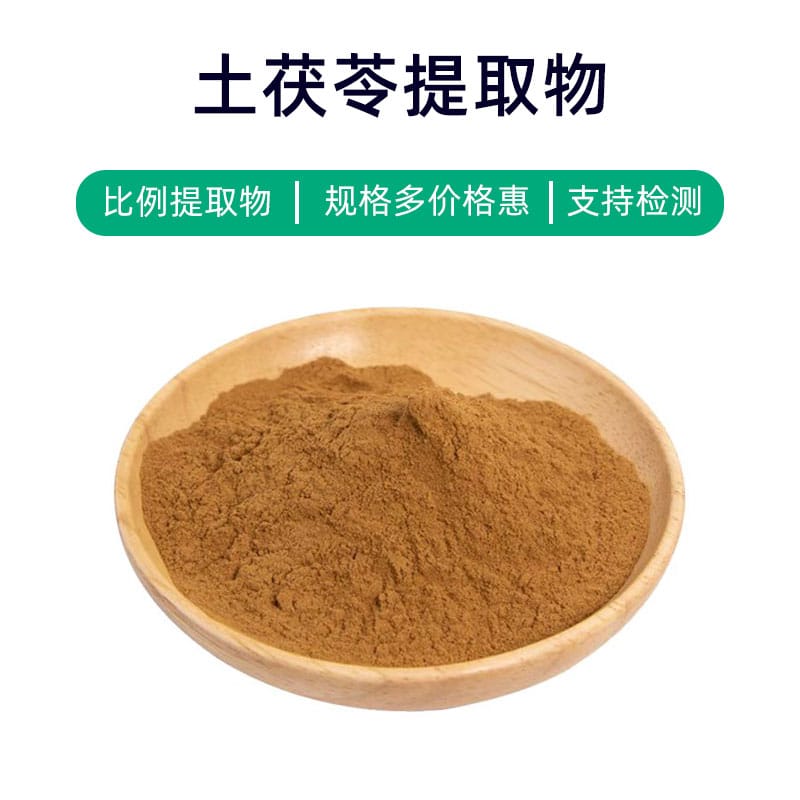
Poria Cocos Extract is a natural plant extract derived from the sclerotium of Poria cocos. Its main components include active ingredients such as polysaccharides, triterpenoid saponins, and proteins. Poria Cocos Extract is widely used in the fields of traditional Chinese medicine formulations, health supplements, and pharmaceuticals.
The polysaccharides among its main ingredients exhibit antioxidant, anti-inflammatory, and immune-regulating properties, helping to enhance the immune system and improve disease resistance. Triterpenoid saponins possess antibacterial, antiviral, and antitumor effects, providing certain protective benefits to the cardiovascular and digestive systems. Additionally, the proteins in Poria Cocos Extract are moisturizing, antioxidant, and anti-aging, making them commonly used in cosmetics.
In the pharmaceutical field, Poria Cocos Extract is often used to prepare immune regulators, anti-inflammatory drugs, and antibacterial agents for treating ailments such as colds and chronic nephritis. In health supplements, it aids in nutrient supplementation, boosts immunity, and regulates gut microbiota. In cosmetics, Poria Cocos Extract is commonly found in skincare products, improving moisture balance and maintaining skin elasticity and glow.
In summary, as a natural plant extract, Poria Cocos Extract possesses various benefits and is widely applied in pharmaceuticals, health supplements, and cosmetics, providing valuable support for health and beauty.
Production Process of Poria Cocos Extract
The production process of Poria Cocos Extract mainly includes the following steps:
- Raw Material Preparation: Select high-quality Poria cocos sclerotia as the raw material, then clean and dry it to ensure the quality and purity of the raw material.
- Extraction Process: Use water extraction or organic solvent extraction to extract active ingredients from the Poria cocos sclerotia. Water extraction typically involves soaking the powdered Poria with an appropriate amount of water, heating, and concentrating to obtain the extract.
- Filtration and Concentration: Filter the extract to remove impurities and residues, then concentrate the solution using evaporation or freeze-drying methods to yield a concentrated form.
- Solvent Recovery: If organic solvent extraction is used, it is necessary to recover the solvent to reduce costs and environmental pollution.
- Drying and Grinding: Dry the concentrate, commonly using spray drying or vacuum drying methods to turn it into powder, then grind it to obtain fine particles.
- Packaging and Storage: Place the Poria Cocos Extract into sealed containers to ensure product stability and quality. During storage, avoid direct sunlight and high humidity to extend the product’s shelf life.
- Quality Control: Throughout the production process, strict quality control standards are followed, monitoring the quality of raw materials, intermediate products, and final products to ensure compliance with safety and quality requirements.
By following these processing steps, high-quality, pure Poria Cocos Extract can be produced, providing premium raw materials for pharmaceuticals, health supplements, and cosmetics.
Effects and Side Effects of Poria Cocos Extract
Poria Cocos Extract is a commonly used herbal material with multiple effects and functionalities, mainly including the following aspects:
- Diuretic and Edema Reduction: Poria Cocos Extract contains various active components with good diuretic effects, helping to expel excess water from the body, alleviating edema and swelling.
- Immune Regulation: The polysaccharides in Poria Cocos Extract have immune-regulating properties, enhancing the body's immune function and helping to prevent infections and inflammation.
- Antioxidant: Poria Cocos Extract is rich in antioxidants, such as polyphenolic compounds, which help eliminate free radicals, protecting cells from oxidative damage and delaying aging.
- Blood Sugar Regulation: Studies indicate that certain components in Poria Cocos Extract have blood sugar-lowering effects, which can help regulate blood sugar levels and provide supportive treatment for metabolic diseases like diabetes.
- Lipid Reduction and Weight Loss: The active components in Poria Cocos Extract can promote fat metabolism and lower blood lipid levels, aiding in the reduction of body fat and improving symptoms related to obesity and high blood lipids.
- Anti-inflammatory and Pain Relief: Poria Cocos Extract exhibits certain anti-inflammatory effects, alleviating inflammatory responses and discomfort, commonly used for treating arthritis and rheumatic pain.
- Digestive Improvement: Poria Cocos Extract contains dietary fiber and digestive enzymes, promoting gut motility and improving digestion, thus relieving indigestion and gastrointestinal discomfort.
- Antibacterial and Anti-inflammatory: The active components in Poria Cocos Extract exhibit certain antibacterial and anti-inflammatory effects, inhibiting bacteria, fungi, and viruses, aiding in the prevention and treatment of infectious diseases.
Poria Cocos Extract is generally safe, but individual differences may lead to some adverse reactions, such as allergic reactions or digestive issues. Therefore, it is advisable to consult a doctor or pharmacist before use and strictly adhere to the dosage instructions to avoid adverse effects.
Application Scenarios and Dosage of Poria Cocos Extract
Poria Cocos Extract is widely used in the pharmaceutical, food, and cosmetic industries. Here are its specific applications and dosages in various fields:
- Pharmaceutical Field:
- Poria Cocos Extract is commonly applied in traditional Chinese medicine prescriptions, such as decoctions, granules, and pills, used for treating symptoms like damp-heat, spleen and stomach weakness, and edema. The common administration is oral, with a typical dosage of 10-15 grams per use, 2-3 times daily, or adjusted according to a doctor’s advice.
- For external use, Poria Cocos Extract can also be applied as an ointment or topical agent for treating skin diseases like eczema and itching, with usage guidelines being to apply an appropriate amount to the affected area 1-2 times daily.
- Food Industry:
- Poria Cocos Extract is often added to health supplements for immune regulation, lipid reduction, and health maintenance purposes. Administration is typically following the product's instructions, with a usual dosage of 3-5 grams per use, 1-2 times daily.
- In food processing, Poria Cocos Extract can serve as a natural food additive to enhance flavor and increase nutritional value, such as being added to cookies, dairy products, and health foods.
- Cosmetic Industry:
- Poria Cocos Extract possesses antioxidant, anti-inflammatory, and moisturizing properties, commonly found in cosmetics like masks, lotions, and serums. Usage follows product guidelines, typically being applied evenly on the face after cleansing, gently massaging until absorbed, once or twice a day.
- Food-Medicine Homology:
- Poria Cocos Extract is used to develop products that blend food and medicine, such as oral liquids and beverages, combining traditional herbal benefits with modern nutrition, providing both health benefits and convenience in today’s fast-paced lifestyle.
In summary, Poria Cocos Extract holds significant application value across pharmaceuticals, food, and cosmetics. When using, it is essential to follow specific instructions and recommendations to avoid overuse or dependency. Individuals with differences in reactions or allergy concerns should use under the guidance of a healthcare professional.
Overview of the Source Plant for Poria Cocos Extract, Distribution, and Growth Environment
Poria, scientifically known as Poria cocos, is a common fungus belonging to the Basidiomycota family, often utilized in traditional Chinese medicine. Below is a detailed overview of the source plant of Poria Cocos Extract, its distribution, and growth environment:
- Source Plant Overview:
Poria primarily refers to the sclerotium of Poria cocos, which is a fungus and not a plant. It grows in the soil around plant roots, parasitizing various plant roots, primarily of broadleaf trees. Morphologically, Poria appears fleshy and solid, with a yellow-brown or brown exterior, typically exhibiting a pattern of intersecting fine lines on the surface and a porous texture internally. - Distribution:
Poria is mainly distributed in the southern regions of China, such as Jiangsu, Zhejiang, Hunan, Hubei, Sichuan, Guangdong, and Guangxi, as well as in East Asian areas like South Korea and Japan. Its distribution areas are typically humid mountainous regions, forests, and river valleys, with some presence in lower elevation plains. - Growth Environment:
Poria primarily thrives in the soil surrounding broadleaf tree roots, usually in a warm, humid, and well-ventilated environment. It has specific requirements for light, humidity, and temperature, favoring growth temperatures of 15-25 degrees Celsius and humidity levels between 70%-90%. The cooler, moist mountainous or forested areas are particularly suitable for its growth.
In summary, Poria cocos is a fungal organism that parasitizes the soil around plant roots, with its distribution concentrated in the warm, humid regions of southern China and East Asia. Its growth environment primarily consists of the roots of broadleaf trees, thriving in humid mountainous, forested, and river valley areas, with specific temperature and humidity requirements.
Processing and Storage of Poria Cocos Extract
The processing and storage of Poria Cocos Extract are crucial steps to ensure its quality and stability. The processing mainly involves cleaning, slicing, drying, and grinding, aimed at removing impurities, enhancing dryness, and pulverizing into powder form. For storage, it is typically sealed, moisture-proof, and light-blocking, kept in dry and ventilated areas, avoiding high temperatures, humidity, and direct sunlight to prevent quality changes and mold growth. It is recommended to store in dry, sealed containers, avoiding contact with odorous substances to prolong shelf life and maintain the stability of its active ingredients.

Monica Sun is a seasoned expert in the plant extraction industry with over a decade of experience in research and production. She specializes in the extraction and purification of plant active ingredients, focusing on driving innovation in natural product applications. Monica has participated in the development of multiple functional plant extracts, delivering high-value natural raw material solutions for the health food, pharmaceutical, and dietary supplement sectors.