


Pine Needle Extract Product Overview
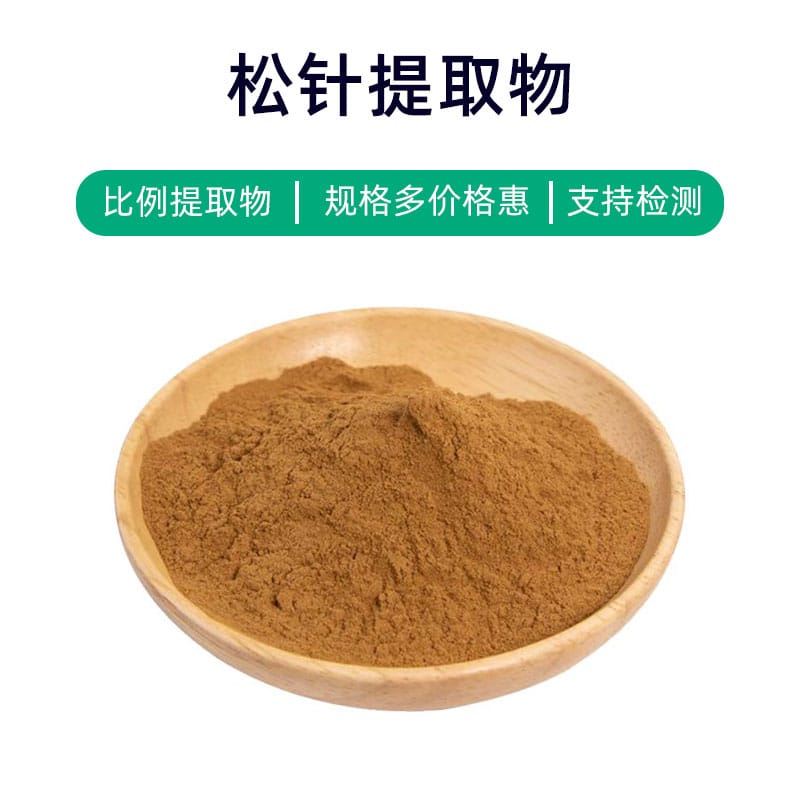
Pine needle extract is a natural plant extract sourced from Pinus species, featuring main components like turpentine, resin, and volatile compounds, as well as tannins, flavonoids, and vitamins. This extract offers multiple benefits including antioxidant, anti-inflammatory, and antibacterial effects. In the pharmaceutical field, it is commonly utilized to formulate anti-inflammatory drugs, supplements, and medicinal cosmetics, effectively alleviating inflammation and promoting wound healing. In the dietary supplement sector, it serves as an ingredient for boosting immunity and enhancing respiratory health. Additionally, pine needle extract is frequently added to food and cosmetics for its natural pine scent, along with its antioxidant and antibacterial effects that help prolong the shelf life of products.
Pine Needle Extract Production Process
The production process for pine needle extract typically involves the following steps:
- Collection: Fresh pine needles are harvested during the mature season, ideally from healthy, pest-free trees to ensure quality.
- Washing: Collected needles must be washed to remove impurities, maintaining the purity of the extract. This is usually done using clean water or soaking solutions.
- Grinding: The washed needles are ground to increase extraction efficiency and speed. Mechanical grinding or pulverizers are commonly used to turn them into powder.
- Extraction: The powdered needles undergo extraction using methods such as water extraction, supercritical fluid extraction, or organic solvent extraction. Water extraction is common, involving boiling or soaking the needles to dissolve active components in water.
- Filtration and Concentration: The extract is filtered to eliminate impurities, followed by concentration methods like evaporation or vacuum concentration to remove water, resulting in a concentrated extract.
- Drying and Refinement: The concentrated extract is dried to eliminate residual moisture, often using spray drying or vacuum drying. It may also undergo refinement to remove leftover impurities and enhance purity and quality.
- Packaging and Storage: The refined pine needle extract is then packaged, usually in sealed containers to prevent contamination and oxidation. It should be stored away from direct sunlight and in a dry, ventilated area to maintain stability and shelf life.
Effects and Side Effects of Pine Needle Extract
Pine needle extract is a versatile natural product with several benefits, including:
- Antioxidant: Rich in polyphenols like pinostrobin and pine phenol, it has strong antioxidant properties to neutralize free radicals, slow cellular aging, and prevent disease.
- Anti-inflammatory: Active components can inhibit the release of inflammatory factors, reducing inflammation and making it suitable for treating arthritis and skin inflammation.
- Immune Modulation: It can regulate immune system functions, enhance resistance, and help prevent infectious diseases.
- Antibacterial and Antiviral: Pine needle extract possesses antimicrobial and antiviral properties, effectively inhibiting the growth of bacteria and viruses, aiding in the prevention and treatment of respiratory infections.
- Respiratory Health Improvement: It helps clear foreign objects and phlegm from the respiratory tract, alleviating coughs and sore throats while promoting overall respiratory health.
- Mental Clarity: The extract enhances blood flow to the brain, improving memory and focus, reducing fatigue, and boosting work efficiency.
- Stress Relief: Active components can stabilize nervous system functions, alleviating anxiety and tension, thereby improving mental health.
- Circulation Improvement: It can dilate blood vessels, enhancing circulation, lowering blood pressure, and preventing cardiovascular diseases.
Note: It is crucial to follow medical advice regarding dosage and usage to avoid adverse effects. Individual responses may vary, and some may experience allergies or discomfort, warranting observation and prompt medical attention if needed.
Applications and Dosage of Pine Needle Extract
Pine needle extract has extensive applications in pharmaceuticals, food, and cosmetics, with dosages varying by use case.
- Pharmaceutical Applications:
- Internal Use: Commonly used in TCM formulas like pine needle tinctures or teas. Recommended dosage is typically 5-10 grams for adults, taken 2-3 times daily, adjusted as necessary.
- External Use: Used for topical treatment of skin inflammation or wounds, and in medicinal baths. The dosage may vary; usually around 2-5 grams per application, mixed with appropriate water or liquid.
- Food Applications:
- Additive: Serves as a natural antioxidant and preservative in foods like beverages, candies, and baked goods, typically added per processing requirements, adhering to food safety standards.
- Cosmetic Applications:
- Skincare: With antioxidant and anti-inflammatory properties, it is included in products like creams, masks, and shampoos. The typical content is 0.1%-5% of the total formulation, adjusted according to product needs.
- Bath Products: Often found in body washes and shampoos, improving skin condition and providing a refreshing scent. Commonly added at 0.1%-2% of the total formulation.
Cautionary Notes:
- Ensure quality and sourcing of the product from reputable manufacturers.
- Use per medical advice, avoiding interactions with other medications.
- Follow food safety standards for food applications.
- Ensure proper storage conditions for cosmetic products.
In conclusion, pine needle extract is a valuable natural resource with broad applications across various fields, provided it is used responsibly to prevent adverse reactions.
Overview of Source Plants for Pine Needle Extract, Distribution, and Growth Environment
Pine needle extract is derived from pine trees, belonging to the Pinaceae family, primarily including species such as Chinese red pine, oil pine, and masson pine. These trees are widely distributed across the globe, notably flourishing in temperate and cold regions of the Northern Hemisphere.
Pine trees are evergreen conifers characterized by their tall, straight trunks and grayish-brown bark tinged with longitudinal cracks. Their needle-like leaves are long, pointed, and typically deep green to blue-green, emitting a distinct pine aroma. The crowns of pine trees tend to present a conical or tower-like shape.
Regarding growth conditions, pine trees thrive in sunny environments with well-drained, loose soil. They exhibit strong adaptability and can grow in various soil types, including sandy soils, loams, and clays, even in less fertile conditions. They also demonstrate resilience in dry climates.
In terms of distribution, pine trees are chiefly found in temperate and cold regions of the Northern Hemisphere, covering areas of North America, Europe, large parts of Asia, and certain regions of North Africa. In North America, they are prevalent in northern areas such as Alaska, Canadian forests, and the northern states of the U.S. In Europe, their presence is extensive across Nordic countries, Russia, Eastern Europe, and parts of Western Europe. In Asia, they largely populate Siberia in Russia, Northeast China, and areas in Japan.
Overall, pine trees are common conifers with a wide growth distribution, exhibiting strong adaptability to diverse soil and climate conditions. Their extensive distribution and abundant resources make them a significant source for extracting pine needle extract.
Processing and Storage of Pine Needle Extract
The processing of pine needle extract primarily includes collection, washing, grinding, and extraction steps. Initially, fresh pine needles are collected and thoroughly washed to remove surface impurities. Next, the clean needles are ground, typically using pulverizing methods to create a powder. Finally, extraction methods such as water extraction or solvent extraction are employed to obtain active ingredients from the needles.
For storage, pine needle extract should be kept in a dry, cool, and ventilated environment, away from direct sunlight and excessive heat. Ideally, it should be sealed in opaque containers to protect against light and moisture. It is also essential to avoid contact with harmful substances that could affect its quality and stability. Proper storage can help prolong the shelf life of the pine needle extract while maintaining the stability of its active components.

Monica Sun is a seasoned expert in the plant extraction industry with over a decade of experience in research and production. She specializes in the extraction and purification of plant active ingredients, focusing on driving innovation in natural product applications. Monica has participated in the development of multiple functional plant extracts, delivering high-value natural raw material solutions for the health food, pharmaceutical, and dietary supplement sectors.