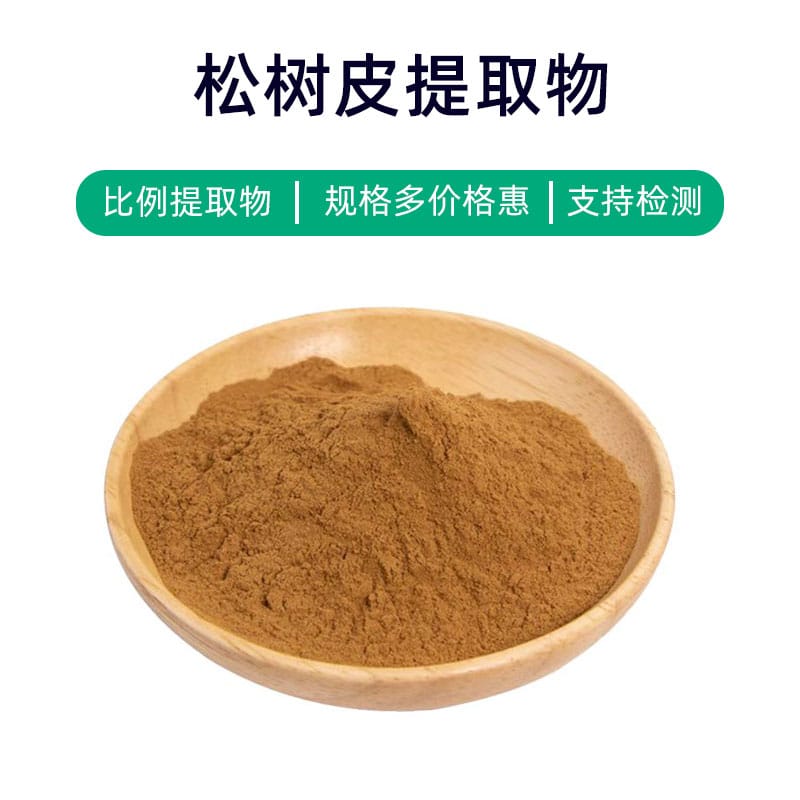



Introduction to Pine Bark Extract
Pine bark extract is a natural plant extract obtained from pine trees, primarily composed of proanthocyanidins, flavonoids, and other bioactive substances. Its benefits include antioxidant, anti-inflammatory, and antibacterial effects. Pine bark extract is extensively used in health supplements, pharmaceuticals, and cosmetics. In health supplements, it is often employed in antioxidant and anti-aging products, helping to enhance immune function and improve skin quality. In the pharmaceutical field, pine bark extract is used in drug formulation, exhibiting anti-inflammatory, analgesic, and antibacterial properties, commonly for treating inflammatory diseases. Additionally, in cosmetics, it is frequently included in skincare products to help tighten pores, reduce pigmentation, and improve skin texture. Overall, as a natural plant extract, pine bark extract demonstrates broad application prospects across multiple fields, receiving substantial market attention and recognition.
Pine Bark Extract Production Process
The production process of pine bark extract typically involves several steps:
- Raw Material Preparation: Select high-quality pine bark as the raw material. The bark should be cleaned and initially processed to remove impurities and foreign materials.
- Extraction Process: The cleaned bark is ground and crushed, then extracted using suitable solvents such as water or ethanol. Various methods like maceration or heated reflux can be utilized to obtain the target compounds.
- Filtration and Concentration: The extracted solution is filtered to remove solid impurities. Then, the solvent is evaporated to concentrate the extract.
- Purification and Separation: The concentrated extract undergoes purification and separation, employing methods like precipitation, crystallization, or thin-layer chromatography to obtain pure target compounds.
- Drying: The purified extract is dried, typically using methods like spray drying or vacuum drying, to yield powdered pine bark extract.
- Packaging and Storage: Finally, the dried pine bark extract is packaged, often in moisture-proof, light-proof, and airtight materials. It should be stored in a cool, dry environment, avoiding direct sunlight and high temperatures to maintain its stability and activity.
By following these production process steps, high-quality pine bark extract can be obtained for use in various pharmaceuticals, health supplements, and cosmetics.
Effects and Side Effects of Pine Bark Extract
Pine bark extract is a natural plant extract with various effects and functions, primarily derived from the bark of pine trees. Its benefits mainly include:
- Antioxidant Effects: Rich in polyphenolic compounds like proanthocyanidins and flavonoids, pine bark extract has powerful antioxidant properties, helping to eliminate free radicals, slow cellular aging, and protect cells from oxidative stress.
- Anti-Inflammatory Effects: Studies show that the active components in pine bark extract exhibit significant anti-inflammatory properties that can alleviate inflammatory responses and relieve symptoms of conditions like arthritis and dermatitis, promoting tissue repair and healing.
- Antibacterial and Antimicrobial Effects: Pine bark extract contains components with antibacterial and antimicrobial properties that can inhibit the growth of bacteria, fungi, and viruses, providing supportive treatment for skin infections and respiratory infections.
- Blood Sugar Reduction: Some studies indicate that certain active compounds in pine bark extract can help lower blood sugar levels, aiding in the regulation of blood sugar for diabetic patients.
- Cardiovascular Protection: The polyphenolic compounds in pine bark extract are believed to offer cardiovascular protection by lowering blood lipids, inhibiting platelet aggregation, and preventing atherosclerosis and other cardiovascular diseases.
- Skin Care Benefits: Pine bark extract is widely used in cosmetics and skincare products for its moisturizing, anti-aging, and whitening effects, improving skin texture and radiance while reducing wrinkles and pigmentation.
It is important to note that while pine bark extract has many benefits, individuals may experience variations in reactions and potential allergic responses. It is recommended to conduct a patch test for skin sensitivity and follow usage guidelines provided in product instructions to minimize possible side effects. If any adverse reactions occur, discontinue use and consult a healthcare professional.
Application Scenarios and Dosages for Pine Bark Extract
Pine bark extract has broad applications in pharmaceuticals, food, and cosmetics, with dosages varying according to the context of use.
- Pharmaceutical Applications:
- Oral Medication: Pine bark extract is commonly used to prepare oral health supplements or medications aimed at improving cardiovascular health, lowering blood sugar, and providing anti-inflammatory effects. Typically, the recommended dosage for adults is 100-200 mg per day, divided into 2-3 doses.
- Topical Medication: In topical formulations, pine bark extract is frequently included in ointments and creams for skin inflammations, scabies, or eczema. The extract can be incorporated into the ointment base and applied as needed.
- Food Applications:
- Food Additive: As a natural antioxidant and preservative, pine bark extract is utilized in the food industry to prevent rancidity and extend shelf life. Dosages depend on food type and purpose, adhering to national food safety standards.
- Cosmetic Applications:
- Skincare Products: Used in skincare formulations, pine bark extract provides antioxidant, anti-inflammatory, and moisturizing benefits. It can be incorporated into creams, lotions, and serums, generally at a concentration of 1%-5%.
- Beauty Products: In beauty products, pine bark extract is often found in whitening, anti-wrinkle, and firming formulations. Its concentration typically ranges from 1%-3% in masks, serums, and toners.
It is crucial to follow specific product guidelines or consultation with professionals regarding dosages and usage methods, as they may vary across applications. If any adverse reactions arise during use, discontinue immediately and seek advice from a doctor or pharmacist.
Introduction to Pine Trees and Their Growth Environment
Pine trees (Scientific name: Pinus) belong to the Pinaceae family and are a common type of conifer, widely distributed across the globe, including North America, Europe, Asia, and Africa. They are typically tall trees with significant economic value and ecological importance.
Plant Description
Pine trees are evergreen conifers that can reach heights from several dozen to over a hundred feet. They have upright trunks with grayish-brown or reddish-brown bark, often exhibiting vertical fissures. The crown is usually conical or cylindrical, dense with needle-like leaves that are long and pointed, typically appearing in bundles of two. Mature pine trees produce pine cones, which can be cylindrical or oval, with hard seeds usually featuring wings to aid in wind dispersal.
Distribution
Pine trees are found globally, mainly in temperate and cold regions of the Northern Hemisphere, including North America, Europe, Asia, and North Africa. Different species of pines exhibit varying adaptability to environmental conditions; some thrive at high elevations, while others flourish in lowland plains.
Growth Environment
- Climate Conditions: Pine trees generally show strong adaptability to climate, though specific species may have different requirements. Most prefer mild, moist climates, but a few can tolerate arid or cold climates.
- Soil Requirements: Most pine species prefer well-drained soils and can grow in a variety of soil types, including sandy, clay, and limestone soils.
- Light Conditions: Pines favor abundant sunlight, typically growing in well-lit areas, though some species can thrive in partially shaded environments.
- Elevation: Different pine species have varying elevation requirements; some can grow in high mountain regions, while others are better suited to lowland plains.
Overall, pine trees are highly adaptable plants that thrive in diverse natural environments, providing abundant resources and ecological services.
Processing and Storage of Pine Bark Extract
The processing of pine bark extract typically involves the following steps: starting with the collection of pine bark, cleaning and treating it to remove impurities and outer layers; grinding or chopping the cleaned bark to enhance extraction efficiency; then using appropriate extraction methods such as water or alcohol extracts to retrieve the active components; finally, through processes such as concentration, filtration, and drying, the pine bark extract is produced.
In terms of storage, pine bark extract should be kept in a cool, dry environment, avoiding direct sunlight and high temperatures to prevent moisture absorption. Use tightly sealed containers to guard against air, moisture, and odor infiltration. Keeping it at the right temperature will help prolong its shelf life and maintain the stability and activity of the active ingredients.

Monica Sun is a seasoned expert in the plant extraction industry with over a decade of experience in research and production. She specializes in the extraction and purification of plant active ingredients, focusing on driving innovation in natural product applications. Monica has participated in the development of multiple functional plant extracts, delivering high-value natural raw material solutions for the health food, pharmaceutical, and dietary supplement sectors.