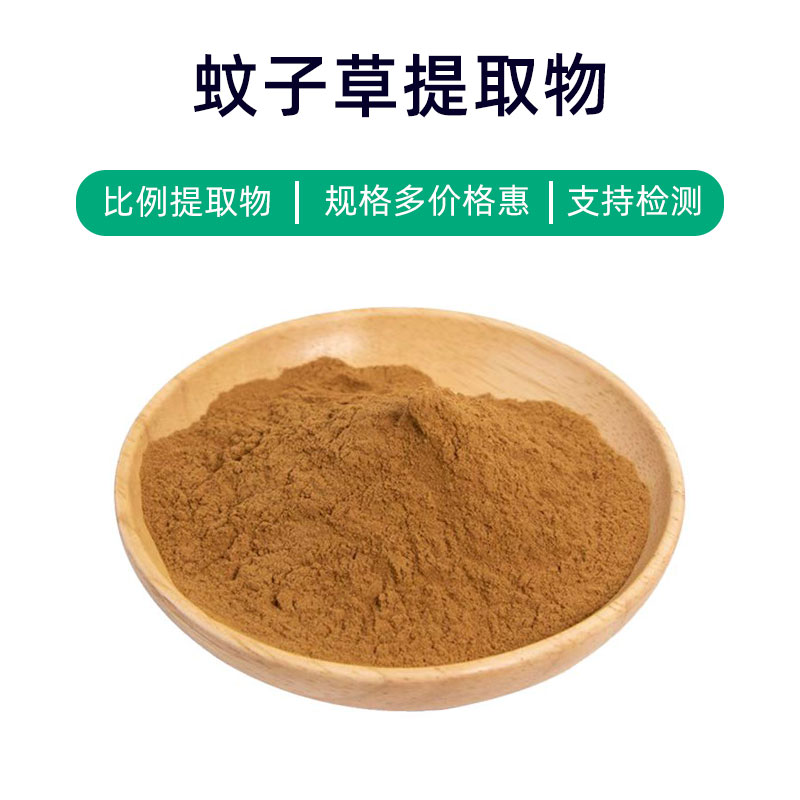



Mosquito Grass Extract Product Introduction
Mosquito grass extract is a natural plant extract derived from mosquito grass (Cymbopogon citratus). Its main components include active substances like limonene, citronellol, and citric acid. This extract has various benefits, including antibacterial, antioxidant, insect-repelling, and regulating skin oil balance.
Firstly, mosquito grass extract has notable antibacterial properties, effectively inhibiting the growth of bacteria and fungi, helping to prevent skin infections and inflammation.
Secondly, rich in antioxidants, mosquito grass extract can neutralize free radicals, slow down the skin aging process, and protect the skin from oxidative stress, promoting skin health and youthfulness.
Additionally, mosquito grass extract is widely used as an insect repellent, showing good effects in preventing bites from mosquitoes and flies, and can be used to make repellents and creams.
In the cosmetics field, mosquito grass extract is often used to regulate skin oil secretion, helping to tighten pores and balance oil, making it suitable for oily and combination skin types.
In summary, mosquito grass extract serves as a natural plant extract with a variety of benefits and a wide range of applications, contributing to health and well-being in the medical, food, dietary supplement, and cosmetic industries.
Mosquito Grass Extract Production Process
The production process of mosquito grass extract typically involves the following steps:
- Raw Material Preparation: Select fresh, healthy mosquito grass plants as raw material. Harvesting should be conducted during cooler morning or evening temperatures to preserve the stability of active ingredients.
- Washing: Cleanse the harvested mosquito grass plants to remove dirt and impurities, maintaining plant hygiene.
- Crushing and Grinding: Crush or grind the cleaned mosquito grass to increase extraction efficiency and surface area.
- Extraction Process: Use appropriate solvents (such as ethanol or water) for extraction. Common methods include soaking extraction, ultrasonic extraction, microwave extraction, etc., to extract the active ingredients from the plant.
- Filtering and Concentrating: Filter the obtained solution to remove solid impurities, and then use concentration techniques (such as vacuum concentration or evaporation) to remove solvents, yielding concentrated mosquito grass extract.
- Refining and Purification: Further purify the concentrated extract to remove impurities and unwanted components, obtaining pure mosquito grass extract.
- Drying: Dry the purified mosquito grass extract to eliminate any residual moisture, resulting in the final powder product.
- Packaging and Storage: Package the dried mosquito grass extract, typically using sealed or inert gas-protected packaging to prevent oxidation and moisture damage, then store in a cool, dry place away from direct sunlight and high temperatures to maintain product stability and efficacy.
The above outlines the main production process for mosquito grass extract, with a strict need for quality control at each step to ensure the final product's quality and safety.
Mosquito Grass Extract Effects and Side Effects
Mosquito grass extract, as a natural herb extract, is widely used in traditional and modern medicine, offering various effects:
- Anti-inflammatory: Rich in bioactive components, mosquito grass extract exhibits significant anti-inflammatory properties, effectively alleviating skin inflammation and swelling.
- Antibacterial and Antiviral: Research shows that mosquito grass extract has antibacterial and antiviral effects, inhibiting the growth and reproduction of various bacteria and viruses, aiding in the prevention and treatment of infectious diseases.
- Antioxidant: Mosquito grass extract is abundant in natural antioxidants, removing free radicals, protecting cells from oxidative damage, and slowing the aging process.
- Improving Circulation: Mosquito grass extract promotes blood circulation, enhances microcirculation functionality, helping to improve blood supply and nutrient delivery, which is beneficial for cardiovascular health.
- Anti-allergic: The active components in mosquito grass extract may offer certain anti-allergic effects, reducing symptoms of allergic reactions and allergic diseases, such as allergic rhinitis and dermatitis.
- Promoting Wound Healing: Mosquito grass extract provides good protection and repair for the skin, speeding up wound healing, reducing inflammation, and minimizing scarring, assisting in tissue recovery.
- Regulating Immunity: The extract can help regulate immune system function, enhancing the body’s resistance and boosting immunity, playing a role in preventing infections and strengthening the body’s defenses.
Despite its numerous benefits, there are points to consider when using mosquito grass extract:
- Allergic Reactions: Some individuals may have allergic reactions to specific components in mosquito grass extract. If symptoms like redness or itching occur, discontinue use and consult a doctor.
- Moderation: While using mosquito grass extract, adhere to recommended dosages to avoid adverse reactions or misuse.
- Quality Awareness: Purchase products through reliable channels to ensure safety and quality, avoiding counterfeit products.
- Adverse Reactions: Long-term or excessive use could lead to gastrointestinal discomfort, dizziness, or nausea. Seek medical attention if adverse symptoms arise.
In conclusion, mosquito grass extract, with its various benefits and effects, has a positive impact on human health. However, it’s essential to consider individual differences and usage methods to avoid adverse reactions.
Mosquito Grass Extract Applications and Dosage
Mosquito grass extract finds widespread applications in medicine, food, and cosmetics, serving multiple purposes.
- Medical Applications: Mosquito grass extract is commonly utilized in traditional Chinese medicine formulations, believed to have heat-clearing, detoxifying, anti-inflammatory, and diuretic properties. In medicine, it can be prepared into oral solutions, granules, or capsules for treating colds, fevers, and infections.
- Food Applications: It can also serve as a natural food additive in food processing. In this sector, mosquito grass extract is often added to beverages, supplements, and teas, imparting a fresh taste and antioxidant effects.
- Cosmetic Applications: Due to its anti-inflammatory, antibacterial, and antioxidant characteristics, mosquito grass extract is frequently included in cosmetic products. It can be utilized in masks, lotions, and serums to soothe the skin, improve skin texture, and alleviate sensitivity issues.
Dosage and Usage:
- Medical Use: Typically taken in forms such as oral solutions, granules, or capsules, dosage and administration should follow medical advice, generally in accordance with a healthcare provider's recommendations.
- Food Use: When used as a food additive, adhere to the appropriate amounts specified in food processing guidelines, adding the required dosage as needed for product formulation.
- Cosmetic Use: As an ingredient in cosmetics, users should select appropriate products based on skin type and follow usage instructions provided on product labels.
It’s important to follow moderation guidelines when using mosquito grass extract to prevent adverse reactions. Special populations (such as pregnant women and children) should ideally consult a healthcare professional before use.
Introduction to Mosquito Grass Source Plant, Distribution, and Growth Environment
Mosquito grass, scientifically known as Houttuynia cordata Thunb., is a perennial herbaceous plant belonging to the Saururaceae family, also known as fish mint, chameleon plant, and chicken fecal grass. Below is an overview of its source plant, distribution, and growth environment.
Source Plant:
Mosquito grass is a terrestrial or aquatic perennial herb, typically growing to about 10-80 cm in height, with heart-shaped leaves attached to the stem, and small white flowers blooming in the summer. Its stem and leaves have a strong garlicky scent, while the flowers emit a distinct odor, hence the name “fish mint.”
Distribution:
Mosquito grass is mainly distributed in southern China, Japan, Korea, Vietnam, and Indonesia, as well as some areas in Europe and North America. In China, it predominantly grows south of the Yangtze River, including regions such as southern China, central China, and eastern China, especially in provinces like Hunan, Hubei, Fujian, and Guangdong.
Growth Environment:
Mosquito grass prefers damp environments, typically thriving in stream beds, river wetlands, fields, forest edges, and moist grasslands. It is not particular about soil quality and is adaptable, growing in sandy soils, loamy soils, and humid muddy earth. While it requires ample sunlight for growth, it can also thrive in partially shaded environments.
In nature, mosquito grass demonstrates strong vitality, capable of rapid reproduction and growth in moist conditions. Due to its specific growth environment, it is often used in landscape greening, wetland protection, and water management, serving significant ecological roles. Additionally, its medicinal and edible values make it an important herbal material and food plant.
Processing and Storage of Mosquito Grass Extract
The processing of mosquito grass extract includes the following steps: First, fresh mosquito grass plants are collected; then they undergo washing, impurity removal, and preliminary treatment. Subsequently, extraction methods, including aqueous and ethanol extraction, are applied, followed by filtration, concentration, and drying to yield mosquito grass extract.
For storage, mosquito grass extract should be kept in a dry, cool, and ventilated place, preventing direct sunlight and high temperatures, while also avoiding moisture. It is best sealed to avoid oxidation from air exposure, thereby extending its shelf life.

Monica Sun is a seasoned expert in the plant extraction industry with over a decade of experience in research and production. She specializes in the extraction and purification of plant active ingredients, focusing on driving innovation in natural product applications. Monica has participated in the development of multiple functional plant extracts, delivering high-value natural raw material solutions for the health food, pharmaceutical, and dietary supplement sectors.