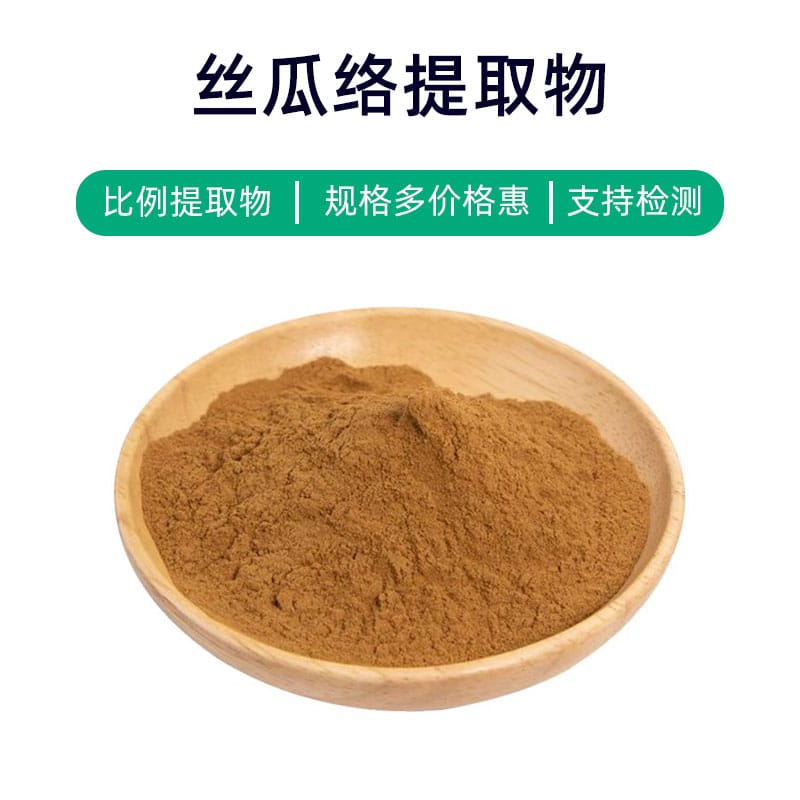



Loofah Extract Product Introduction
Loofah extract is a natural plant extract derived from the fruits and seeds of the loofah. Its main components include saponins, polysaccharides, proteins, vitamins, and minerals. This extract boasts several benefits, such as moisturizing, antioxidant, anti-inflammatory, and antibacterial properties. In skincare and beauty products, loofah extract is often utilized to enhance skin moisture, improve elasticity, reduce the appearance of wrinkles and fine lines, soothe skin inflammation, and inhibit the growth of acne. Additionally, loofah extract can be used in pharmaceuticals to treat certain skin conditions and promote wound healing. Its wide application requires adherence to appropriate concentrations and formulations to ensure safety and efficacy.
Loofah Extract Production Process
The production process of loofah extract typically includes the following steps:
- Raw Material Collection and Selection: Fresh, mature loofah fruits and seeds are selected, washed, and screened to remove impurities.
- Grinding and Crushing: The cleaned loofah fruits and seeds are ground and crushed to enhance extraction efficiency.
- Solvent Extraction: Suitable solvents (such as water, ethanol, etc.) are used to soak the crushed loofah fruits and seeds, dissolving the active components into the solvent.
- Filtration of Extract: The extract solution is filtered through a filter to remove solid particles and impurities, resulting in a purified extract.
- Solvent Recovery: The solvent from the extract is recovered to reduce cost and resource waste.
- Concentration: The recovered solvent is concentrated to increase the purity and effectiveness of the active ingredients in the extract.
- Freeze-Drying: The concentrated extract is freeze-dried to evaporate moisture, yielding dry loofah extract.
- Crushing and Grading: The freeze-dried loofah extract is crushed and graded to achieve the desired particle size and granule size.
- Quality Testing and Packaging: The final product undergoes quality testing to ensure compliance with standards and regulations, followed by packaging, typically in sealed containers to prevent contamination and oxidation.
- Storage and Shipping: The packaged loofah extract is stored in a dry, cool environment, avoiding direct sunlight and high temperatures to ensure stability and quality. Finally, the product can be shipped for sale or further processing into various cosmetics and pharmaceuticals.
Loofah Extract Effects and Side Effects
As a natural plant extract, loofah extract offers various benefits, including:
- Antioxidant Effect: Loofah extract is rich in various antioxidants, such as Vitamin C, Vitamin E, and polyphenols, which can neutralize free radicals, slow down cell oxidation, and protect cells from oxidative damage.
- Anti-Inflammatory Effect: Research indicates that some active components in loofah extract possess anti-inflammatory properties, inhibiting the release of inflammatory factors and alleviating skin issues like redness and itching.
- Moisturizing: Loofah extract contains abundant moisture and moisturizing factors that effectively hydrate the skin, strengthening the skin's barrier function and keeping it smooth and moisturized.
- Whitening and Spot Reduction: The active components in loofah extract can help inhibit melanin production, fade dark spots, and even out skin tone for a brighter complexion.
- Anti-Aging: Various antioxidants in loofah extract help prevent skin aging, slow down sagging and wrinkle formation, and maintain skin elasticity and firmness.
- Oil Balance Regulation: Loofah extract has astringent properties and can regulate sebum secretion, helping to manage oily skin issues and reduce enlarged pores and shine.
- Soothing Skin: Certain components in loofah extract can soothe and calm the skin, alleviating discomfort and addressing sensitivity and redness for added comfort.
- Promoting Healing: Loofah extract contains components that can enhance skin healing, expedite wound recovery, and reduce inflammation for minor cuts and wounds.
While loofah extract offers numerous benefits, individual differences and allergic reactions should be considered. A skin sensitivity test is recommended before use, and excessive application should be avoided to prevent discomfort. If any adverse reactions occur, use should be discontinued immediately, and medical advice sought.
Loofah Extract Application Scenarios and Dosage
Loofah extract, as a natural plant extract, has broad applications in medicine, food, and cosmetics. Below are key applications in each field, along with recommended dosages:
- Medical Field:
- Skin Inflammation Treatment: Loofah extract's anti-inflammatory, antibacterial, and calming properties make it suitable for topical formulations treating conditions like eczema and dermatitis. Generally applied 1-2 times per day, gently massaged into the affected areas until absorbed.
- Promoting Wound Healing: Loofah extract can aid in wound recovery and is used in making topical dressings, typically changed daily until healing is complete.
- Food Industry:
- Seasoning: Loofah extract can serve as a natural flavoring agent in foods, imparting a fragrant taste. The usual dosage is 1-5 grams of loofah extract per 100 grams of food.
- Beverage Additive: It can be added to beverages to enhance taste and nutritional value, with a typical usage rate of 5-10 grams of loofah extract per 500 milliliters of beverage.
- Cosmetics Field:
- Skincare Products: With moisturizing, antioxidant, and anti-inflammatory properties, loofah extract can be formulated into various skincare products like masks, lotions, and serums. The typical dosage is 1-5% of the total product formulation.
- Hair Care Products: Rich in vitamins and minerals, loofah extract can be included in shampoos and conditioners to nourish hair and promote growth. The usual dosage is 1-5% of the total formulation.
While loofah extract has diverse applications, the following precautions should be observed during use:
- Conduct a skin sensitivity test before use to avoid allergic reactions.
- Adjust dosages and frequency based on specific products and intended purposes.
- If adverse reactions or discomfort occur, discontinue use immediately and seek medical attention.
Overall, loofah extract is a versatile natural plant extract with numerous benefits and applications, playing an important role in the fields of medicine, food, and cosmetics, and supporting health and beauty.
Introduction, Distribution, and Growth Environment of the Loofah Extract Source Plant
The source plant for loofah extract is the loofah (scientific name: Luffa aegyptiaca), a climbing herbaceous plant from the gourd family. Below is a detailed description of the loofah extract source plant’s introduction, distribution, and growth environment:
- Plant Introduction:
- The loofah (Luffa aegyptiaca) is an annual climbing plant belonging to the gourd family. It exhibits a vine-like growth pattern and can grow either climbing or sprawling. The plant boasts abundant leaf foliage, featuring deeply lobed, palmate leaves with wavy edges.
- The flowers are yellow, unisexual, and bear both male and female on the same plant. The fruit has an elongated cylindrical shape with numerous longitudinal grooves on its surface, and it contains fibrous threads within, giving the loofah its name.
- Distribution:
- Loofah is native to tropical and subtropical regions of Asia, primarily found in the Indian subcontinent, southern China, Southeast Asia, and tropical regions of Africa. Southern China, including provinces like Guangdong, Guangxi, and Yunnan, is one of the main production areas.
- Thanks to its adaptability to temperature, light, and humidity, the cultivation of loofah has expanded to other subtropical and tropical regions.
- Growth Environment:
- Loofah thrives in warm, humid climates and prefers well-drained soil with ample sunlight. During its growing season, it requires sufficient sunlight and moderate moisture.
- Its optimal growth temperature ranges from 20°C to 30°C; excessively high temperatures in summer and too low temperatures in winter should be avoided. It is not strict about soil conditions but thrives best in loose, well-draining sandy loam.
- The loofah has a long growth cycle,通常 requiring 4-5 months to mature, necessitating patience and careful management for successful cultivation.
In summary, the source plant for loofah extract, Luffa aegyptiaca, is a climbing herbaceous plant that is indigenous to tropical and subtropical regions of Asia. With strong adaptability, it can prosper under suitable temperature, light, and humidity conditions, and from its abundant fruits, loofah extract is obtained, providing essential raw materials for various applications.
Processing and Storage of Loofah Extract
The processing of loofah extract typically involves the following steps: First, the harvested loofah fibers are washed and treated to remove impurities and skin; next, the fibers are cut into smaller pieces or ground into powder; then, suitable extraction methods (such as water extraction or alcohol extraction) are employed to extract the desired components; finally, the resulting liquid undergoes concentration, filtration, and drying processes to yield loofah extract.
For storage, loofah extract should be kept in a dry, cool, and well-ventilated environment, avoiding direct sunlight and humidity. During storage, it should be protected from moisture, high temperatures, and oxygen exposure to maintain its quality and stability. Sealed containers or bags are typically used to store loofah extract to prevent air contact.

Monica Sun is a seasoned expert in the plant extraction industry with over a decade of experience in research and production. She specializes in the extraction and purification of plant active ingredients, focusing on driving innovation in natural product applications. Monica has participated in the development of multiple functional plant extracts, delivering high-value natural raw material solutions for the health food, pharmaceutical, and dietary supplement sectors.