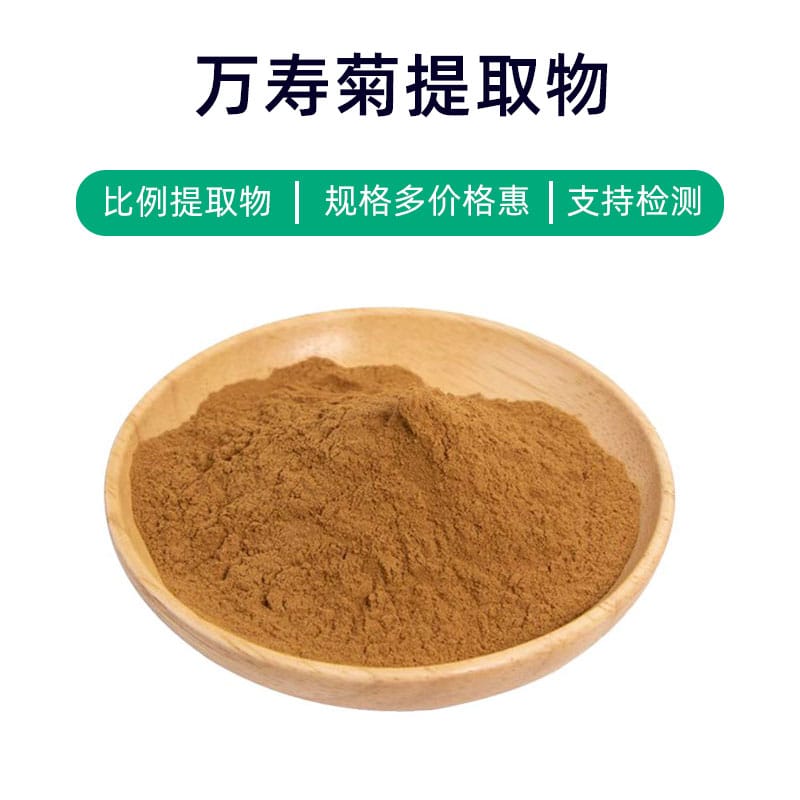



Marigold Extract Product Introduction
Marigold extract is derived from the flowering part of the Marigold (Chrysanthemum morifolium Ramat.), containing rich components such as flavonoids, volatile oils, and flavonoid glycosides. These elements contribute to various effects and applications. First, marigold extract boasts strong antioxidant properties capable of neutralizing free radicals and protecting cells from oxidative damage. Secondly, it exhibits anti-inflammatory and calming effects, alleviating inflammatory reactions and soothing skin discomfort suitable for various skin types. Moreover, marigold extract is widely used in cosmetics as an antioxidant and anti-inflammatory ingredient to regulate skin conditions and alleviate skin allergies. In the health supplement sector, it is commonly formulated to help enhance immunity and improve sleep quality. Overall, marigold extract has broad applications in pharmaceuticals, health supplements, and cosmetics, with its rich active components appealing to consumers.
Marigold Extract Production Process
The production process of marigold extract typically includes the following steps:
- Harvesting: Fresh flowers are collected during the flowering growth period, selecting blooms that are mature, uncontaminated, and free from pests.
- Washing: The collected flowers must be thoroughly washed to remove impurities, dirt, and pesticide residues, typically using water or other cleaning methods.
- Grinding: The cleaned flowers are ground to enhance extraction efficiency, using a grinder or mill to create a fine powder.
- Extraction: The ground flower powder undergoes solvent extraction, commonly using water or ethanol. During this process, parameters like temperature, time, and solvent concentration are controlled to ensure effective extraction and product quality.
- Filtration: The extract is filtered to remove residue and suspended particles, resulting in a pure extraction liquid.
- Concentration: The extraction liquid is concentrated to eliminate solvent and increase product concentration, typically using evaporation or vacuum concentration methods.
- Drying: The concentrated extract is dried to reduce moisture content and stabilize the product, with common drying methods including spray drying or vacuum drying.
- Packaging: Finally, the dried product is packaged, usually in sealed containers to avoid contamination and oxidation. Once packaged, the product is ready for storage or sale.
This is the general production process for marigold extract, with specific operational steps and parameters varying based on the manufacturer's technology and equipment.
Marigold Extract Effects and Side Effects
Marigold extract is a common plant extract widely used in pharmaceuticals, health supplements, and cosmetics. Its main effects include:
- Antioxidant Properties: Rich in various bioactive components, marigold extract possesses strong antioxidant properties, capable of neutralizing free radicals and delaying aging while protecting cells from oxidative damage.
- Anti-inflammatory Effects: Research indicates that some components of marigold extract exhibit significant anti-inflammatory effects, alleviating inflammatory responses and symptoms associated with conditions like arthritis and dermatitis.
- Skin Protection: Marigold extract offers protective and repairing benefits for the skin, enhancing barrier function and reducing environmental damage while promoting skin cell regeneration and repair.
- Antibacterial and Antiviral: Studies have found that some active components in marigold extract have antibacterial and antiviral properties, inhibiting the growth of bacteria and viruses and helping prevent and treat infectious diseases.
- Anti-allergic Properties: Certain components in marigold extract can mitigate allergic responses, alleviating symptoms of allergic conditions such as allergic rhinitis and skin allergies.
- Sleep Improvement: Some research suggests that marigold extract can aid in improving sleep quality, helping alleviate insomnia and anxiety issues.
Marigold extract, as a natural plant extract, is generally considered safe, but individual differences and allergic reactions should be monitored. Long-term high-dose use may lead to adverse effects such as gastrointestinal discomfort, dizziness, and skin allergies. It is advisable to conduct a skin sensitivity test before use and to follow the manufacturer’s recommended dosage. If any discomfort arises, usage should stop immediately and medical attention sought.
Marigold Extract Applications and Dosage
Marigold extract is widely applied in pharmaceuticals, food, and cosmetics. Below is a detailed introduction to its application scenarios, usage, and dosage in these fields.
- Pharmaceutical Applications:
- Uses: Marigold extract is common in traditional medicine formulations, known for its effects in clearing heat and detoxifying, reducing swelling, and relieving pain, typically used for symptoms such as colds, sore throats, and fever.
- Dosage: It can be taken orally or applied externally. For oral use, dried marigold extract can be prepared as a decoction, with doses of 5-10 grams per serving, taken 2-3 times daily; for topical use, it can be made into creams or tinctures applied to affected areas 2-3 times daily.
- Food Industry Applications:
- Uses: In the food industry, marigold extract is often used as an additive for flavor, aroma enhancement, or antioxidant properties.
- Dosage: Added to foods as needed, typically in amounts of 0.1%-0.5% of the total food weight; specific usage may be determined by the manufacturer's formula and food processing requirements.
- Cosmetics Applications:
- Uses: Marigold extract is commonly included in skincare and cosmetic products for its moisturizing, antioxidant, and soothing properties, suitable for all skin types.
- Dosage: Typically included as one of the ingredients in creams, lotions, masks, and serums, with specific amounts based on formulation requirements usually recommended between 0.1%-1.0%.
- Precautions:
- When using marigold extract, follow the manufacturer's instructions and standard operating procedures, strictly controlling dosages to prevent overuse.
- Individuals who may have allergic reactions to marigold extract should perform a skin sensitivity test; if allergic symptoms appear, discontinue use and seek medical attention.
- When purchasing marigold extract products, choose reputable channels to ensure product quality and safety.
In summary, marigold extract has extensive applications in pharmaceuticals, food, and cosmetics, with established usage and dosage standards, but precautions should be taken regarding safety and individual differences during applications.
Marigold Source Plant Introduction, Distribution, and Growth Environment
Marigold (Scientific name: Gynura divaricata (L.) DC.) is a common perennial herb belonging to the Asteraceae family, also referred to as longevity flower, marigold, and purple sea flower. It is a commonly used medicinal material and ornamental plant. Here we introduce the source, distribution, and growth environment of marigold.
- Source Plant Introduction:
- Appearance: Marigold is a perennial herb that can reach up to 1 meter tall, with a fleshy stem. Leaves are long oval or elliptical, featuring purplish-red stripes on strong petioles, and flowers bloom year-round.
- Flower and Fruit Characteristics: Flowers form dense head-like clusters with yellow corollas, offering ornamental value. The fruits are slender and elliptical, yielding medicinal benefits when matured.
- Distribution:
- Marigold is native to southern China, primarily distributed in provinces like Yunnan, Guangxi, Guangdong, Fujian, and Jiangxi, thriving in warm and humid climates, generally found in low hill regions below 1000 meters in elevation.
- Due to its adaptability, it is now widely spread across most of China as well as Southeast Asia, South Asia, and Africa.
- Growth Environment:
- Light: Marigold prefers abundant sunlight and grows well in well-lit environments but can adapt to semi-shade.
- Temperature: The ideal growth temperature ranges from 15°C to 30°C. It is not very demanding regarding temperature but is sensitive to low temperatures and cold environments.
- Humidity: Marigold thrives in humid, well-ventilated environments, though it can also withstand drought. Soil requirements are not very strict.
- Soil: Prefers fertile, loose, well-drained soil and has good adaptability to pH levels but is unsuitable for overly dry or soggy soils.
In summary, marigold is a common perennial herb primarily found in southern China and surrounding regions, favoring warm, humid, well-lit, and fertile environments. It is not only an important medicinal material but also possesses ornamental value, being widely cultivated and utilized.
Marigold Extract Processing and Storage
The processing and storage of marigold extract are crucial for ensuring product quality.
- Processing Steps:
- Harvesting: Choose robust marigold plants devoid of diseases and pests, ideally harvested in the morning or late afternoon to avoid high temperatures.
- Drying: Freshly harvested marigold should be promptly dried, placed in a well-ventilated, cool, and dry environment until moisture evaporates appropriately.
- Grinding: After drying, the marigold plants are ground, typically using milling or cutting methods.
- Storage Conditions:
- Dry Storage: Processed marigold extract should be stored in a dry, ventilated area away from light to prevent moisture and direct sunlight.
- Sealed Storage: The extract should be placed in sealed containers, with desiccants included to absorb moisture, extending product shelf life.
- Avoid High Temperatures: Avoid storing in high-temperature environments to preserve product stability and the quality of active components.
Through proper processing and storage methods, the active components and quality of marigold extract can be maintained, extending its shelf life and ensuring the product's effectiveness.

Monica Sun is a seasoned expert in the plant extraction industry with over a decade of experience in research and production. She specializes in the extraction and purification of plant active ingredients, focusing on driving innovation in natural product applications. Monica has participated in the development of multiple functional plant extracts, delivering high-value natural raw material solutions for the health food, pharmaceutical, and dietary supplement sectors.